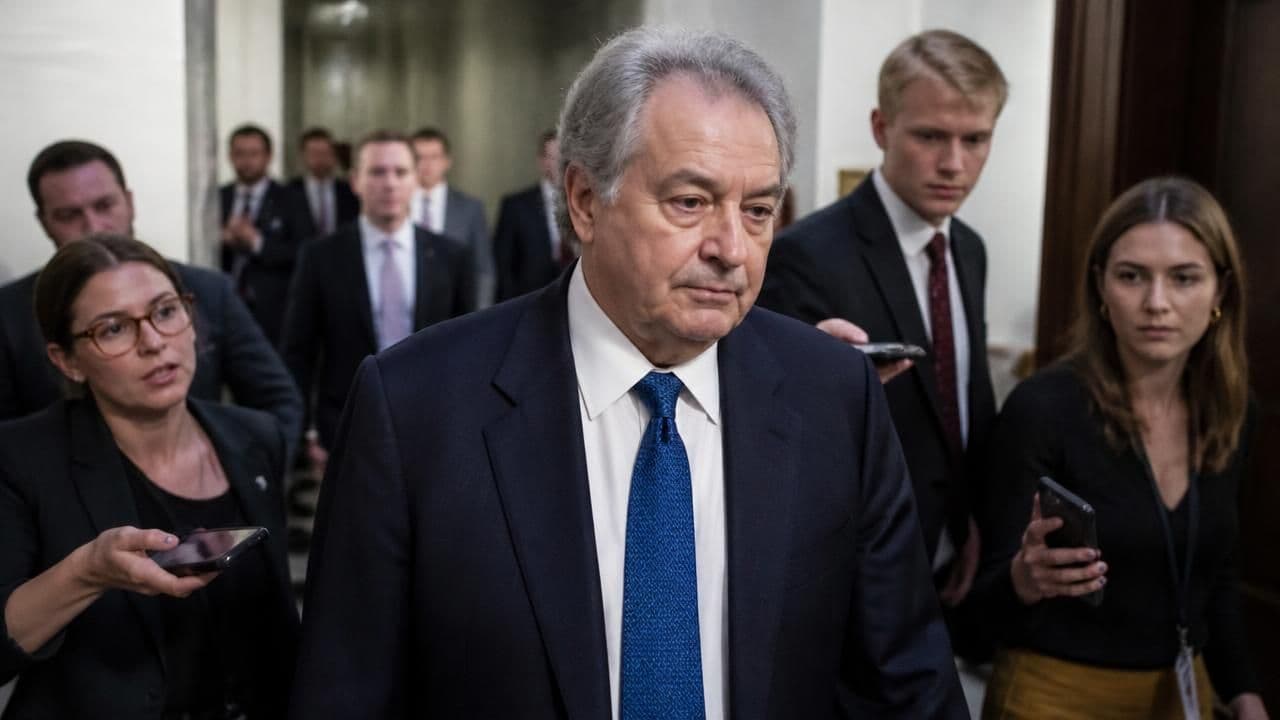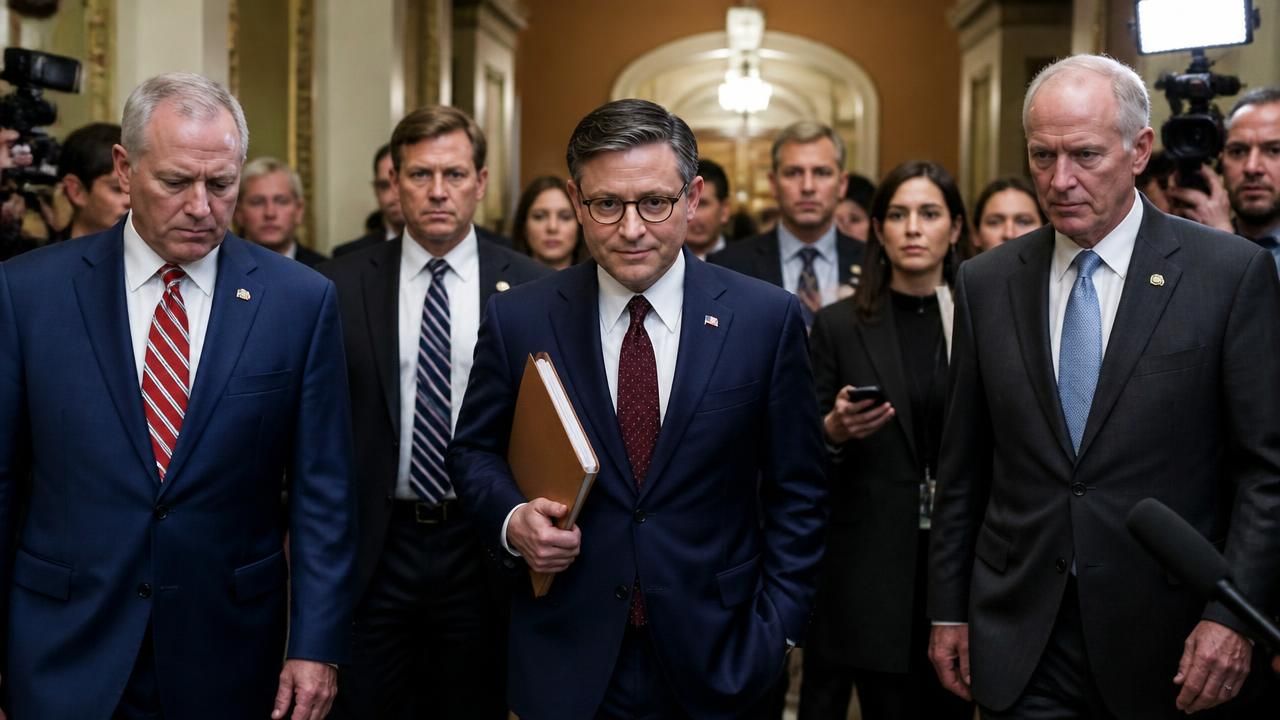
The U.S. House voted to pass a sweeping, bipartisan Russia sanctions package on Tuesday, clearing the measure for President Trump's signature after a debate that exposed deep Democratic unease about the powers the bill would place in the president's hands. The legislation — formally the Lindsey Graham Sanctions Act, named for the South Carolina Republican who championed it and whom Reuters described in its coverage as the "late" senator — now heads to the White House, where the president's signature would enact some of the most far-reaching economic penalties on Moscow since the war in Ukraine began.
The bill's core purpose, as the New York Times reported, is to choke off financing for Russia's war effort "as attacks intensify." It would impose secondary sanctions on foreign banks, refiners and shippers that facilitate Russian energy exports, and it would authorize punitive tariffs — in some formulations as high as 100 percent — on countries that continue to buy Russian crude.
A Win Built on an Uncomfortable Coalition
The vote was bipartisan in the narrow, friction-heavy sense that defines this Congress: Republicans supplied the bulk of the support, while Democratic leaders fought the measure almost to the floor. The sticking point was not Russia policy but the tariff authority the bill would vest in the president.
As the Times put it, the measure "passed the House over the objections of Democrats who opposed handing President Trump new tariff powers." MSN's framing of the run-up was blunter still — "House Dems face Trump tariff dilemma as major Russia sanctions bill heads to floor" — and CBS News described the final vote as "overcoming opposition from Democratic leaders." That the bill moved anyway reflects an uncomfortable electoral reality: voting against a Russia sanctions bill in 2025 invites an attack ad, however sound the institutional objections.
"House passes Russia sanctions bill, overcoming opposition from Democratic leaders" — CBS News
The result is a measure that is simultaneously a rebuke to Moscow and an expansion of executive economic power — a combination that has left both parties describing the same vote in almost entirely different terms. The Hill and the New York Post emphasized its arrival on the president's desk; Politico and MSN emphasized the tariff fight beneath it.
The India Question
No country outside Russia has more riding on the bill's fine print than India. Indian and international outlets led their coverage with the tariff threat: Fortune India warned of "up to 100% tariffs on India over Russian oil," and India Today billed it as a bill "that could hit India 100% tariffs."
New Delhi has spent three years positioning itself as a strategic partner of the United States while remaining one of the largest purchasers of discounted Russian crude. The sanctions bill would force that contradiction into the open, converting what has been a diplomatic talking point into a live trade question with potentially billions of dollars at stake for Indian refiners.
Ukraine, Diesel and a Fraying Alliance
The vote lands amid fresh friction between Washington and Kyiv. The Tucson-based Arizona Daily Star reported that Trump told Ukrainian President Volodymyr Zelenskyy to stop striking Russian diesel infrastructure — a demand that sits awkwardly beside a sanctions bill explicitly aimed at Russia's oil revenue.
The tension is structural rather than incidental. Lawmakers on both sides have argued that squeezing Russian energy exports is the most direct lever available to degrade Moscow's war financing. The president, meanwhile, has publicly signaled concern that attacks on Russian refining capacity could roil global fuel markets — and that the resulting price spikes would be felt by American voters.
Washington's Broader Muddle
The sanctions vote unfolded against a backdrop of stalled and contested policy on nearly every other front.
- The Fed defied the White House. The Federal Reserve raised its key interest rate for the first time in three years, according to AP's live coverage, and NBC News reported that Trump "lashes out" at the central bank in response — a collision that injects monetary policy directly into the political fight.
- AI legislation is stuck. Politico reported that "Congress [is] in AI deadlock as public fear soars," while a companion Politico story noted that "Trump's AI demands jam Republicans" — a rare case of presidential pressure making a difficult coalition harder rather than easier.
- Direct payments are back on the table. The Twin Cities Pioneer Press reported that Trump "wants to send Americans money," and that "Congress and economists don't seem thrilled with the idea."
- The money is already moving. The Omaha World-Herald reported that Trump- and Musk-aligned super PACs are "unleash[ing] millions to boost Republicans" ahead of the midterms.
Meanwhile, the machinery of election administration remains contested. The New Republic reported that "Trump's war on mail-in ballots could hurt this overlooked voting bloc" — a reminder that even as the House legislates on Moscow, the domestic fight over how Americans vote continues to intensify.
What Happens Now
The bill's fate rests with the president, who must weigh a rare bipartisan foreign policy win against the market and diplomatic disruption the secondary sanctions could cause. India, China and Turkey — all significant buyers of Russian barrels — are watching the implementation rules as closely as Kyiv is.
For Democrats, the vote is likely to be litigated twice: once on substance, over whether Congress should have expanded presidential tariff authority to punish Russia, and once on politics, over whether they can afford to have been seen resisting it. For Republicans, the bill is a deliverable — and, if the tariff authority is used broadly, a precedent they may one day regret handing to a president of either party.
What is not in dispute is the signal the vote sends. After years of sanctions packages that critics called incremental and leaky, the House has now approved a mechanism designed to reach the banks, insurers and shipping networks that keep Russian oil flowing. Whether it works will depend less on the text of the bill than on how aggressively the administration chooses to enforce it.