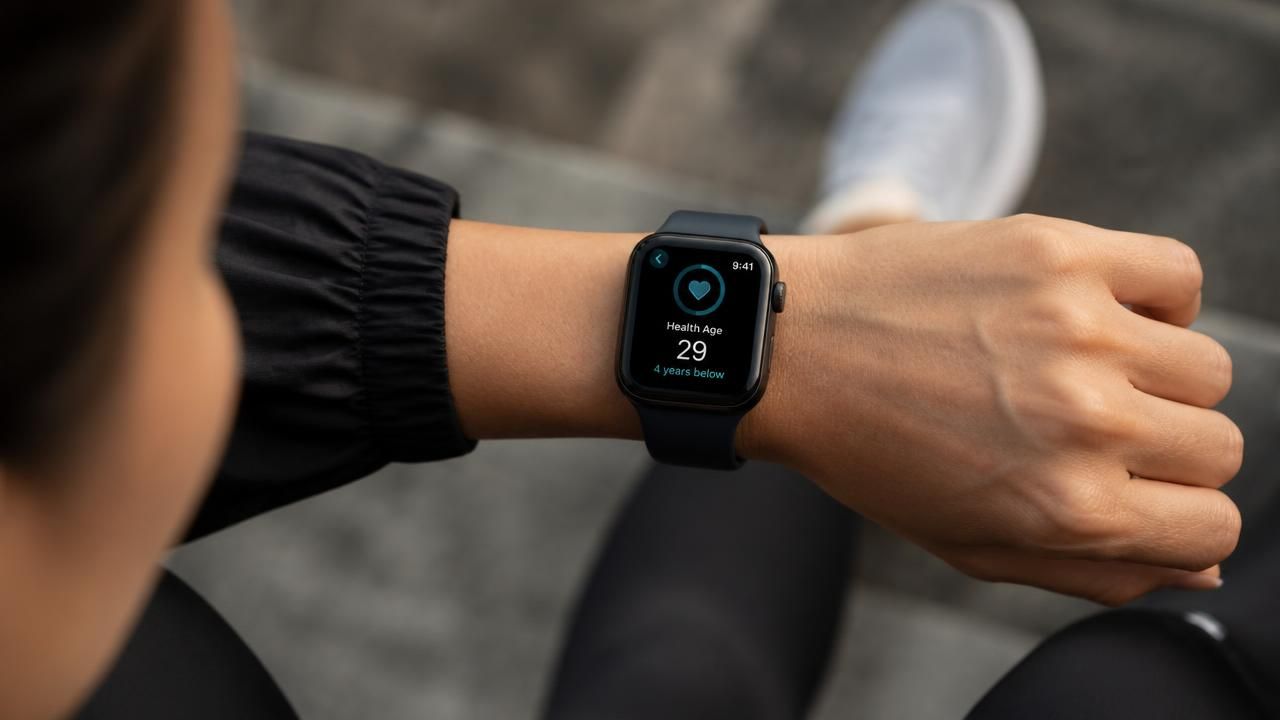
Apple spent much of its recent Apple Watch announcement talking about the body, not the hardware. Alongside a new readiness metric and a redesigned Health app, the company said it will introduce a longevity feature called Health Age later this year — a single figure intended to tell wearers how old their physiology actually looks. The reveal landed poorly in at least one seat in the Steve Jobs Theater. "I let out a distinct 'Noooo!'" writes Victoria Song, a senior reviewer at The Verge, in her weekly Optimizer newsletter.
A familiar pitch, a familiar problem
Health Age is not a new idea so much as a new logo on an old one. Wearable makers have spent the better part of a decade trying to compress the messy, multivariate process of human aging into a score that fits on a watch face. Whoop offers a "Whoop age." Garmin and Fitbit have leaned on fitness age and metabolic-equivalent estimates. Independent labs such as InsideTracker sell biological-age panels built on blood biomarkers. The premise is consistent across all of them: if you invest in sleep, training and recovery, your physiological age should fall below your chronological one, and the number should be your reward.
In practice, the reward often reads as a rebuke. Song's own experience is the anecdote that anchors her critique. Her Whoop age, she says, has run four to five years older than her actual age — an arithmetic contradiction that follows her around. If you are "aging at 0.9 times your age," she asks, how do you end up older than you are? It is a small inconsistency that points at a larger one: the metric is not a measurement of aging so much as a model's opinion about your fitness, sleep and recovery data.
"My villain origin story is my Whoop age." — Victoria Song, The Verge
How the number gets made
Companies rarely publish the full weighting of these algorithms. Broadly, they blend inputs such as resting heart rate, heart rate variability, VO2 max, sleep duration and consistency, activity volume, and sometimes body composition or blood markers. Each is compared against population norms for a given age and sex, then recombined into a single estimate. That estimate is a relative ranking dressed up as a biological fact — and it inherits every bias baked into the reference population.
Researchers who work on aging clocks make a related point. Even the most rigorous epigenetic clocks, built on DNA methylation patterns, are better at predicting population-level risk than at telling any individual how old their body is. Consumer versions swap lab assays for wrist sensor data, which raises the noise floor considerably. A bad night of sleep, a stressful week at work, or a worn-out optical heart-rate sensor can all move the number — which is why these scores tend to swing more than the biology they claim to describe.
Why Apple wants in anyway
The business logic is straightforward. Health features are among the strongest drivers of smartwatch upgrades, and they give Apple a credible claim on the most emotionally loaded question a consumer can ask a device: am I doing okay? A longevity score is sticky, personal, and shareable — the ideal hook for subscription-adjacent features and for encouraging daily engagement with the Health app. Readiness scores, training load and sleep staging have already followed that playbook across the industry.
The risk is the mirror image of the reward. A number that flatters you on a good week can shame you on a bad one, and users who feel misjudged tend to disengage. Song's column captures that failure mode precisely: the feature meant to motivate her instead became the thing she resents. Apple, which has positioned the Watch as a health companion rather than a fitness judge, will need Health Age to feel explanatory rather than evaluative if it wants the feature to survive the first wave of screenshots.
A note on the wider feed
This synthesis was assembled from a six-item tech and general-news feed. Five of those items — Wikinews dispatches on the Luigi Mangione terrorism charge, Elon Musk's return-to-office email to Tesla staff, an interview with Minneapolis mayoral candidate Philip Sturm, a chess career interview with Iranian International Master Dorsa Derakhshani, and Leo Varadkar becoming Ireland's first openly gay elected Taoiseach — returned only automated robot-policy notices rather than article text. They belong to unrelated news cycles and could not be verified or merged from the material supplied, so they are flagged here rather than reported. The Verge's newsletter is the sole source with substantive content in this batch.
What to watch
- Transparency: Whether Apple publishes any methodology for Health Age, or follows Whoop and others in keeping the weighting proprietary.
- Framing: Whether the feature presents a range or trend line rather than a single verdict number — a design choice that could defuse much of the criticism.
- Regulation: As wellness scores edge closer to clinical claims, expect scrutiny over how such metrics are marketed to consumers.
- Adoption: The real test arrives when users start comparing numbers, and discovering that the same wrist can produce very different ages depending on which app is reading it.