For more than 15 years, one night each autumn has been set aside for the same simple act: stepping outside and looking up. International Observe the Moon Night, NASA's annual global celebration of Earth's nearest celestial neighbor, returns on Saturday, Sept. 19, with events planned from the agency's flagship visitor center in Maryland to university campuses, local astronomy clubs, and community observatories across the United States.
The timing is hardly accidental. Coming months after NASA's Artemis II mission sent four astronauts around the Moon for the first time in more than half a century, this year's observance carries a renewed sense of momentum — and a built-in reason for the public to care about a body many take for granted.
A global night for the Moon
International Observe the Moon Night is designed to be radically accessible. There is no ticket required to participate, no equipment mandated, and no single venue that owns the evening.
International Observe the Moon Night is an annual celebration that brings people together to learn about the Moon and explore our connection to Earth's nearest celestial neighbor.
Since the program began in 2010, participants around the world have marked the occasion through lunar observations, hands-on activities, artwork, music, and community gatherings. NASA positions the event as equal parts science outreach and cultural ritual — a rare moment when professional astronomers, amateur telescope owners, and families with nothing more than a clear sky share the same target.
Artemis II casts a long shadow — and a bright spotlight
The centerpiece of this year's NASA programming will be at the Goddard Space Flight Center Visitor Center in Greenbelt, Maryland, where the celebration runs from 6 p.m. to 9 p.m. EDT. According to the agency, visitors will be able to peer behind the scenes to learn what it took to make Artemis II's journey around the Moon a success, and to discover how Goddard scientists and engineers are advancing understanding of the Moon, the solar system, and beyond.
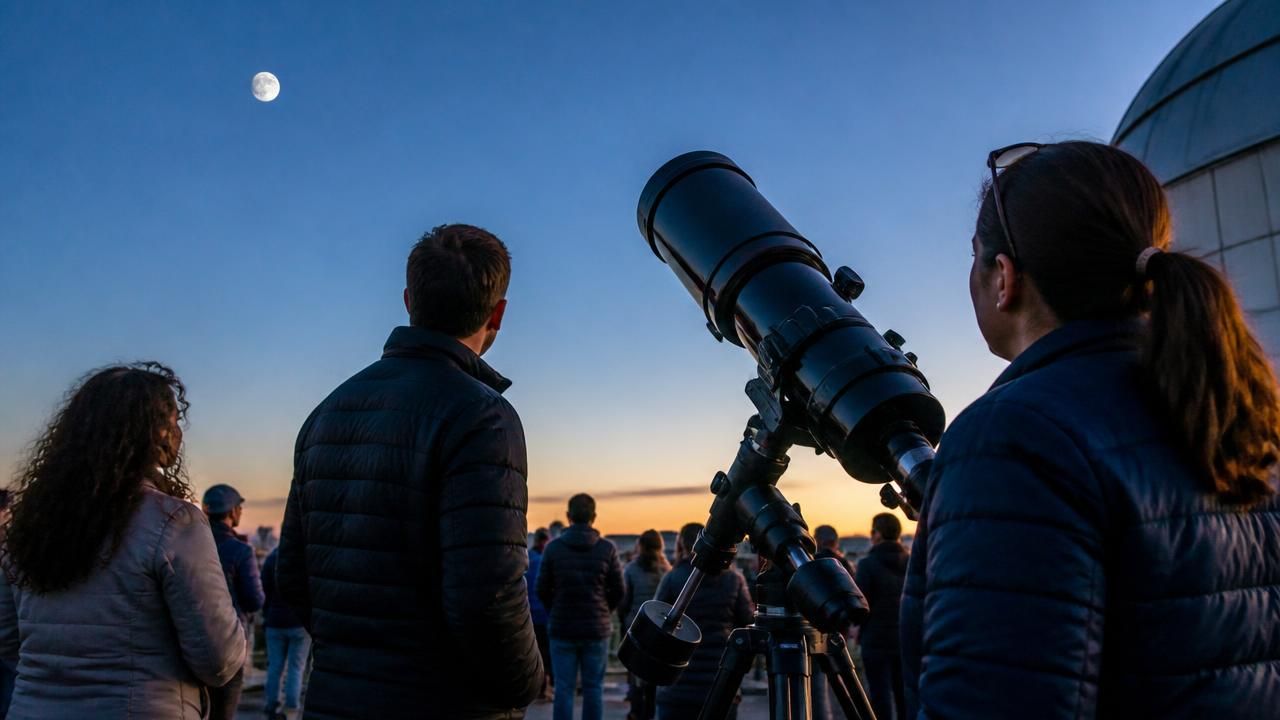
The evening includes interactive hands-on activities, art and craft stations, and a photo kiosk for selfies. Weather permitting, telescopes will be set up outside for direct lunar viewing — the low-tech payoff at the end of a high-tech story.
NASA's framing is telling: the agency is not merely inviting the public to admire the Moon, it is using the event to build public literacy around the Artemis program, which aims to return humans to the lunar surface and establish a sustained presence there. In that sense, Observe the Moon Night functions as both celebration and recruiting tool.
From Greenbelt to Boulder to Bellville
Local outlets across the country have framed the same evening in strikingly different terms, reflecting how the story lands outside NASA's communications apparatus.
In Colorado, the Daily Camera reported that CU Boulder will host its own Observe the Moon Night on Sept. 19, extending the celebration into academia. In Ohio, the Mansfield News Journal highlighted a free moon-viewing event at the Warren Rupp Observatory in Bellville, where the appeal is straightforward: a chance to see the lunar surface up close through serious hardware. In Arizona, the Phoenix Astronomical Society is staging a star party, while outlets in California's Central Valley have compiled lists of events spread across the region. Farther south and east, the Islander News promoted a "Park After Dark" program that folds lunar observing into a broader nature-and-night-sky experience, and an Athens-area stargazing event is pairing the Moon with Saturn — an added attraction for anyone who has never seen the ringed planet through a telescope.
The range of coverage says something about the event's durability. For national outlets and NASA itself, Sept. 19 is a hook for a story about human spaceflight and scientific ambition. For local newsrooms, it is a service item: a free, family-friendly evening that requires no expertise, no travel, and no expense.
Why the Moon, why now
The Moon has quietly become one of the busiest destinations in space exploration. NASA's Artemis campaign, China's lunar program, and a growing roster of commercial landers are all targeting the surface. Meanwhile, September skywatching guides from NASA note that the month offers favorable conditions for lunar observation, with long evening hours and the Moon at accessible phases for casual viewers.
Scientists also point to a subtler value in events like this one. The Moon is a Rosetta stone for the solar system — its cratered surface preserves a record of bombardment that Earth's atmosphere and tectonics have long erased. Every amateur photograph and backyard observation adds to a culture of public engagement that planetary science depends on for funding and for future talent.
How to take part
- Find an event near you. NASA maintains a global event registry, and local astronomy clubs, universities, museums, and parks frequently host free public viewings.
- Go outside and look. No telescope is required. Binoculars reveal craters and maria; the unaided eye can trace the Moon's phases.
- Attend a NASA-hosted celebration. The Goddard Visitor Center event runs 6 p.m. to 9 p.m. EDT on Sept. 19 with activities and outdoor telescopes.
- Check the weather. Cloud cover is the only real obstacle — outdoor telescope viewings are contingent on clear skies.
- Share the view. Many events include art, music, and photography components, and participants worldwide post their observations online.
What unites the disparate local listings is a premise NASA has bet on for more than a decade: that the shortest path between a person and the cosmos is the nearest object in it. On Sept. 19, that distance will feel, for one evening, a little shorter.