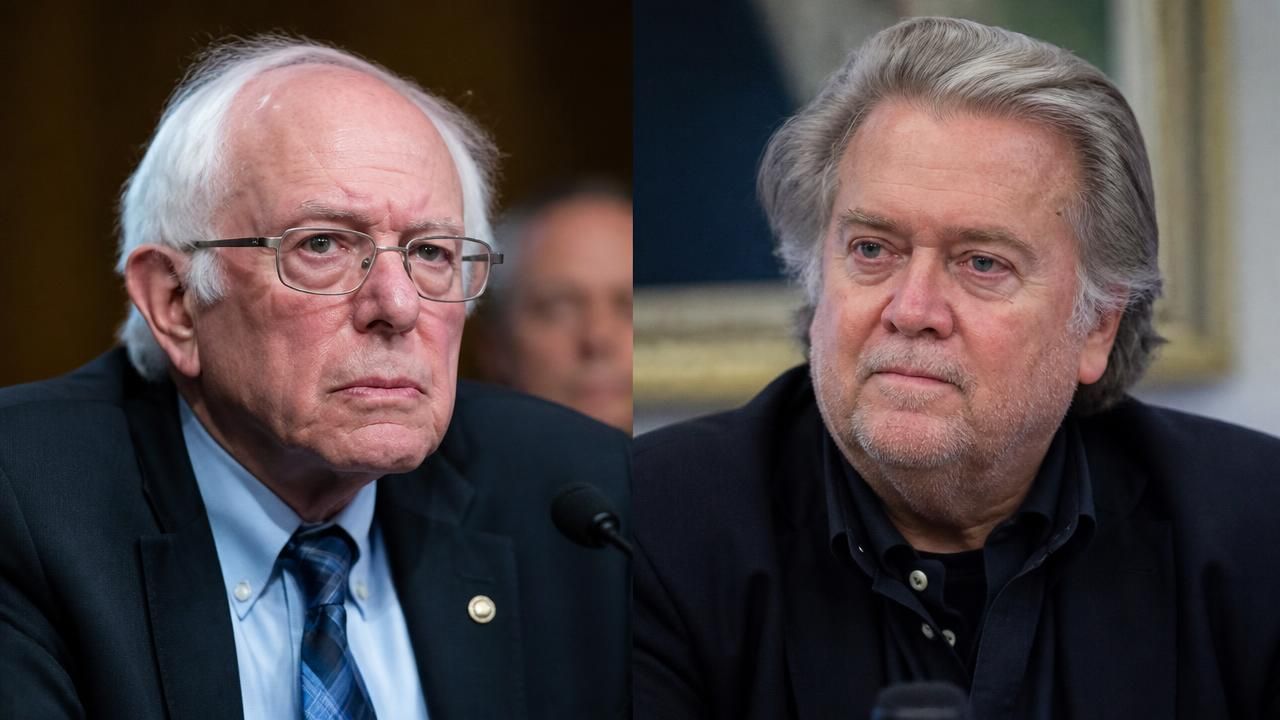
Two of the most polarizing figures in American politics are set to stand on the same stage — and for once, they appear to agree on something. Sen. Bernie Sanders, the Vermont independent and democratic socialist, and Steve Bannon, the former White House chief strategist turned podcaster and MAGA firebrand, will appear together at the "Pro-Human Assembly" in Washington, D.C., an event designed to push Congress to move faster on curbing the risks of artificial intelligence.
The pairing, first reported by NPR and confirmed in advance notices circulating among Washington policy circles, represents one of the strangest political alliances of the year — a convergence of the populist left and the nationalist right around a shared suspicion of concentrated technological power.
An Unlikely Alliance Built on a Shared Anxiety
The organizers' stated goal is blunt: to convince lawmakers that AI is moving faster than the rules meant to govern it. According to NPR, the assembly is intended to pressure Congress "to work faster to curb the impact of AI," drawing together skeptics from across the ideological spectrum who rarely find themselves in the same room, let alone on the same side of an issue.
"The poles of U.S. politics are coming together over AI."
That framing, used by NPR to describe the event, captures the unusual dynamic. Sanders has spent years warning about automation's effect on workers, the concentration of wealth among a handful of technology giants, and the unchecked deployment of algorithmic systems in hiring, housing, and health care. Bannon has approached the same industry from a different direction, casting Big Tech as an unaccountable elite that threatens ordinary Americans' livelihoods, national sovereignty, and — in his telling — the country's cultural cohesion.
NBC News covered the event as a live-updating story, framing it as a gathering of "AI skeptics" — a label that captures a coalition that includes labor advocates, civil-libertarians, religious conservatives, artists, and disaffected technologists.
Why Washington Is the Target
The choice of Washington as the venue is deliberate. For all the sound and fury around artificial intelligence over the past three years, Congress has passed no comprehensive AI legislation. The European Union moved first with its AI Act, a sweeping risk-based regulatory framework that began taking effect in stages. In the United States, by contrast, the federal response has largely consisted of executive orders, agency guidance, voluntary commitments from major labs, and the release of policy frameworks such as the White House's AI Action Plan.
The legislative vacuum has been filled from the other direction: state legislatures have introduced more than a thousand AI-related bills in a single year, producing a patchwork of rules on deepfakes, algorithmic discrimination, and chatbot safety that industry groups warn is unworkable. Meanwhile, a proposed moratorium on state AI enforcement became one of the most fiercely lobbied provisions in federal budget negotiations — a fight that illustrated how quickly the issue has become a proxy war over who writes the rules.
The Substance Behind the Slogans
While the event's marquee names guarantee attention, the policy menu on the table is broader than either figure's personal brand:
- Worker protections: demands for transparency when AI systems are used in hiring, scheduling, and surveillance, and for advance notice of automation-driven layoffs.
- Liability and accountability: proposals to hold developers and deployers responsible when models cause demonstrable harm, from medical misdiagnosis to financial fraud.
- Child safety: growing pressure over companion chatbots and recommendation algorithms that critics say are engineered to maximize engagement among minors.
- Concentration of power: antitrust scrutiny of the handful of firms that control compute, data, and the most capable frontier models.
- Existential risk: calls — from researchers as well as activists — for pre-deployment testing and, in some quarters, a pause on the most advanced systems.
The Industry Pushback
Technology companies and their allies in Congress have argued that aggressive regulation would hand an advantage to China and slow the deployment of AI tools in medicine, education, and scientific research. Industry lobbying groups have spent heavily to shape federal legislation, favoring provisions that preempt state rules and emphasize security and national competitiveness over liability and labor protections.
That argument has powerful backing in the current political environment, where AI leadership is routinely framed as a matter of geopolitical strategy. The result is a debate that pits two competing anxieties against each other: the fear that AI is being deployed too fast, and the fear that America is falling behind.
How the Story Is Being Framed
The coverage itself reveals how unusual the moment is. NPR and its syndication partners, including KRWG, led with the odd-couple optics, emphasizing that the ideological poles of American politics are converging. The New York Times framed the event more broadly, reporting that "political figures from Bernie Sanders to Steve Bannon" are sounding alarms on AI — a headline that treats the pairing not as a curiosity but as evidence of a genuine, cross-cutting political movement. NBC News opted for live coverage, positioning the conference as a developing political event rather than a one-off spectacle.
Each framing carries an implicit argument: that the story is about personalities, about a policy movement, or about an emerging electoral coalition. In practice, it may be all three.
What to Watch
The practical question is whether a stage shared by Sanders and Bannon produces anything more than headlines. Their constituencies overlap on almost nothing else — not on taxes, not on immigration, not on foreign policy — which makes sustained legislative cooperation improbable and a one-issue coalition fragile.
But the pair's appearance also signals something durable: public anxiety about artificial intelligence is not breaking down along the usual partisan lines. Polling has consistently shown broad, bipartisan concern about AI's effect on jobs, privacy, and the reliability of information. If that anxiety finds an institutional home in Congress, the Pro-Human Assembly may be remembered less for who shared the stage than for the coalition it helped formalize.