When a Promise Meets a Bureaucracy
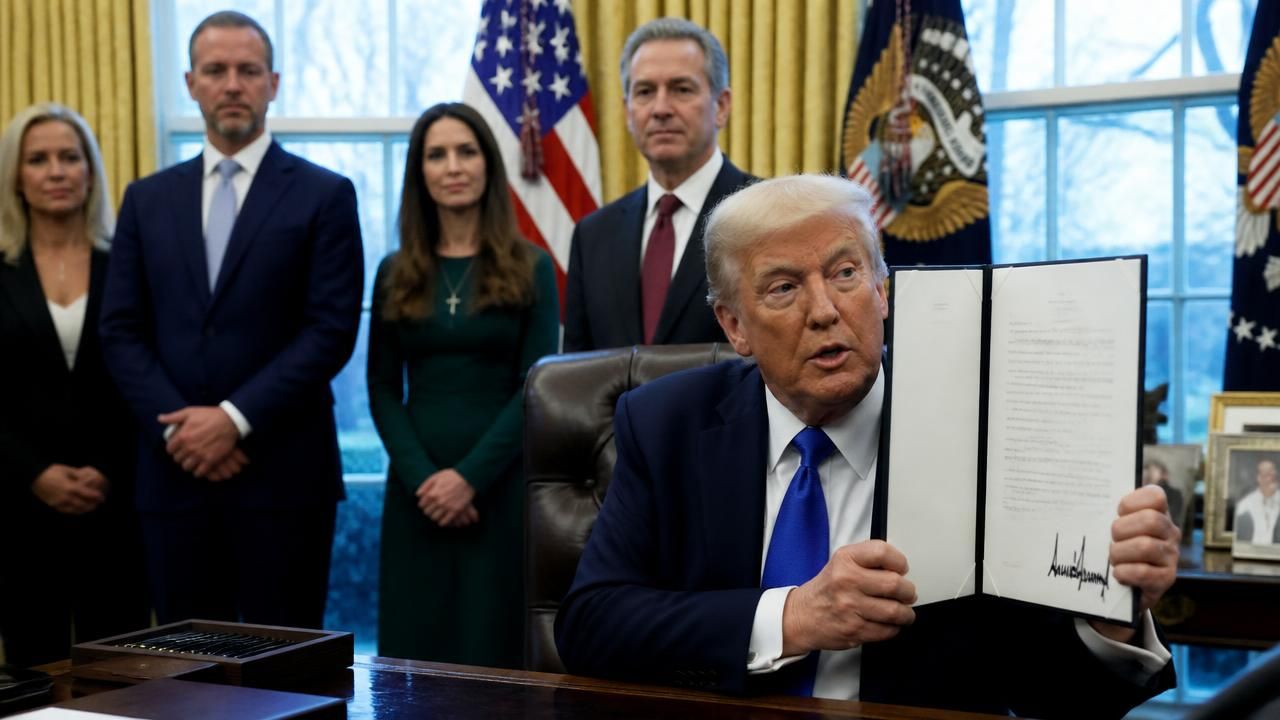
When President Donald Trump announced in February 2025 that the United States would accept Afrikaners from South Africa as refugees, many white South Africans who believed they were victims of racism in their country thought their prayers had been answered. Trump had falsely claimed that South Africa’s white minority faced a “white genocide” and that a new land expropriation law was seizing their property. The offer of refugee status seemed like a lifeline. But in the months since, dozens of applicants have been rejected, leaving many dismayed and confused about why they would be left behind in a country Trump himself had described as dangerous for them.
The rejections have exposed a widening gap between the political rhetoric that surrounded the program and the legal realities of the US refugee system. The Guardian’s reporting centered on the human cost: applicants who uprooted their lives, sold belongings, and waited for approval, only to receive denials that often came without detailed explanations. Many had believed the program was designed for them. Now they are asking whether the promise was ever meant to be kept at scale.
How the Program Became a Racial Flashpoint
The New York Times framed the initiative in stark terms: “How Trump Turned America’s Refugee Program Into a Pathway for White People.” That headline captures a central criticism. The US refugee program has historically been used to protect people fleeing persecution based on race, religion, nationality, political opinion, or membership in a particular social group. Under Trump, however, the broader refugee system was largely suspended, even as a special channel was created for Afrikaners. The contrast has led critics to argue that the administration is not simply prioritizing a persecuted group but reordering the program around race.
MSN’s coverage asked the question bluntly: “Trump’s refugee policy: Only white South Africans welcome?” The implication is that the administration’s professed concern for persecuted white South Africans sits awkwardly alongside its restrictions on refugees from Africa, the Middle East, and other regions. CNN, meanwhile, went inside the administration’s scramble to get white South Africans to the US as refugees, reporting on the political pressure and logistical hurdles that have shaped the effort. Together, the outlets describe a program that was announced with sweeping moral language but has been uneven, opaque, and legally contested in practice.
The Claim at the Center
Trump and some of his allies have promoted the idea that white South Africans, particularly Afrikaner farmers, are victims of a targeted genocide. That claim is false. South Africa has high rates of violent crime, and farm attacks do occur, but researchers and fact-checkers have repeatedly found no evidence of an organized campaign to exterminate white people. South Africa’s government has rejected the genocide allegation. The country’s Expropriation Act, signed in 2025, allows the state to expropriate land in certain circumstances, including with nil compensation, but it does not authorize mass seizure of white-owned property. It is aimed at addressing one of the world’s most unequal land distributions, a legacy of apartheid and centuries of dispossession.
White South Africans make up roughly 7 to 8 percent of the population but own a disproportionate share of agricultural land. Inequality, unemployment, and crime affect Black, coloured, and Indian South Africans at far higher rates than white South Africans. That context does not erase the concerns of white South Africans who have experienced violence or discrimination, but it complicates the claim that they are a persecuted group in the legal sense required for refugee status.
Legal Hurdles and Confusion
To qualify as a refugee under US law, an applicant must demonstrate a well-founded fear of persecution on account of a protected characteristic. General insecurity, crime, or economic hardship is not enough. Some Afrikaner applicants may have strong individual cases, but many others appear to have been rejected because they could not meet that standard. The Guardian’s reporting suggests that some applicants believed the program would be a fast track. Instead, they encountered interviews, document requests, and denials that felt arbitrary. The confusion has been compounded by the fact that the broader US refugee program remains severely curtailed, making the Afrikaner channel an exception that is difficult to administer fairly.
“I believed the hype,” one applicant told The Guardian, a phrase that has become emblematic of the disappointment.
CNN’s reporting on the administration’s scramble indicates that officials have faced pressure to deliver results quickly, even as legal requirements and logistical capacity slow the process. That tension helps explain why a program sold as a rescue mission has produced so many rejections.
Competing Frames and Broader Implications
Each outlet approaches the story through a different lens. The Guardian focuses on the lived experience of rejected applicants, giving voice to people who feel abandoned by the very leader who claimed to champion them. The New York Times emphasizes the racial transformation of US refugee policy, placing the Afrikaner program in the context of a broader nativist turn. MSN highlights the exclusionary logic: if only white South Africans are welcomed, what does that say about the values that supposedly guide American asylum and resettlement? CNN documents the political and bureaucratic machinery behind the initiative, showing how a headline-grabbing promise becomes a messy implementation problem.
Supporters of the program argue that Afrikaners face real threats and that the US has a moral obligation to help them. They point to farm murders, hate speech, and a hostile political climate. Critics respond that those problems, while serious, do not amount to genocide and that using refugee law to benefit one racial group undermines the system’s legitimacy. The dispute is not only about South Africa. It is about who the United States considers worthy of protection.
What Happens Next
For the applicants who have been rejected, options are limited. Some may appeal. Others may seek visas through other channels or look to third countries. The South African government has condemned the genocide narrative but has also said it will not stand in the way of citizens who wish to leave. Afrikaner advocacy groups are divided: some praise Trump’s offer, while others worry it exaggerates their vulnerability and fuels racial polarization.
The program’s future is uncertain. Legal challenges could force the administration to clarify its criteria. A change in US leadership could end the special channel altogether. What remains clear is that the gap between Trump’s rhetoric and the refugee system’s reality has left many white South Africans in limbo. They were told they were fleeing a genocide. Instead, many are learning that a political promise is not the same as a legal protection.