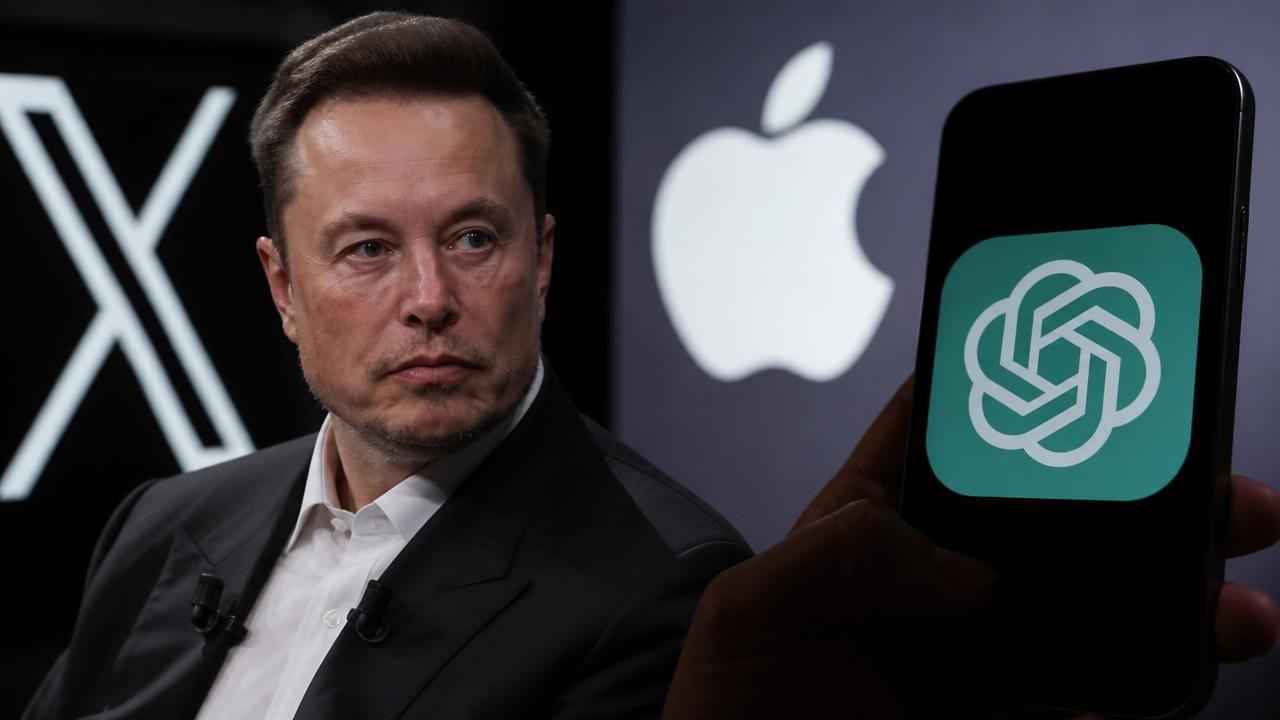
Elon Musk’s legal campaign against Apple over ChatGPT has ended—at least for Apple. X Corp. and SpaceXAI have dropped their antitrust lawsuit against the iPhone maker, according to reports from CNBC and Seeking Alpha, resolving claims that Apple’s integration of OpenAI’s chatbot gave the two companies an illegal monopoly over AI on Apple devices. But the retreat is only partial. The same plaintiffs are keeping OpenAI in the crosshairs, leaving Sam Altman’s company as the remaining defendant in a case that could expose the inner workings of one of the most consequential AI partnerships in tech.
The dispute dates to 2024, when Apple announced it would weave ChatGPT into iPhone features. Musk immediately attacked the deal, calling it an agreement to let OpenAI install “creepy spyware” on users’ devices. The following year, his companies sued, alleging that the Apple-OpenAI partnership gave the firms a monopoly over Apple users’ AI prompts and harmed competition in both smartphone and chatbot markets. Musk also fixated on App Store rankings, claiming his own chatbot, Grok, was being illegally blocked from reaching the top spot. “Apple is behaving in a manner that makes it impossible for any AI company besides OpenAI to reach #1 in the App Store, which is an unequivocal antitrust violation,” Musk wrote last August.
Apple Escapes, OpenAI Stays
The filings reported this week resolve the antitrust claims against Apple. CNBC framed the move as Musk’s X Corp. and SpaceXAI resolving their lawsuit against the iPhone maker. Seeking Alpha was more precise: the companies dropped Apple from the case but “keep OpenAI in legal crosshairs.” Ars Technica focused on the consequence for OpenAI, noting that the company is “stuck fighting Musk antitrust suit after Apple finds a way out.” Yahoo Finance described OpenAI as “left exposed after Apple’s surprise legal break.”
The differing headlines capture the same shift. Apple, which had been accused of colluding with OpenAI to entrench ChatGPT on its platforms, has been removed from the antitrust action. OpenAI, which Musk accused of benefiting from an illegal distribution advantage, remains a defendant. Terms of Apple’s exit were not disclosed in the reports, and it is unclear whether the dismissal involved a settlement, a procedural maneuver, or a strategic decision by Musk to narrow the case. What is clear is that the legal battlefield has contracted: Apple is no longer in the line of fire, while OpenAI is.
That matters because the case goes to the heart of how AI services reach consumers. Apple’s ecosystem—iPhones, iPads, and the App Store—is one of the world’s most powerful distribution platforms. A default or deeply integrated AI assistant can shape consumer habits, data flows, and competitive dynamics for years. Musk’s original complaint alleged that Apple and OpenAI conspired to make ChatGPT the default beneficiary of Apple’s AI features while making it impossible for rivals like Grok to compete on equal terms. OpenAI has consistently denied wrongdoing, and Apple has defended its right to choose partners and curate its App Store.
A Separate Trade-Secrets Fight
As the antitrust case narrows, a second legal front has opened—and it is already spilling onto social media. Apple has accused OpenAI of destroying evidence in a trade-secrets lawsuit, according to reports. The specifics of that suit remain murky from the available sources, but the allegation is serious: it suggests Apple believes OpenAI failed to preserve documents or communications relevant to claims that it misappropriated confidential information. Musk seized on the development. In a post on X, he mocked Altman, saying, “Leopard cannot change its spots.” The two executives also sparred publicly on X after Apple filed the OpenAI lawsuit, according to MSN, adding a personal dimension to a corporate dispute.
“Apple is behaving in a manner that makes it impossible for any AI company besides OpenAI to reach #1 in the App Store, which is an unequivocal antitrust violation.” — Elon Musk
The public back-and-forth is characteristic of Musk, who has turned X into a platform for both corporate messaging and personal combat. But it also underscores how high the stakes have become. OpenAI is now simultaneously defending against Musk’s antitrust claims and Apple’s trade-secrets allegations, even as it navigates a broader industry race to embed generative AI into every device and service. Apple, meanwhile, has extracted itself from one lawsuit while pursuing another—a reminder that partnerships in the AI era can curdle into litigation.
What Comes Next
For OpenAI, the immediate challenge is the remaining antitrust case. If the court allows the suit to proceed, discovery could force disclosures about the Apple-OpenAI agreement, App Store ranking algorithms, and any internal discussions about promoting or demoting rival AI apps. That could be uncomfortable for both OpenAI and Apple, even if Apple is no longer a defendant. Antitrust claims of this kind are difficult to prove: plaintiffs must show that the defendants had market power and engaged in exclusionary conduct that harmed competition. Musk’s “monopoly on AI prompts” theory is novel, but it may resonate with regulators already scrutinizing Big Tech’s control over AI distribution.
The dropped claims against Apple do not mean the fight is over. They mean it is now more focused. X Corp. and SpaceXAI have chosen to keep OpenAI in their sights, while Apple’s separate trade-secrets suit adds another layer of legal risk. And the public sniping between Musk and Altman shows no sign of cooling. In the battle over who controls the gateway to AI on mobile devices, the courtroom is only one arena—and the docket is not getting shorter.