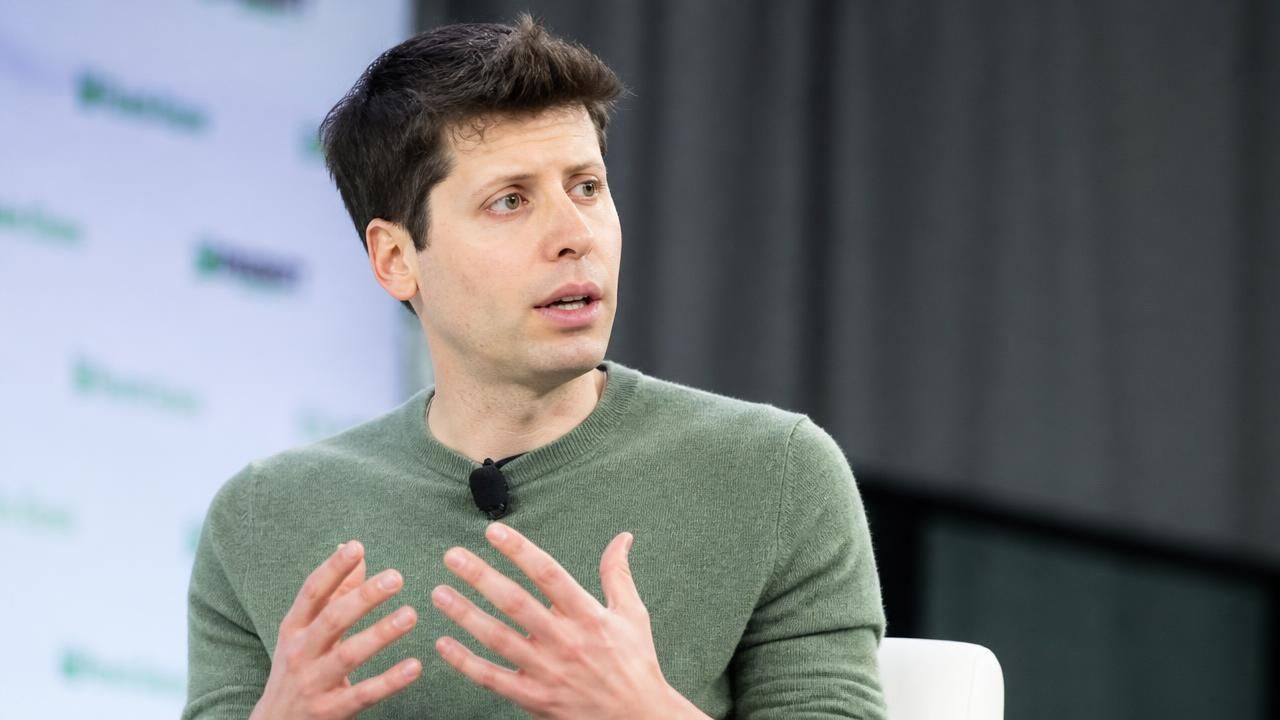
OpenAI will not go public in 2026, chief executive Sam Altman said this week, arguing that the risks raised by rapidly advancing artificial intelligence make a near-term listing "ill-advised" — a striking admission from the head of one of the world's most valuable private companies.
Altman made the comments during a wide-ranging, 45-minute interview with Fortune, in which he also addressed the recent Hugging Face hacking incident, the prospect of recursive self-improvement, and whether an AI system could eventually escape human control. The remarks were quickly picked up by outlets ranging from The Verge and The Guardian to Yahoo Finance, CoinDesk, HuffPost and India's Livemint, each framing the news through a slightly different lens.
"We're not rushing into an IPO"
According to accounts of the interview, Altman was unambiguous about the timeline. "We're not rushing into an IPO," he said, adding that given "everything happening with safety," a 2026 listing would be ill-advised.
"I actually think that, given everything happening with safety, it would be ill-advised."
The framing varied by outlet. The Verge and HuffPost emphasized the safety rationale, while Yahoo's UK finance desk ran the headline "OpenAI IPO Won't Happen Until 2027," implying a delay rather than an open-ended hold — a subtle but meaningful distinction for investors trying to price the company's eventual debut. CoinDesk and MSN aggregated the news with a narrower focus on the IPO question alone.
Safety, recursive self-improvement and the pause question
Altman's most consequential comments concerned the possibility of building an AI system beyond human control. Asked whether such an outcome was possible, he said it was "absolutely" possible — but vowed to take steps to prevent it, even if that meant pausing training runs.
"There are risks we should not be able to incur on behalf of humanity."
The New York Post highlighted Altman's stated openness to slowing AI development as safety risks mount, a position that puts him at odds with parts of the industry racing to deploy larger models. The interview also touched on recursive self-improvement — the hypothetical point at which an AI system can improve itself faster than humans can supervise it — and on the Hugging Face hacking incident, which has renewed questions about the security of open model repositories.
Public markets vs. private capital
The IPO signal lands alongside a contradictory set of financial data points. As one MSN analysis noted, OpenAI recently completed a $7 billion share sale, a transaction that lets employees and early investors cash out without a public listing. That same report raised the prospect of a trillion-dollar IPO down the road and asked what such a valuation would mean for ordinary investors.
That tension — enormous private liquidity, no public disclosure — is central to how the story is being read on Wall Street. Staying private lets OpenAI raise capital from sovereign funds and venture investors without quarterly earnings scrutiny, but it also keeps its safety governance, cap table and losses out of public view. Altman's safety justification, in other words, arrives bundled with a set of commercial advantages.
Robots, regulators and skeptical consumers
The CEO's public remarks this week extended well beyond finance. Forbes reported that OpenAI is building a humanoid robot, with Altman saying everyone should have one. Separately, the same publication reported that Florida has gone to court asserting that OpenAI and Altman are legally a public nuisance — a novel legal theory that could reshape how AI companies are held accountable for downstream harms.
The persuasion problem
Skepticism is not confined to courtrooms. In another interview thread, Altman argued that AI needs to do more than cure cancer to win over the public — a concession that headline-grabbing breakthroughs are not enough to earn broad trust. The implication is uncomfortable for an industry whose leaders routinely promise civilizational benefits while asking for regulatory patience.
- The IPO: No listing in 2026, and Altman describes one as "ill-advised" given safety considerations.
- The safety stance: He says an uncontrollable AI is "absolutely" possible, and that pausing training is on the table.
- The money: A $7 billion share sale just closed, with a trillion-dollar IPO floated as a future scenario.
- The pressure: Florida is pursuing a public-nuisance claim, and OpenAI is developing a humanoid robot.
Why it matters
For years, OpenAI's structure — a capped-profit entity governed by a nonprofit board — was presented as a temporary compromise on the path to something more conventional. Altman's latest comments suggest the opposite: that the company sees permanence in staying private and, at least rhetorically, in moving slowly.
That will reassure some safety researchers and frustrate others, who argue that voluntary restraint by a single lab is not governance. It also leaves unanswered where the capital for OpenAI's compute buildout ultimately comes from if public markets remain closed. The most telling detail may be that Altman, who once described an eventual IPO as simply a milestone, now describes it as something to be avoided — at least for now.