Laika has unveiled the first full trailer for Wildwood, and the reaction across the film and tech press has been unusually uniform: this is what handcrafted animation looks like when a studio refuses to compromise. The Portland-based animation house behind ParaNorman, The Boxtrolls and Kubo and the Two Strings is returning to theaters next month with its most ambitious stop-motion project to date — and it is doing so at a moment when the industry's attention is fixed firmly on generative AI.
A Trailer Built for the Big Screen
The footage debuted to a chorus of early praise. The Verge, which caught an early look during a packed schedule at the Toronto International Film Festival, described the film as looking "so smooth" — a notable compliment for a medium in which every frame is physically manipulated by hand. Mashable called the trailer "the most stunning thing you'll see today," while UPI framed it as a faithful, emotionally charged adaptation that "brings novel to life."
Yahoo's coverage zeroed in on the emotional register, calling the trailer "an emotional trip into a fantasy world," and Animation Magazine headlined its piece simply: "LAIKA's 'Wildwood' Full Trailer Takes Flight." Several aggregators noted the trailer's visual grammar resembled "a fusion of two fantasy masterpieces" — a nod to the film's blend of epic quest structure and intimate fairy-tale imagery.
Making stop-motion today feels like a quiet act of rebellion.
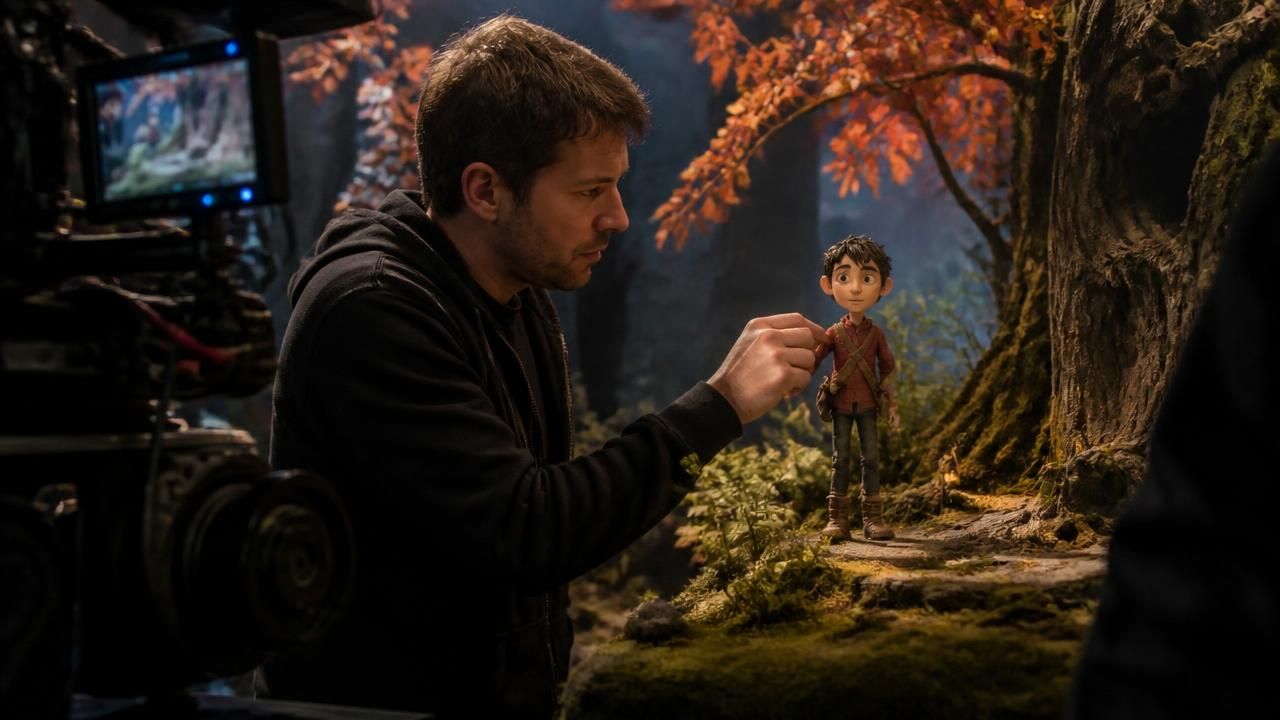
That line, delivered by director Travis Knight during an extended preview at the Annecy International Animation Film Festival and reported by Cartoon Brew, has become the de facto thesis statement for the film's rollout. Knight's framing is deliberate. As AI-generated imagery floods trailers, concept art and marketing materials, Laika's insistence on puppets, armatures and practical lighting has become a form of positioning as much as a craft choice.
The AI-Era Subtext
MSN's coverage put it bluntly: "Laika Officially Doubles Down on Stop-Motion in the AI Era." Mashable went further, pitching a behind-the-scenes featurette as "the perfect antidote for AI content." The subtext is impossible to miss. Where much of the current conversation around animation concerns what machines can generate, Laika's marketing is emphasizing what only human hands can build — and how long it takes.
That contrast has given Wildwood an unexpected cultural charge. The studio's films have grown steadily more technically sophisticated over the past decade, and early footage suggests Wildwood continues that arc with denser environments, more expressive character rigs and more fluid camera work than anything Laika has previously attempted in the medium.
A Portland Story, Told by Portlanders
The film adapts Colin Meloy's 2011 illustrated novel, a fantasy epic set in a fantastical version of Portland, Oregon — a city Laika has called home since its founding. Meloy, best known as the frontman of The Decemberists, wrote the book with illustrations by Carson Ellis, and its Pacific Northwest identity runs through the story's forests, neighborhoods and mythology.
Coverage from regional outlets such as columbian.com highlighted that local resonance, with headlines noting that the trailer is "quintessentially Portland." For a studio that has often built worlds inspired by European folklore and Japanese mythology, Wildwood represents something of a homecoming.
Craft, Conflict and the Cost of Patience
Beyond the visuals, the trailer teases a story that is notably darker than the studio's earlier work: a tale of love, loss and war, as one outlet summarized, centered on a young girl's journey into the Impassable Wilderness to rescue her brother. Director and cinematographer commentary has emphasized how the film's scale demanded new approaches to staging action and depth within a physical set.
The production timeline underscores that ambition. Stop-motion of this scale moves at a pace measured in seconds per week, and Laika's approach — building practical sets, shooting on rigs, then augmenting with digital effects rather than replacing them — remains among the most labor-intensive pipelines in commercial filmmaking.
What to Watch For
- Critical reception: Festival buzz is strong, but wide release will test whether handcrafted spectacle still draws mainstream audiences.
- Industry signaling: A commercial success for Wildwood would strengthen the case for practical animation at a time when studios are weighing AI-assisted workflows.
- The Portland factor: Local identity could become a meaningful part of the film's marketing identity.
Why It Matters
The coverage across outlets — from tech-leaning publications like The Verge to animation trade press like Cartoon Brew — reveals a shared frame: Wildwood is being read as a statement about how films should be made, not just what they show. Whether that framing holds will depend on the final film. But for now, Laika has achieved something rare in a crowded release calendar: it has made the method itself the story.
Wildwood arrives in theaters next month.