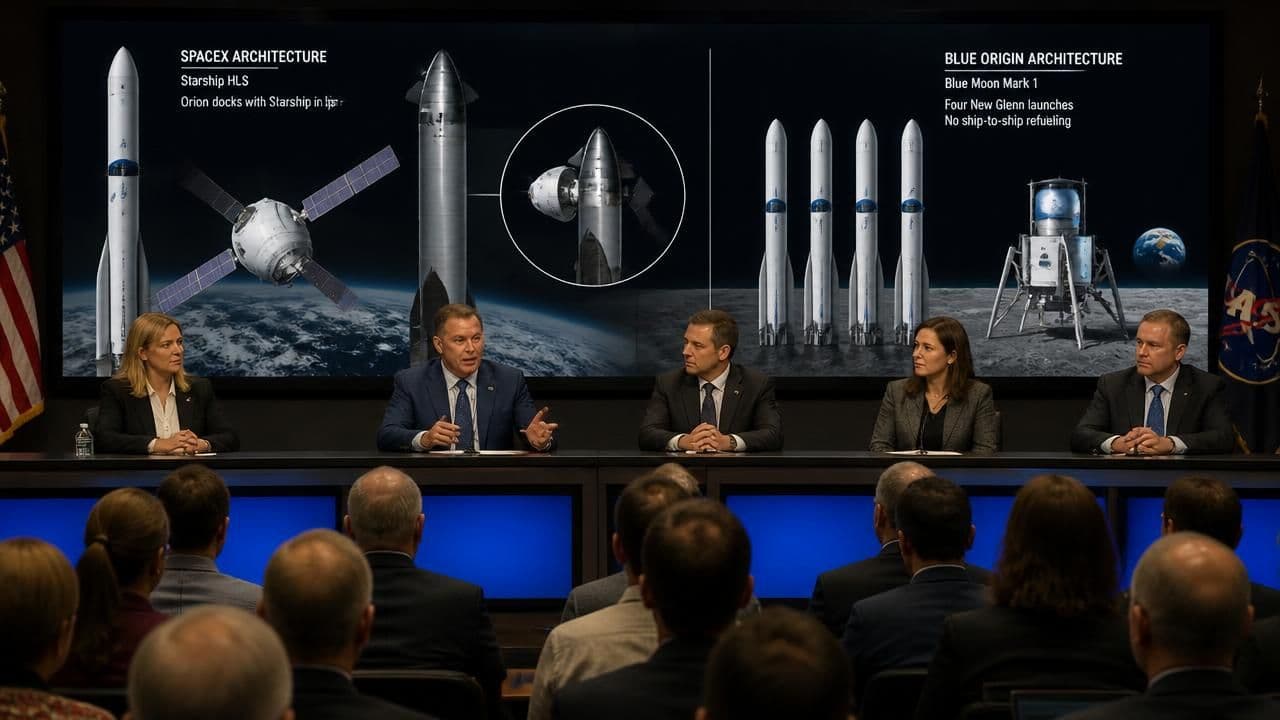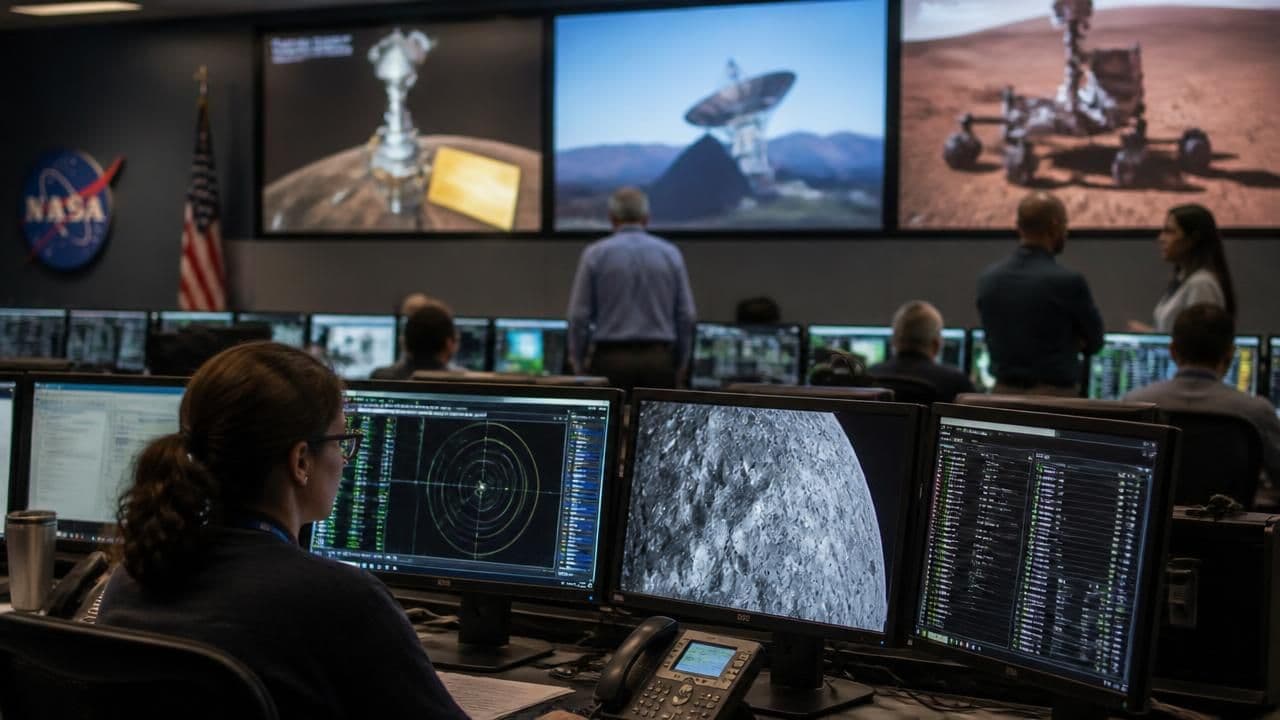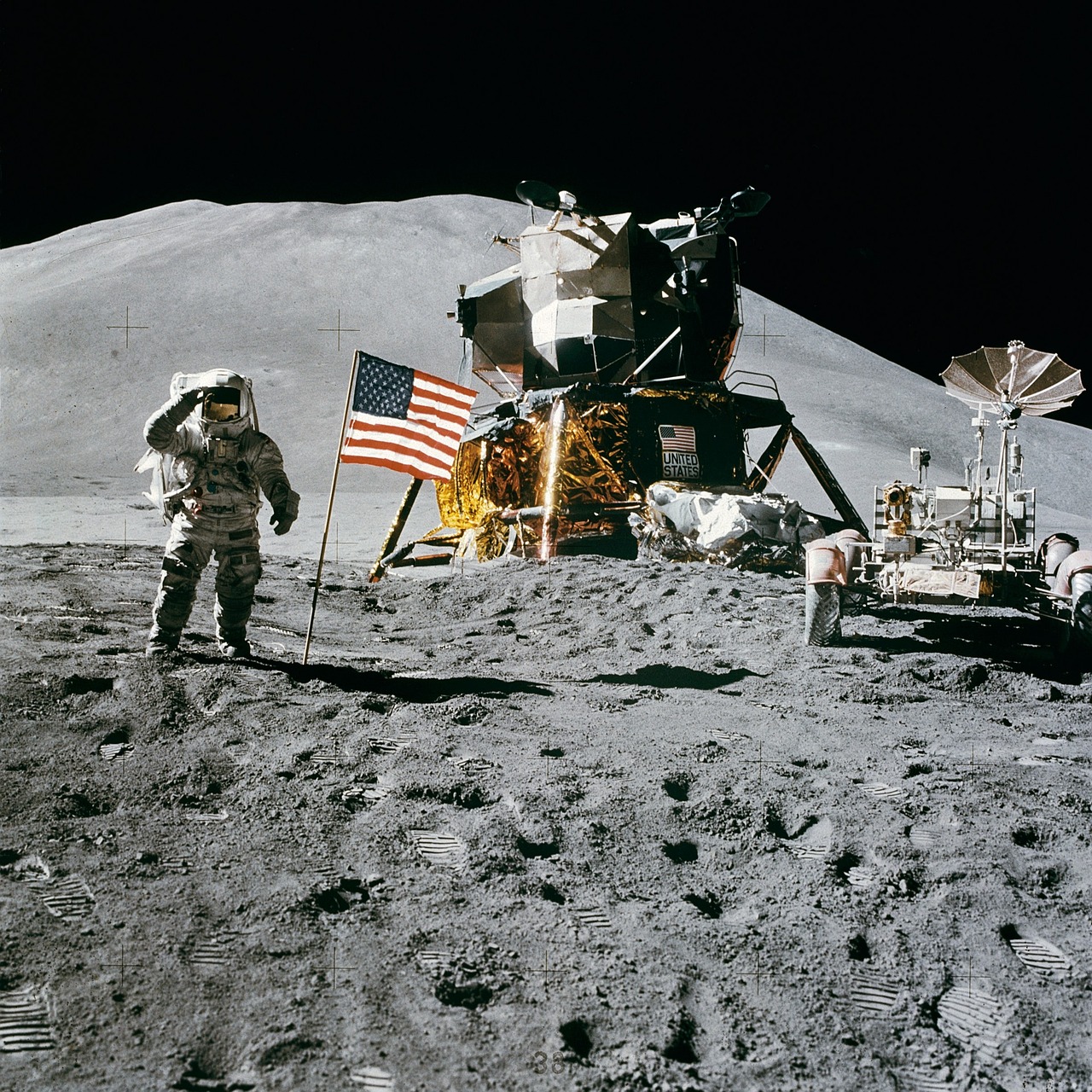
In a sweeping acceleration of its lunar exploration agenda, NASA has unveiled a series of initiatives aimed at turning the Moon into a sustainable human outpost. The agency announced Tuesday a new solicitation for lunar surface infrastructure, selected 41 promising space technologies, awarded a major commercial lunar mission contract, and is exploring nuclear-powered mobility concepts originally designed for Mars. Together, these actions signal a concentrated push to close the capability gaps that stand between humanity and a permanent presence on the lunar South Pole.
Seeking Proposals for Lunar Infrastructure
The centerpiece of Tuesday's announcement is the NextSTEP-3 Broad Agency Announcement Appendix A: Lunar Enabling Infrastructure Accelerator. This solicitation specifically targets the technologies required to generate power, extract oxygen from regolith, and produce construction materials directly on the lunar surface. NASA is looking for industry partners to mature and demonstrate capabilities in five critical areas:
- Vertical solar array systems capable of reliable power generation, management, distribution, and energy storage.
- Oxygen extraction from lunar regolith at a usable scale for life support and propellant production.
- In-situ manufacturing tools that can turn local resources into structural elements.
- Advanced nanomaterials production for high-performance components.
- Construction and operational infrastructure for a long-term Moon base.
“NASA is accelerating the development of key technologies and closing critical gaps needed for long-term human exploration at the Moon,” said Greg Stover, director of NASA’s Advanced Research and Technology Division. “Partnering with industry will strengthen the U.S. industrial base as we mature the capabilities and infrastructure needed for a sustainable lunar presence.”
The solicitation is open to U.S. industry and is expected to lead to multiple awards that will fund prototype development and in-space demonstrations. According to NASA, these investments are essential precursors to the Artemis program's long-term goal of establishing a permanent base at the Moon's South Pole, where water ice may be accessible and where solar power is challenging due to long nights and extreme terrain.
Commercial Partnerships Take Center Stage
Alongside the infrastructure solicitation, NASA is engaging commercial partners through separate contracts. In one notable action, NASA awarded Firefly Aerospace a $144 million contract for an accelerated lunar mission. Firefly, a Texas-based company with a growing portfolio of lunar landers, will deliver science and technology payloads to the Moon as part of NASA's Commercial Lunar Payload Services (CLPS) initiative. The mission is expected to demonstrate critical capabilities that support a sustained human presence.
Another company, Mission Space, has been selected by NASA to advance lunar environmental monitoring technology. This contract focuses on instruments and systems that can measure the lunar environment—including radiation, dust, and seismic activity—data that will be vital for designing habitats and protecting astronauts during long-duration stays. While details are scarce, the selection underscores NASA's strategy of distributing lunar development across multiple commercial partners to reduce risk and accelerate innovation.
A Pipeline of New Technologies
In a parallel effort, NASA selected 41 space technologies for future Moon and Mars exploration. These selections span a wide range of early-stage innovations, from advanced propulsion and power systems to robotic construction and life support. Many of these technologies will be matured through ground testing and small flight demonstrations, feeding a robust pipeline that can later be incorporated into lunar infrastructure or deep-space missions.
One intriguing concept involves a nuclear-powered Mars rover originally built for Earth-based testing—potentially repurposed for the lunar surface. The idea, reported by multiple media outlets, suggests NASA is considering using nuclear thermal or nuclear electric propulsion technologies designed for Mars missions to power a rover that can operate in the Moon's permanently shadowed craters. Such a rover could explore resources in extreme cold and dark conditions, making it a valuable complement to solar-powered systems.
Context and Implications
These initiatives represent a significant intensification of NASA's lunar focus. The Artemis program has already landed the first elements of new exploration infrastructure, but the vision of a permanent, self-sustaining base requires far more than rockets and landers. Power generation, oxygen extraction, and materials production are the foundational technologies that will allow astronauts to “live off the land” and reduce dependence on Earth resupply.
The lunar South Pole is particularly attractive for a base because of its potential water ice resources. However, the region presents extreme engineering challenges: prolonged periods of darkness, temperatures that can drop below -230°C, and rugged terrain. The technologies NASA is seeking through this solicitation—especially reliable vertical solar arrays and robust power storage—are designed to address these harsh conditions.
Experts see these moves as a deliberate effort to build a lunar economy before committing to more ambitious human missions to Mars. By leveraging commercial contracts through CLPS, NextSTEP, and similar mechanisms, NASA aims to lower barriers to entry for private companies and accelerate the cycle of innovation. The selection of 41 technologies ensures a broad set of options, while targeted contracts like Firefly's provide early flight opportunities for critical systems.
“Efforts like these are not just about returning to the Moon—they are about learning to stay, and ultimately moving beyond,” said Stover in a press briefing. “Every capability we mature at the Moon brings closer the day when astronauts can work and live on another world with increasing independence.”
As NASA pushes forward on all fronts, the coming years will see a rapid cadence of missions, prototypes, and partnerships. The agency is no longer simply planning—it is procuring, building, and testing at a pace that reflects a new era in space exploration. The lunar South Pole, once an inaccessible frontier, is becoming a proving ground where humanity will write its next chapter in space.
This article was synthesized from multiple announcements and reports, including NASA's official solicitation, media coverage of Firefly Aerospace's contract, Mission Space's selection, and reports on NASA's technology portfolio.