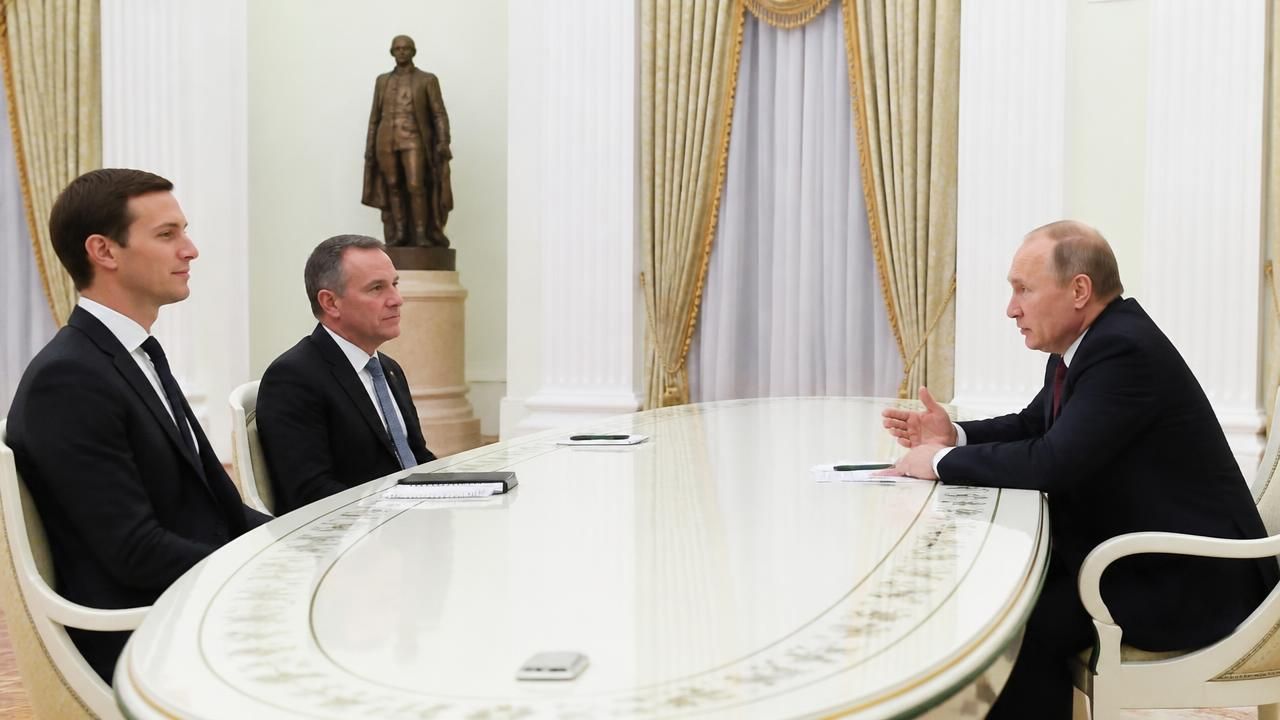
In a significant diplomatic development, Russian President Vladimir Putin met with U.S. President Donald Trump's personal envoys, Jared Kushner and Steve Witkoff, in Moscow on [date] to discuss efforts to end the ongoing war in Ukraine. The meeting came as Putin ordered a temporary pause in strikes on Ukraine's capital, Kyiv, in what many analysts interpret as a goodwill gesture ahead of the talks.
High-Stakes Meeting in Moscow
The closed-door meeting, confirmed by Russian state television and multiple international outlets, marks one of the highest-level direct engagements between Washington and Moscow since the start of the full-scale invasion in February 2022. Kushner, Trump's son-in-law and senior adviser, and Witkoff, a real estate mogul turned special envoy, traveled to Moscow as part of a renewed U.S. push to revive peace negotiations.
According to Reuters, Putin told the envoys that the situation in Ukraine is "difficult," signaling the complexity of any potential settlement. The Russian leader has consistently maintained that Russia is open to dialogue but insists that any agreement must address Moscow's security concerns.
A Pause in Strikes on Kyiv
One of the most striking developments reported by The New York Times and other outlets was Putin's decision to pause strikes on Kyiv ahead of the envoys' arrival. This move was widely interpreted as an attempt to create a more favorable atmosphere for negotiations. However, the pause is temporary, and Ukrainian officials have expressed cautious skepticism, recalling that Russia previously violated a three-day ceasefire during an earlier round of diplomatic efforts.
The Week news outlet highlighted this history, posing the question: "Russia violated a 3-day ceasefire last time. Will Putin keep his word this time as Jared Kushner and Steve Witkoff arrive in Moscow?" This sentiment reflects broader concerns about the reliability of Russian commitments in the face of continued hostilities.
A New Peace Plan?
Sources indicate that the envoys carried a new peace plan proposed by the Trump administration. Details remain sketchy, but South China Morning Post and NTD reported that the plan aims to de-escalate the conflict along the current front lines and establish a framework for future negotiations. The proposal reportedly includes confidence-building measures and discussions on prisoner exchanges, though territorial questions remain a major sticking point.
After the Moscow meetings, Kushner and Witkoff were expected to travel to Kyiv to consult with Ukrainian President Volodymyr Zelensky, according to The New York Times and other reports. This dual-track diplomacy mirrors earlier shuttle-style negotiations, but the outcome remains highly uncertain.
Media Framing and Perspectives
The story has been covered from different angles by various outlets:
- The New York Times emphasized the pause in strikes on Kyiv as a key development, framing the visit as a "revival" of peace talks.
- Reuters focused on Putin's characterization of the situation as "difficult," underscoring the obstacles to any breakthrough.
- South China Morning Post highlighted the "new peace plan" carried by the envoys, suggesting a more concrete proposal than previously seen.
- The Week raised the critical question of trust, referencing Russia's violation of a standing ceasefire in the past.
- Other media such as MSN and news aggregators provided brief, matter-of-fact updates, indicating the global resonance of the meeting.
The Road Ahead
The meeting in Moscow is a reminder of the volatile geopolitical landscape. Since the early weeks of the war, multiple attempts at ceasefire and negotiation have failed, often collapsing amid mutual recriminations. The international community watches closely, with the U.S., Russia, and Ukraine all jockeying for leverage.
Historical context is crucial: the Ukraine conflict has caused tens of thousands of casualties, displaced millions, and triggered a global energy and food crisis. Any peace deal would need to address not only territorial integrity but also security guarantees, sanctions relief, and the reconstruction of war-torn areas. Experts caution that even a temporary pause in fighting could be exploited for military repositioning, making verification mechanisms essential.
"The situation is difficult, and it requires careful and deliberate steps to move forward," a senior Russian official told state media on condition of anonymity. "But the fact that American envoys have arrived in Moscow is a positive signal."
Implications and Reactions
Ukrainian officials have reacted warily, insisting that any negotiations must include full respect for sovereignty and territorial integrity. Western allies remain skeptical of Russian intentions, with some European leaders urging against concessions that could reward aggression. The visit by Kushner and Witkoff also underscores the Trump administration's desire to claim a diplomatic victory, though the path to a durable peace remains laden with obstacles.
As the envoys jet between Moscow and Kyiv, the world holds its breath. The three-day pause on Kyiv strikes may provide a brief respite, but the hard work of negotiation has just begun. Whether this initiative will succeed where others have failed depends on a delicate balance of military realities, political will, and international pressure.
In the coming days, more details are likely to emerge about the specific proposals discussed. For now, the diplomatic track has been reopened, but the shadow of previous betrayals still looms large over any potential deal.