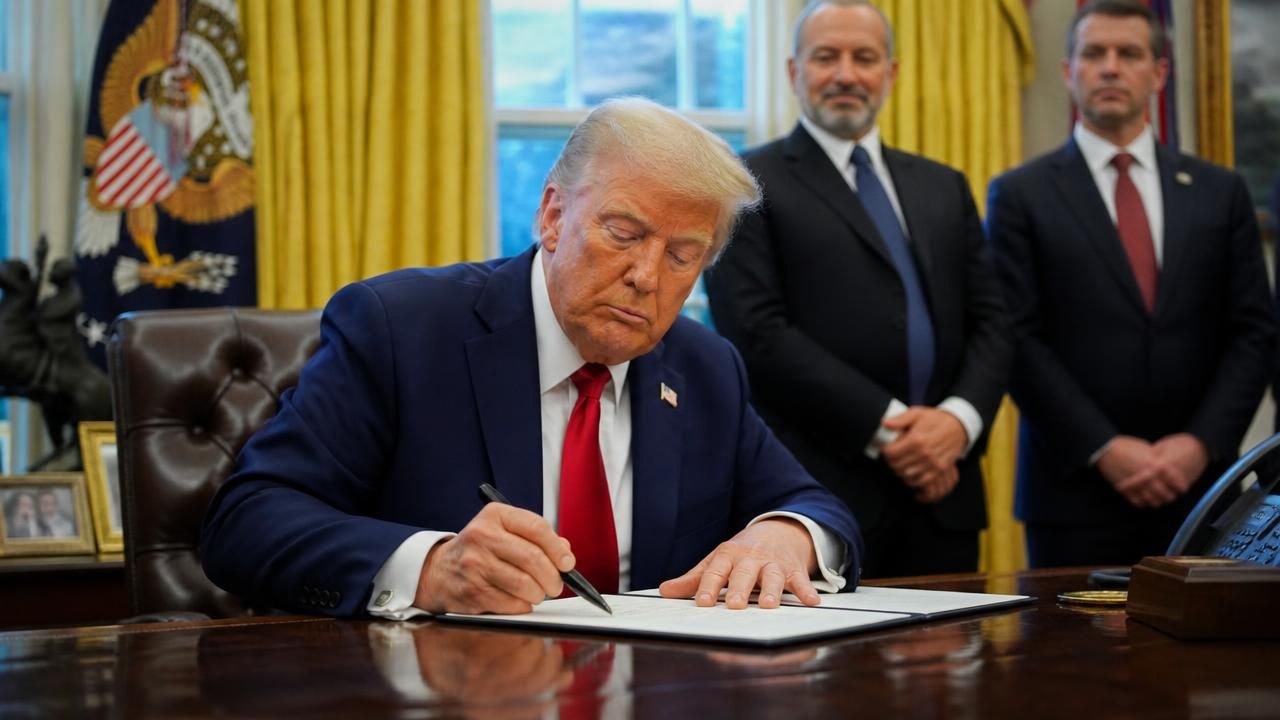
President Donald Trump has signed an executive order renaming Lake Ontario as "Lake America," a move that has ignited a diplomatic spat with Canada and prompted technology companies to update digital maps. The order, reported by Bloomberg and multiple outlets, is the second time the president has unilaterally changed the name of a major geographic feature, following the Gulf of Mexico's controversial redesignation as the "Gulf of America."
An executive order with a sharp edge
The White House framed the measure as an assertion of American sovereignty, but Trump's verbal attacks suggested a more personal motive. "Canadian officials are nasty," Trump said, according to NDTV. The renaming comes amid a heated trade war, with the president imposing tariffs on Canadian goods and threatening further economic pressure. Tensions have been escalating for months, including confrontations with Ontario Premier Doug Ford, who has emerged as a vocal critic of Trump's trade policies.
Critics argue the renaming is symbolic grandstanding. Lake Ontario, one of the five Great Lakes, is shared by the United States and Canada. It borders the state of New York and the Canadian province of Ontario. Any name change would have no effect beyond American cartographic definitions unless recognized by international bodies.
Canada pushes back
Canadian Prime Minister Mark Carney delivered a pointed response to the move. In a brief statement, he asserted:
"Then, now and always."
The message, widely interpreted as a vow to preserve the lake's name, was directed at Trump's declaration. Carney's phrase underscores Canada's insistence that the lake is shared sovereignty, not a U.S. possession.
Ontario Premier Doug Ford also weighed in. According to Fox News, Ford responded sharply to the president's order, calling it yet another insult from an administration that has repeatedly targeted the province. Ford had previously engaged in a war of words with Trump over trade and energy policies, making him a central figure in the broader U.S.-Canada rift.
Tech giants follow the president
Within hours of the executive order, digital maps made the change. Apple Maps renamed Lake Ontario to "Lake America," as reported by Bloomberg. Sources indicate that Trump directly reached out to Apple to ensure the change was made. Google Maps followed suit, reportedly updating its label to reflect the president's directive, according to MSN.
The rapid compliance by Silicon Valley has raised eyebrows. Unlike regulatory naming standards, presidential executive orders on geographic names are not automatically binding on private companies. The U.S. Board on Geographic Names is the federal body that standardizes names, but its decisions are legally binding only for federal agencies. Tech companies face pressure from the White House, yet they also face backlash from users and the international community who may not recognize the unilateral change. Apple and Google did not immediately comment on their decision-making process.
Political backlash in the U.S.
Democrats were quick to condemn the move. Reactions ranged from legislative action to sharp criticism:
- Rep. Debbie Dingell introduced a bill to block the order.
- New York officials dismissed the change as a symbolic distraction.
- A Rochester-area official demanded that the president focus on real issues affecting the Great Lakes.
- Other critics called the move "petty, vindictive."
The pushback indicates that Trump's naming order may face legal and political resistance beyond Canada's objections.
Small businesses feel the ripple effect
The renaming has also unsettled business owners whose brand names are tied to the lake. One owner of a business named after Lake Ontario expressed frustration, noting that the change could cause confusion and hurt brand recognition. Although the order does not affect trademarks or corporate names, the symbolic and cartographic shift carries weight in border communities that rely on cross-border commerce.
A name with deep roots
As USA Today pointed out, the lake's name is not originally Canadian. "Ontario" is derived from the Haudenosaunee word "skanadario," meaning "beautiful water" or "sparkling water." The name predates both the United States and Canada, belonging to Indigenous peoples who inhabited the region for millennia. Trump's renaming raises questions about erasing Indigenous heritage, and some have pointed out the irony that a lake shared by two nations is being rechristened with a solely American label.
Symbolic politics amid a trade war
The move must be understood in the context of escalating tensions between Washington and Ottawa. Trump has repeatedly threatened tariffs and used aggressive rhetoric against Canadian leaders. He previously renamed the Gulf of Mexico in an executive order shortly after taking office, a nationalist gesture that drew criticism from Mexico and the international community. The latest action suggests the administration is willing to use geographic symbolism as leverage in trade disputes.
Analysts note that renaming geographic features does nothing to alter economic realities or legal claims. However, when digital assistants and maps adopt the change, the policy gains a technological footprint that extends far beyond official U.S. documents. That can create confusion for users in Canada and elsewhere, who may see the change as an intrusion on their own national geography.
What happens next?
Canada has made clear it will not accept the unilateral name change. Carney's "then, now and always" message signals a prolonged diplomatic contest. Whether the U.S. government will force federal agencies to use "Lake America" while Canada and most of the world continue to use "Lake Ontario" remains an open question. Legal experts argue that international treaties and the shared governance of the Great Lakes make such a change impossible to enforce comprehensively.
In the meantime, the episode highlights how modern political feuds are fought in both physical and digital worlds. With Apple and Google Maps now reflecting the new name, millions of users are seeing a new label for an ancient lake. But for the communities along its shores, the name will always be Lake Ontario—no matter what any map or executive order says.