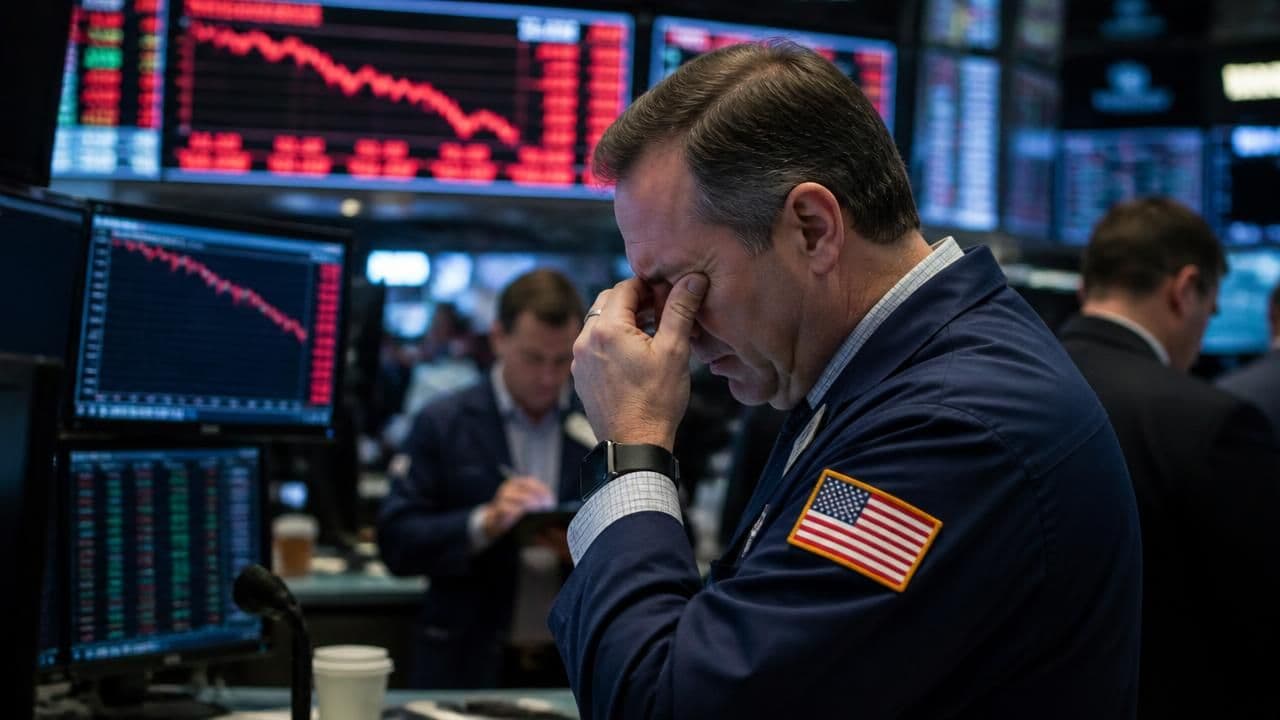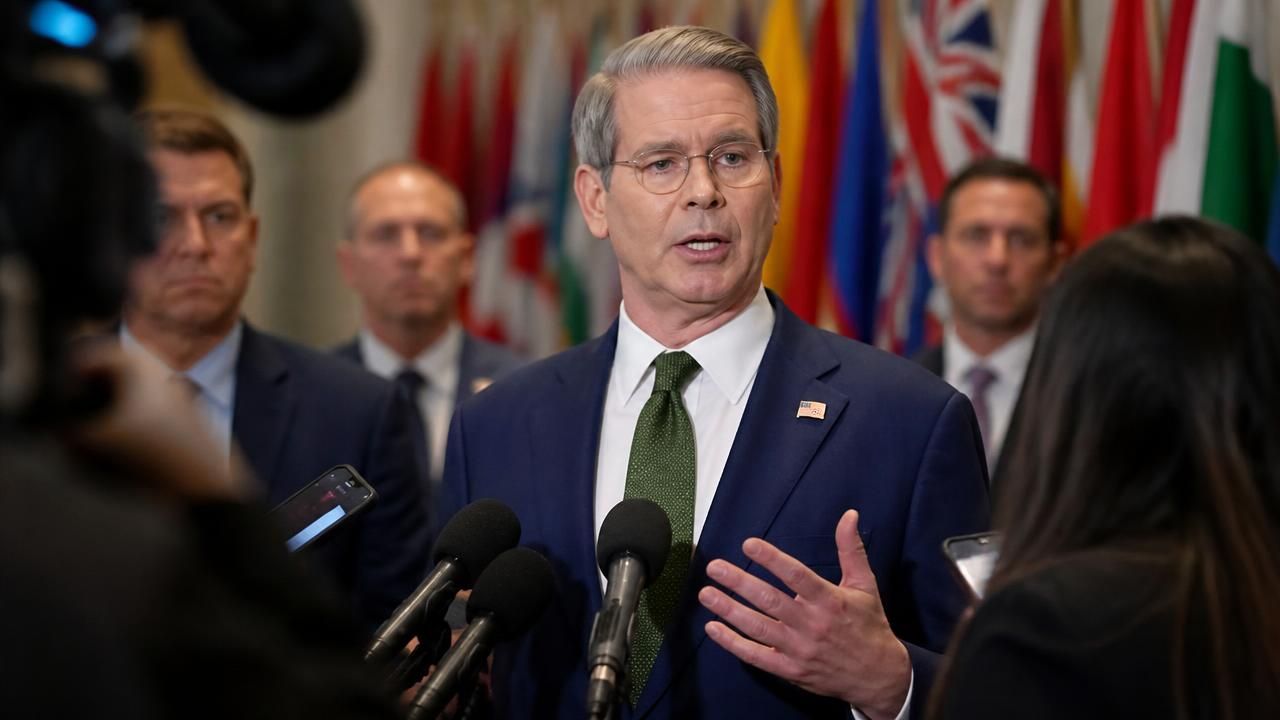
Treasury Secretary Scott Bessent ignited a political firestorm on Wednesday when he suggested that Ukraine's military strikes on Russian oil infrastructure are contributing to high global energy prices. Speaking on the sidelines of a G20 finance ministers meeting in Washington—shortly after hosting Russia's finance minister—Bessent said Kyiv's campaign against Russian refineries is adding upward pressure to an energy market already roiled by the escalating U.S. military confrontation with Iran.
“Ukraine has decided that they want to blow up Russian energy assets and refined products, so that is creating upward price pressure on a global basis,” Bessent told reporters, according to a video posted by journalist Aaron Rupar. The Treasury chief simultaneously acknowledged that the “energy shock” is driven mainly by the U.S. war with Iran, but his pointed emphasis on Ukraine drew rapid condemnation from Kyiv supporters and economic observers.
A Scapegoat for Soaring Fuel Costs?
Bessent's comments came as American motorists continue to grapple with elevated gasoline prices—though data from the Washington Examiner shows U.S. pump prices have actually fallen for three consecutive days, complicating the administration's narrative of a supply-driven crisis. The secretary's framing was quickly seized upon by conservative outlets like the New York Post, which ran the headline: “Bessent says Ukraine causing high gas prices: 'They want to blow up Russian energy assets.'” The Washington Examiner similarly led with “Bessent blames Ukraine strikes on Russia for global energy market instability.”
But critics accused the administration of deflecting attention from its own military actions. A former Ukrainian official told Yahoo Finance that the Iran war matters “significantly more” to global energy markets than Ukraine's targeted strikes on Russian fuel infrastructure. Nobel Prize-winning economist Paul Krugman, writing on his Substack, used the episode to critique the administration's worldview, publishing an essay titled “Imperialist Delusions and the Price of Fuel” that linked the blame-shifting to broader delusions about American power.
“It's a convenient way to distract from the fact that the United States is bombing Iran, which is what's actually moving oil prices,” said one diplomatic observer familiar with the G20 discussions.
Mediaite was blunter, noting that Bessent's comments “spark fury” and describing them as “gross,” particularly in light of a separate appearance on Fox News where the secretary admitted “prices are too high” after being confronted with a poll showing deep public dissatisfaction over the cost of living.
The Russia Meeting Factor
The timing of Bessent's remarks was striking. He had just concluded a meeting with Russian Finance Minister Anton Siluanov, a rare high-level contact between U.S. and Russian officials since Moscow's full-scale invasion of Ukraine. That meeting itself was controversial, coming even as the United States continues to enforce sweeping sanctions against Russia. Bessent's choice to blame Ukraine in that context—rather than Russia's own role in weaponizing energy exports—struck many as diplomatically tone-deaf.
According to NYT reporting, Bessent hosted the G20 gathering as the U.S. launched a second round of strikes against Iran in three days, underscoring the volatile geopolitical backdrop. Meanwhile, at the same summit, some U.S. allies openly pushed back on the Trump administration's economic approach, particularly its use of tariffs and sanctions. Bessent's comments threatened to further alienate European allies who view Ukraine's self-defense as legitimate.
Distinct Framings Across the Media Spectrum
The episode offers a clear case study in how different outlets frame the same story. The New York Times initially reported the news straight: “Bessent Blames Ukraine for High Energy Prices,” while noting that Bessent traced the bulk of the energy shock to the U.S.-Iran conflict. The New York Post amplified only the Ukraine portion, excising the Iran context. MSNBC and progressive commentators ran with the “gross” angle, and Global Times, the Chinese state outlet, interpreted Bessent's comments as an attempt to “shift blame for its own failed pressure campaign” on Iran. The divergence illustrates how a single sentence can be weaponized across the political spectrum.
The Broader Energy Picture
Bessent's remarks also sidestepped a more complex energy reality. The administration is simultaneously trying to expand oil supplies by deepening engagement with Venezuela. As the NYT reported, Chevron is expanding its operations in the country under a Trump-brokered deal, and the Washington Examiner confirmed that Chevron, GE, and Eni have signed agreements to increase drilling in Venezuela. That move relies on a powerful and divisive partner in Caracas, according to NYT, and has drawn criticism from human rights groups. The tension between courting Venezuela while blaming Ukraine for high prices was not lost on energy analysts.
“If you're truly worried about global supply, you don't vilify a country that's attacking the world's third-largest oil producer—you negotiate with the producer, which is what the U.S. is implicitly doing with Russia and Venezuela,” said a commodities market strategist who requested anonymity to discuss the sensitive politics.
The International Energy Agency has long warned that Ukrainian drone strikes on Russian refineries—which have knocked out about 10% of Russia's processing capacity—do create localized product shortages. But most economists agree that the far bigger factor in recent price movements has been the risk of supply disruption from a broadening Middle East war. That distinction was largely absent from Bessent's public remarks, even as U.S. strikes on Iran continued.
Political Ramifications
The controversy hits at a politically sensitive moment for the administration. With inflation still a top voter concern, the White House has struggled to convince Americans that its energy policies are working. Bessent's admission on Fox News that “prices are too high” undercut the administration's earlier messaging, and his attempt to shift part of the blame to Ukraine angered both pro-Ukraine Republicans and Democrats, even as some hardline conservatives cheered the attack on Kyiv's strategy.
Representatives for the Ukrainian government did not immediately respond to requests for comment, but former Ukrainian officials have previously argued that strikes on Russian fuel nodes are a legitimate military tactic designed to reduce Russia's ability to fund its invasion. For now, the debate over who bears responsibility for high pump prices seems destined to remain as heated as the conflicts driving them.
What is clear is that Bessent's offhand remark has crystallized a growing rift within the Trump administration: between a realist wing eager to engage adversaries for economic stability and a nationalist wing that blames U.S. rivals for domestic pain. The Treasury secretary's walk on that tightrope produced a scandal that neither side is likely to let him forget.