Across the globe, the wrecking ball is both a tool of progress and a symbol of loss. In the past year, hundreds of homes near a revered Sufi shrine in Pakistan have been reduced to rubble. In Chicago, preservationists tally another year of victories and defeats in the battle for the city's architectural soul. And in New Zealand, a beloved rural dairy is closing its doors, though its physical pieces will be reborn. These three stories, seemingly unconnected, together illustrate a universal truth: that demolition is never just about buildings—it is about memory, power, and the uneasy trade-off between the old and the new.
The Shrine at Bari Imam: A Pilgrimage Site Under Siege
On the outskirts of Islamabad, the shrine of the 17th-century Sufi saint Bari Imam draws thousands of pilgrims each week. The surrounding neighborhood, with its narrow lanes and bustling markets, has long been a sanctuary for the working poor—many of whom earn a living serving the pilgrims. Yet over the past year, NPR reports, hundreds of homes in this community have been demolished by authorities, and residents live in constant fear that their own houses will be next.
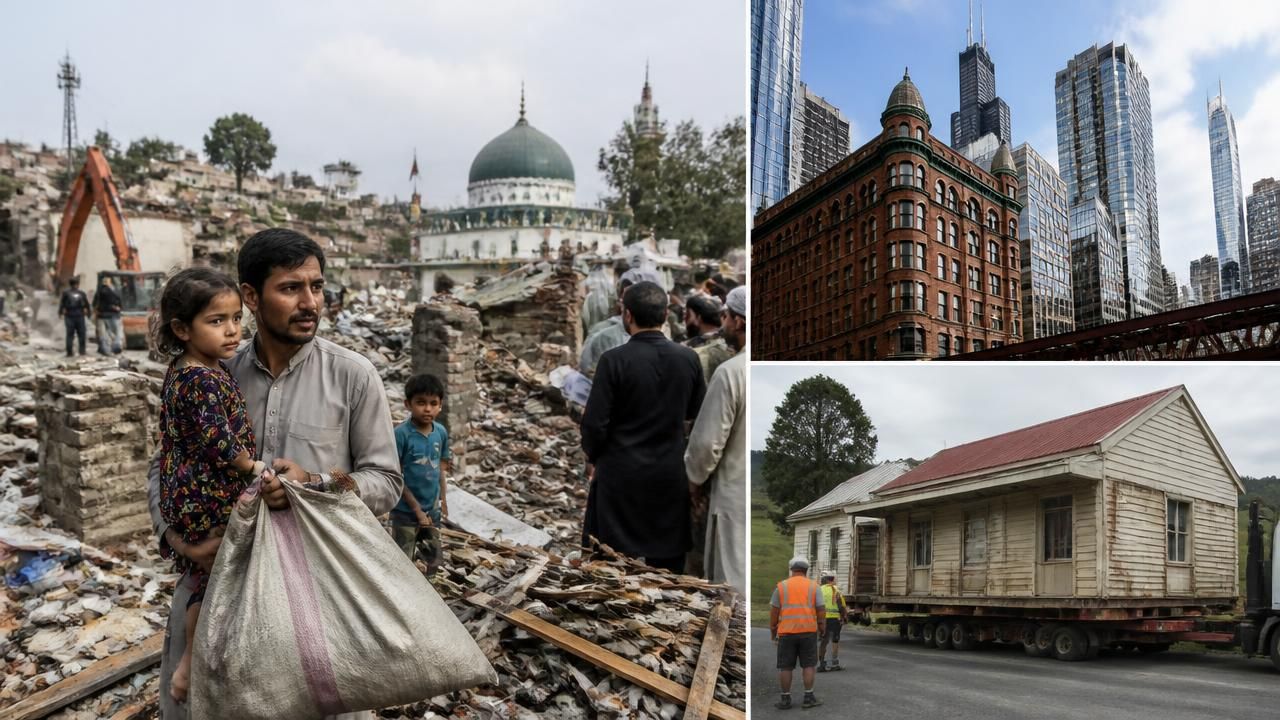
“They come without warning, with bulldozers and police, and in minutes everything is gone,” one resident told NPR, clutching a child and a bag of salvaged belongings.
The demolitions are part of a government-led beautification and “encroachment” removal drive, a common practice in South Asian cities where informal settlements are often razed in the name of urban renewal. But critics argue that these operations disproportionately target the poor, and that they disregard cultural and religious significance. The shrine itself is venerated by both Sunni and Shia Muslims, making it a rare space of shared devotion—and a symbol of what is at stake when communities are displaced.
NPR frames the story not just as a housing crisis, but as an existential threat to a way of life. The images accompanying the report show families picking through debris beside the shrine's gleaming dome. One man, a shopkeeper who lost his shop and home, told the reporter, “We have nowhere else to go. The shrine is our life, and we are being erased from it.”
Chicago: A City’s Ongoing Tug-of-War Over Its Built Heritage
Meanwhile, in Chicago, the battle over what gets demolished and what gets saved is an annual ritual. The website Chicago Patterns publishes its yearly “Wins and Losses” list, cataloguing buildings that were preserved, landmarked, or lost to the wrecking ball. In 2016, the list was a mixed bag—a stark reminder that preservation is a constant struggle.
Among the wins were several 19th-century commercial buildings that were rehabilitated into modern apartments, and a historic theater saved by a grassroots campaign. The losses included a mid-century modernist bank, torn down for a parking lot, and a row of Victorian homes that had stood for over a century. As one preservationist quoted on the site put it, “Every lost building leaves a hole not just in the skyline, but in the neighborhood's collective memory.”
Framing the Story
Chicago Patterns frames these events through the lens of architectural heritage, urging readers to see buildings as repositories of history. The site often pairs before-and-after photographs, making the losses visceral. The tone is not so much angry as elegiac—a lament for what could have been saved with a little more foresight and political will.
“We celebrate the wins because they prove preservation works, but the losses remind us that we are fighting an uphill battle,” the article notes.
The Chicago story is a counterpoint to Pakistan's: in Islamabad, the state is the destroyer; in Chicago, it is often private developers, with preservationists scrambling to protect landmarks. But in both places, ordinary people are caught in the middle—watching the places they love and rely on disappear.
Tiritea Dairy: A Small Town’s Goodbye and a Green Rebirth
Thousands of miles away in New Zealand, a different kind of demolition is taking place—one that offers a more hopeful model. Tiritea Dairy, a small corner store in a rural community near Palmerston North, is closing its doors. For decades, it was more than a shop; it was a meeting point, a place where neighbors swapped news and kids bought ice cream after school. But the owner is retiring, and no one is willing to take over the business.
Yet the news from Stuff.co.nz is not all grim. As the title puts it, “Tiritea Dairy is on the way out, but its parts will live on.” In a fitting twist, the building's materials—its weatherboard cladding, corrugated iron roof, and even the old shop counter—are being salvaged for reuse. A local carpenter plans to turn the wood into furniture, and the counter will become a library shelf in a community center.
This approach, known as deconstruction, is gaining traction as an alternative to traditional demolition. Instead of sending waste to landfills, buildings are carefully dismantled, and their components are given new life. It is a symbolic as well as environmental act: the dairy's physical legacy continues, even if its role in the town's daily life has ended.
“We're not just tearing it down,” the owner told Stuff. “We're making sure the old lady goes out with dignity, and her timber will be part of new homes.”
Stuff frames the story as a reflection on rural change, but also as a testament to the resourcefulness of small communities. The dairy's demise is not a tragedy; it is a transition.
What These Stories Tell Us
Taken together, these three reports from three continents reveal a spectrum of human responses to the impermanence of our built environment. In Pakistan, demolition is a weapon of displacement, wielded without remorse but met with resistance from a community that refuses to abandon its saint. In Chicago, demolition is a contest between market forces and memory, where victories are hard-won and losses are mourned. In New Zealand, demolition becomes reinvention, a way to honor the past while making room for the future.
Each story is framed differently by its outlet: NPR emphasizes human suffering and injustice; Chicago Patterns emphasizes architecture and civic pride; Stuff emphasizes continuity and low-key optimism. Yet all three cover the same essential phenomenon: the places we inhabit are not permanent, and the decision to tear them down is never merely technical.
As cities grow and rural societies shrink, the question of what to demolish—and what to save—will only become more urgent. In every case, the people who live closest to these buildings are the ones most affected. Their voices, whether crying in the rubble, testifying at a city council meeting, or musing on a dairy's timber, deserve to be at the center of the story. The built environment is a palimpsest, and each erasure leaves a trace. The challenge is to ensure that what we build next is worthy of what we remove.