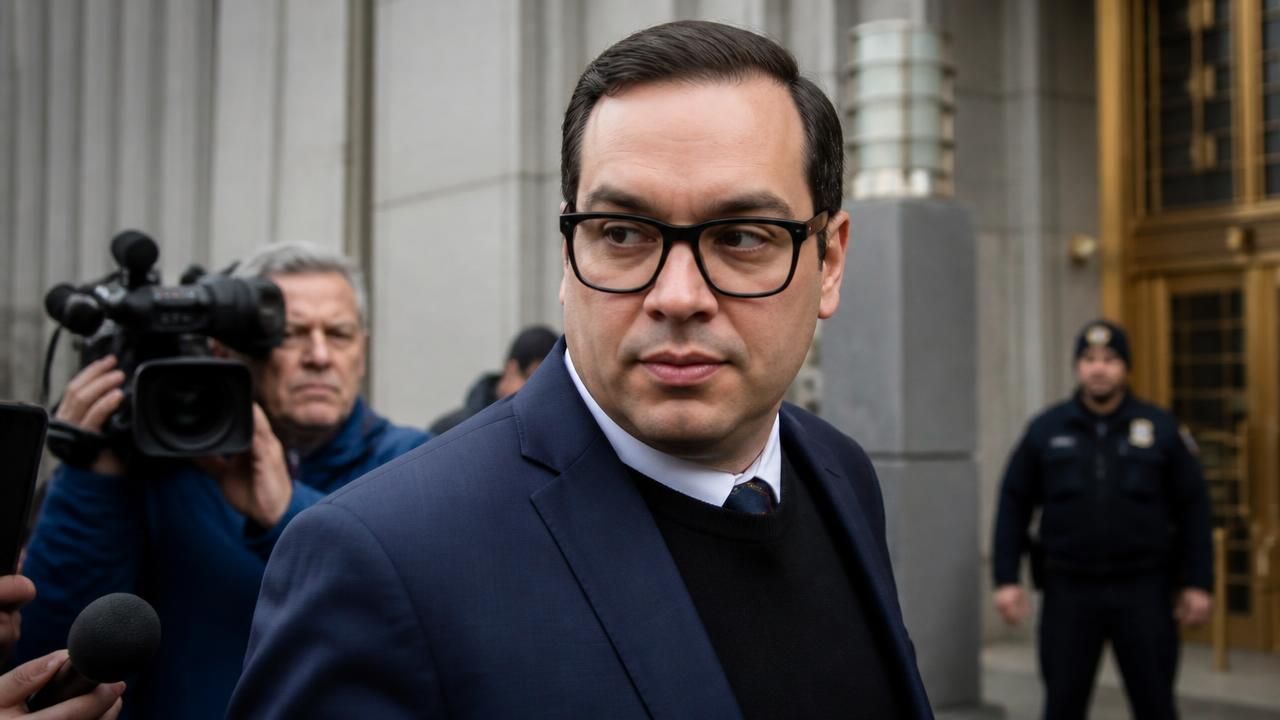
The prediction market platform Kalshi has permanently banned former U.S. Representative George Santos, marking the first lifetime ban in the company's history. The action follows an investigation into bets Santos placed on his own attendance at the State of the Union address, which Kalshi concluded likely constituted insider trading. The company also fined Santos more than $71,000.
According to NPR, Kalshi said Santos did not cooperate with the investigation. The ban and fine were announced after Kalshi determined that Santos used non-public information—specifically, his own knowledge of whether he would attend the presidential address—to place trades on event contracts offered by the platform.
A Disgraced Congressman's Latest Setback
George Santos, a New York Republican, was expelled from the House of Representatives in December 2023 after a scathing ethics report found overwhelming evidence that he had misused campaign funds and committed other crimes. He has since faced federal criminal charges, pleading not guilty to a 23-count indictment. The Kalshi ban adds another layer to his legal and public troubles.
The State of the Union event in question occurred after Santos's expulsion, a time when he no longer held office but was still a public figure. By betting on whether he would physically attend the address, Santos effectively wagered on information that was exclusively known to him and his inner circle—a classic insider trading scenario in the context of prediction markets.
Why Kalshi's Decision Matters
Kalshi is a federally regulated exchange for event contracts, approved by the Commodity Futures Trading Commission (CFTC). Unlike unregulated crypto-based prediction platforms, Kalshi must enforce rules against market manipulation and insider trading. The lifetime ban sends a strong signal that the platform takes these rules seriously.
Kalshi says Santos did not cooperate with its investigation into bets he placed on his own attendance at the State of the Union.
In a statement reported by NPR, Kalshi emphasized that Santos's failure to cooperate hindered the investigation but did not prevent the company from reaching its conclusion. The $71,000 fine is believed to represent the total amount Santos gained or tried to gain from his trades, plus penalties.
How the Investigation Unfolded
Kalshi's compliance team flagged the trades as suspicious shortly after the State of the Union address. The platform has explicit rules prohibiting users from trading based on material non-public information. As a former member of Congress, Santos had unique access to information about his own schedule and plans.
Kalshi's investigation reportedly involved reviewing trading logs, account metadata, and communications. Santos was given an opportunity to explain his trades but declined to cooperate, according to NPR. The lack of cooperation likely contributed to the severity of the punishment.
First-Ever Lifetime Ban
The lifetime ban is unprecedented for Kalshi, which has operated since 2020 and has millions of users. Previous enforcement actions included fines or temporary suspensions, but never a permanent expulsion. The decision underscores how egregious Kalshi viewed Santos's conduct.
Santos is now barred from ever opening an account or using Kalshi's platform again, either directly or through third parties. The ban also extends to any affiliated products or services.
Differing Framings From the Media
Coverage of the story has varied in emphasis, reflecting different editorial angles.
- Insider trading focus: Several msn.com headlines explicitly accuse Santos of “insider trading,” implying that his bet on his own attendance was akin to trading on confidential corporate information.
- Self-betting angle: Other outlets framed the story as Santos “betting on himself,” highlighting the audacity of a former congressman wagering on his own public appearances.
- Institutional credibility: Yahoo News and Houston Public Media, relying on NPR, emphasized the regulatory implications for prediction markets and Kalshi's enforcement efforts.
- Pop-culture novelty: TotalProSports, a sports and culture site, called it “shady bets exposed,” focusing on the sensational nature of the story.
These different frames underscore the multifaceted nature of the story—it is at once a legal tale, a cautionary note for financial platforms, and a chapter in the bizarre public life of George Santos.
Implications for Prediction Markets
Kalshi's decision is likely to have ripple effects across the growing prediction market industry. As event-based trading expands—covering everything from elections to Oscar winners—the need for robust anti-insider-trading enforcement becomes more critical.
The CFTC has been increasingly scrutinizing prediction markets, and this case gives regulators an example of proactive self-policing. It also warns users, especially politicians and public figures, that using their informational advantages on these platforms can lead to severe consequences.
Santos, who has already faced expulsion, criminal charges, and widespread public ridicule, now adds a lifetime ban from a major financial platform to his list of disgraces. Whether this will deter others remains an open question, but Kalshi has made its position clear: no user is above the rules.