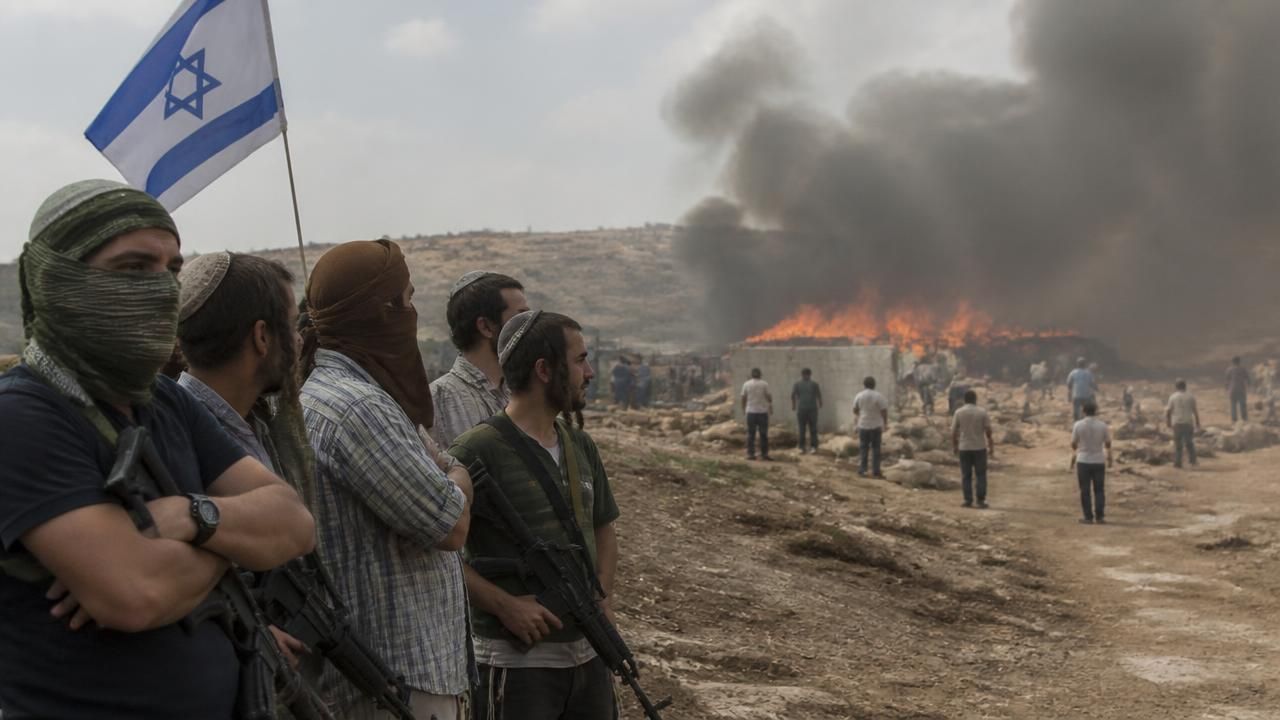
Israel is standing at a precipice, buffeted by external wars and an internal crisis of identity that has prompted a rare public reckoning among its most senior former security officials. A growing number of retired generals, intelligence chiefs, and former prime ministers are now warning that settler violence in the West Bank—backed by elements of the government—poses an existential threat to the country’s democratic and Jewish character. “Once a society behaves this way, that society is doomed,” one former general told The New York Times, in a stark assessment echoed by others who fought for the state.
The warnings come as Israel’s military juggles multiple fronts: a fragile cease-fire in Gaza, escalating exchanges with Hezbollah on the northern border, and a shadow war with Iran that has burst into open strikes and targeted assassinations. President Trump’s top Gaza official has publicly said Israel is jeopardizing the cease-fire, while Prime Minister Benjamin Netanyahu has rejected the administration’s plan to disarm Hamas. Meanwhile, a new Palestinian Authority election date looms, and Israeli society itself is fracturing over conscription, extremism, and the very meaning of victory.
Generals Sound the Alarm on Settler Violence
The most striking intervention comes from a cohort of former Israeli generals and intelligence officials who, in interviews with The New York Times, described a campaign of settler violence in the West Bank that they say amounts to ethnic cleansing, conducted with state support. These are not fringe voices; they include men who helped build Israel’s military and intelligence services. “Once a society behaves this way,” one said, “that society is doomed.” Their words echo a broader trend documented by outlets like the Crisis Group, which has called for stemming settler violence at its root, and by The Times’ own 2023 and 2024 investigations into how extremist violence is pushing the West Bank to the brink.
This internal dissension is mirrored in the political arena. An op-ed titled “Israel Is Not Invincible” reflects a growing sense among analysts that the state’s military might cannot solve its deepest political problems. The disconnect is widening even between traditional pro-Israel Jewish leaders and figures like the scholar Mahmood Mamdani, whose critique of Israeli policy has resonated across the left. As one former intelligence chief bluntly told Politico, “Netanyahu got all the warnings” before the October 7 attack—yet failed to act.
Cease-Fire on the Brink
The current cease-fire in Gaza is fragile. A senior Trump administration official has accused Israel of jeopardizing the truce, while Netanyahu insists on continuing operations until Hamas is dismantled. The prime minister has also rejected a U.S. plan to disarm Hamas, creating friction with Washington. Israeli women have for the first time fought on the front line in Gaza, a historic change, but the military’s ban on foreign media entering the strip remains mired in legal challenges. Reports that Israel backed Gazans to oppose Hamas—and that one such individual met a violent end—underscore the complexity of the Israeli approach.
The October 7 intelligence failures continue to haunt Israel. The Combating Terrorism Center at West Point publishes detailed assessments of the attack, and The New York Times revealed that Israel knew Hamas’s attack plan more than a year before it happened. A former director of the Israeli Counter-Terrorism Bureau, Brig. Gen. Nitzan Nuriel, now speaks of the need to rethink counter-terrorism doctrines. Meanwhile, a small but growing number of reservists—who volunteered to fight but now refuse to serve in Gaza—are telling the BBC that the war has crossed moral lines. One soldier’s parent, in a searing op-ed, asks, “Why is my son being left to die on the streets?”
The Iranian Shadow War
Beyond Gaza, Israel has become emboldened in its undeclared war with Iran. According to The New York Times, Israeli strikes in Damascus and elsewhere have escalated, and both Iran’s intelligence chief, Seyed Majid Khademi, and its de facto political leader, Ali Larijani, have been killed in overnight attacks. The U.S. has conducted its own strikes on pro-Tehran militias in Iraq, while a recent U.S. assessment found that an attack on Iran is unlikely to result in regime change. Secretary of State Marco Rubio was forced to walk back a suggestion that Israel had forced the U.S. hand.
As Washington ordered its staff to leave Israel amid fears of an impending strike, the world watched the latest crossroad. A New York Times timeline of U.S.-Iran tensions shows decades of brinkmanship. Iran, analysts at The Atlantic argue, now feels it has nothing to lose, making its response unpredictable. Qatar, caught between its American ally and its Iranian neighbor, has been forced into a painful reckoning, according to The Times.
Internal Fractures: Draft Riots and Ideological Battles
Israel’s internal cracks are widening. Ultra-Orthodox riots against military conscription outside a judge’s home highlight the bitter divide over who bears the burden of defense. President Isaac Herzog, addressing the UN General Assembly on Holocaust Memorial Day, invoked the fragility of democracy. Meanwhile, an op-ed in The Times describes “I Have Never Been to This Israel Before,” capturing the despair of a generation watching extremists take over. The 2024 publication of “The Unpunished: How Extremists Took Over Israel” reads as a warning.
In the West Bank, Palestinian Authority has set a date for the first major elections in 20 years—a potential turning point—but the ongoing violence and occupation cast doubt. In Lebanon, as John Bowen of the BBC reports, Israel is gambling that Hezbollah will crumple, but it faces a well-armed, angry enemy. The world’s biggest powers, as a New York Times analysis notes, have so far been unable to stop a Middle East war.
What Lies Ahead
Against this backdrop, voices like Yair Golan, the former general now leading a political movement, are fighting for a two-state solution. “We are going to live with scars,” he says. Others, like the general profiled in Tablet, believe in winning wars—but winning what? The question of “When Is War Over?” raised by Chabad, resonates across the region.
As Israel’s leaders confront threats from Iran, Hamas, and Hezbollah, the most dangerous threat may be from within. The generals who once fought for Israel’s security are now warning that the society they defended is losing its way. Their words echo across the political spectrum, from the UN rostrum to the military’s own counter-terrorism experts. The region is at a crossroads, and the choices made in the coming weeks will determine whether the cycle of violence ever ends.
This article synthesizes reporting from The New York Times, BBC News, Politico, the Combating Terrorism Center at West Point, the Crisis Group, The Atlantic, and other sources covering the Israeli-Palestinian conflict, Iran, and regional security.