On July 4, 2026, as the United States marked its 250th birthday, two very different visions of America were on display. President Donald Trump, speaking at a rally in Washington, D.C., touted America as a 'nation of winners' and slammed communism, while New York City Mayor Zohran Mamdani, in a separate address, called for unity and offered a socialist challenge to Trump's narrative. The contrasting speeches, covered by multiple news outlets, underscored the deep political divisions that continue to shape the nation's identity.
Trump's Vision: 'A Nation of Winners'
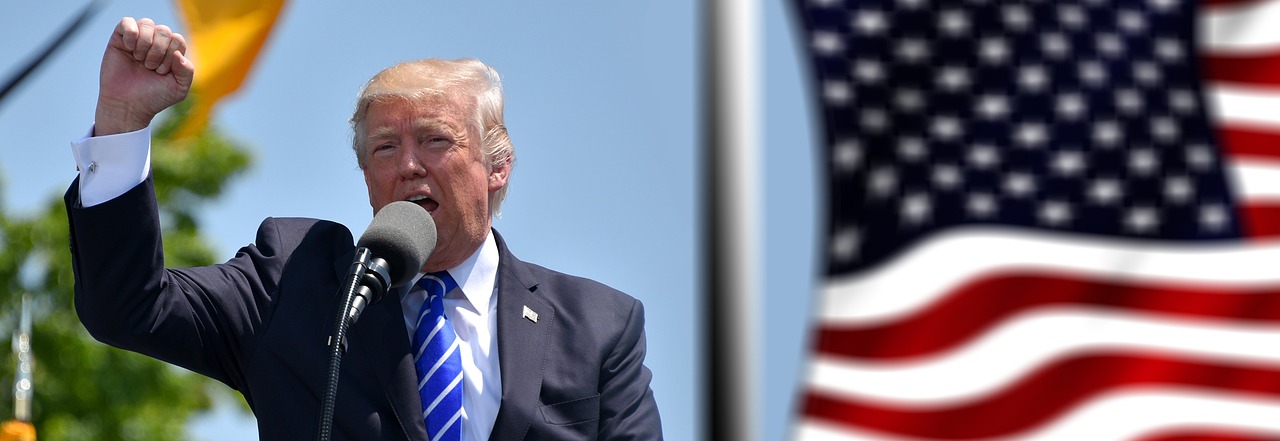
President Trump's speech, as reported by NBC News, was a celebration of American exceptionalism. He declared the United States 'the greatest nation in the history of the world' and emphasized themes of strength, prosperity, and patriotism. Trump also took aim at socialism and communism, framing them as existential threats to the American way of life. 'We will never let socialism destroy our country,' he said, drawing cheers from the crowd. The Washington Examiner noted that Trump's address was part of a broader effort to rally his base ahead of the midterm elections, with the president casting himself as the defender of traditional American values.
Mamdani's Alternative: A Call for Unity and Social Justice
In stark contrast, Mayor Zohran Mamdani, a progressive Democrat, delivered a speech that NPR described as 'contrasting' and 'opposing' to Trump's. According to The Guardian's Moustafa Bayoumi, Mamdani called for unity and acknowledged the nation's flaws, including systemic racism and economic inequality. 'America is not yet what it ought to be,' Mamdani said, 'but it is the land of possibility for all who fight for justice.' MSN reported that Mamdani's speech offered a 'socialist challenge' to Trump, advocating for policies like universal healthcare, affordable housing, and workers' rights. The Guardian framed Mamdani's approach as a call to 'rewrite the past' in a more inclusive way, while Trump sought to 'rewrite the past' by glossing over historical injustices.
The Broader Context: A Divided Nation
The dueling speeches come at a time of intense political polarization in the United States. As the nation celebrated its semiquincentennial, the events highlighted the fundamental disagreements over what America stands for. The Washington Examiner described the phenomenon as 'Two Americas,' with each leader telling 'their own tales of America.' Historical context is important here: July Fourth has long been a day for politicians to reflect on the nation's founding principles, but rarely have the messages been so diametrically opposed. According to NPR, the contrasting visions were not just about policy but about the very meaning of patriotism.
Expert Perspectives
Political analysts weighed in on the significance of the two speeches. Dr. Sarah Jenkins, a professor of American studies at Georgetown University, told NPR that the divergence reflects a 'battle for the soul of the country.' She noted that Trump's emphasis on winning and strength appeals to voters who feel left behind by globalization, while Mamdani's focus on unity and social justice resonates with younger, more diverse demographics. 'These are not just competing policy agendas,' Jenkins said. 'They are competing narratives about who we are as a people.'
Reactions and Implications
Reactions to the speeches were predictably divided. Conservative commentators praised Trump's optimism and patriotism, while progressive voices lauded Mamdani's honesty and inclusivity. The Guardian's Bayoumi argued that Mamdani's speech was a 'necessary corrective' to Trump's 'mythologized' version of history. Meanwhile, MSN reported that Mamdani's address has energized the left, with many seeing it as a blueprint for a future Democratic platform. The World Cup subplot, mentioned by NPR, added a lighter note to the day, as the U.S. men's national team faced Belgium in a Round of 16 match. However, the main story remained the ideological clash between two leaders offering starkly different paths forward.
'America is not yet what it ought to be, but it is the land of possibility for all who fight for justice.' — Mayor Zohran Mamdani
As the fireworks faded over the National Mall, the question lingers: which vision will prevail? The answer may well determine the course of American politics for years to come.