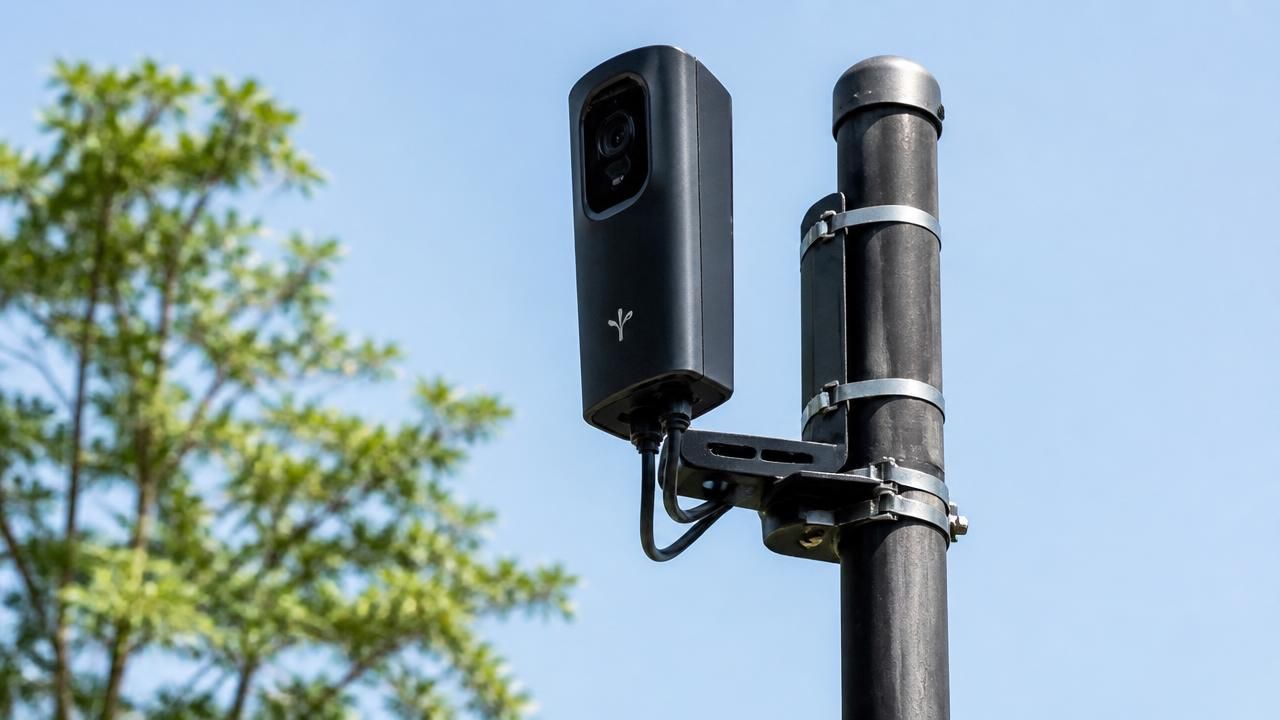
Across the United States, a growing rebellion is brewing against Flock Safety, the Atlanta-based company whose automated license plate reader (ALPR) cameras have become a ubiquitous fixture in American policing. New data compiled by Secure Justice, a Bay Area anti-surveillance advocacy group, shows that American localities are not only dropping the cameras but doing so at an accelerating pace. In August alone, 90 cities and counties terminated their Flock contracts—a fourfold increase from the previous month—bringing the total since 2021 to at least 214 jurisdictions.
Communities from Lansing, Michigan, to Pflugerville, Texas, are ending their relationships with Flock, largely over concerns ranging from out-of-control surveillance and unwanted data sharing to high expenses and reports of police abusing the tool. The wave of cancellations reflects a broader national reckoning over the rapid spread of ALPR technology and its implications for privacy and civil liberties.
Record Cancellations
Secure Justice, an Oakland-based nonprofit, has been tracking Flock contract terminations since 2021. Its latest data reveals a dramatic spike in August, with 90 jurisdictions severing ties—a number that surpasses the total for all of 2024 and the first seven months of 2026 combined. A map published by MSN shows 149 cities actively pushing back, underscoring the geographic breadth of the movement.
Among the cities that have recently voted to cancel are Centerton, Arkansas, which joined a growing list of Arkansas municipalities rejecting Flock cameras, and Farmington, Arkansas, where the police department itself recommended that the city consider terminating its contract. In Western North Carolina, a mayor has publicly called for ending the city's Flock agreement. Milford, Connecticut, residents are urging aldermen to vote against installing the cameras, with one resident declaring, “Mass surveillance is not the way.”
Why Communities Are Pushing Back
Opposition is driven by a confluence of factors. At the forefront is the fear of unchecked surveillance. The ACLU has launched its “Get The Flock Out” campaign, describing the cameras as “creepy ALPR cameras” that track every vehicle's movements and store data indefinitely. Privacy advocates argue that Flock's network creates a de facto national surveillance system that can be used to monitor law-abiding citizens, not just suspects.
A particularly alarming revelation came from the University of Washington's Center for Human Rights, which found that Flock systems in Washington state have exposed license plate data to immigration enforcement. This has raised fears that the technology is being used to target undocumented immigrants, potentially chilling travel by vulnerable communities. The Washington report, titled “Leaving the Door Wide Open,” highlights how Flock's data-sharing agreements can undermine local sanctuary policies.
Police abuse has also been documented. Reports from across the country have detailed officers using Flock cameras to track individuals for personal reasons or to surveil protestors, raising constitutional questions. In Atlanta, where Flock hosted a conference recently, protesters rallied outside the event to demand accountability. The WABE report noted that the demonstrations were fueled by a string of abuses connected to the technology.
Cost is another factor. Many cities are finding that Flock contracts are expensive and that the promised benefits—like reduced crime—are not always realized. In Florida, records obtained by the Florida Trident suggest that the company is prioritizing profit over privacy, with cities paying significant sums for a service whose effectiveness is often overstated.
Local Actions and Protests
At the local level, residents are becoming increasingly vocal. In Milford, Connecticut, community members packed a public meeting to speak out against a proposed Flock system, arguing that it would create a surveillance web without meaningful oversight. Similar scenes have played out in Arkansas, where the Farmington Police Department recommended ending the contract, and in Western North Carolina, where a mayor has taken a public stance.
The protests extend beyond city halls. At Flock's annual conference in Atlanta, demonstrators gathered to call out the company's business practices and the role its cameras play in mass surveillance. These rallies are part of a growing movement that includes civil rights organizations, immigrant rights groups, and local activists who see Flock as a symbol of a disturbing trend toward automatic policing.
Flock's Response
Flock Safety, which has raised hundreds of millions in funding and sold cameras to thousands of law enforcement agencies, maintains that its technology helps solve crimes and protect communities. In response to the backlash, the company says it has tightened safeguards. The Daily Fly reported that Flock is now offering new privacy features, such as limits on data retention and more transparent data-sharing policies, to address concerns.
However, critics argue that these measures are insufficient and largely reactive. Secure Justice's data suggests that the pace of cancellations is accelerating as more communities become aware of the risks. The company's attempts to self-regulate may not be enough to stem the tide of public distrust.
Implications
The growing revolt against Flock Safety is part of a broader conversation about the role of surveillance technology in American life. From face recognition to data brokers, citizens are increasingly questioning who watches the watchmen. The ALPR cameras, which capture thousands of license plates per minute, are a particularly potent symbol because they affect everyone who drives, not just those suspected of wrongdoing.
The record number of cancellations in August sent a clear message: communities are no longer willing to accept surveillance on the basis of vague promises of safety. Whether Flock can adapt to these concerns or will continue to see its contracts evaporate remains to be seen. But for now, the trend is unmistakable.
As the ACLU's campaign puts it, the answer to “What the Flock?” may well be a collective refusal to accept mass surveillance as the new norm. The data from Secure Justice is a powerful reminder that even the most well-funded tech companies can lose when citizens demand accountability and privacy.