With the 2026 midterm elections fast approaching, a broad coalition of Democrats, state election officials, and voting rights advocates is mobilizing to counter what they describe as an unprecedented threat: potential interference by former President Donald Trump and his allies. The preparations span every level of government—from closed-door simulations in Congress to new state laws barring federal agents near polling places—reflecting a deepening concern that the 2026 contests could face challenges not seen in modern American history.
A Failure of Imagination, Corrected
The urgency is born of bitter experience. As NPR Politics reported, Democrats in Congress are preparing for a range of scenarios, intent on avoiding what they see as the failure of imagination that kept lawmakers from anticipating the January 6 attack. This time, they are running tabletop exercises and war-gaming worst-case outcomes. Top Democrats recently simulated election threats as Trump continues his assault on voting, according to The Guardian.
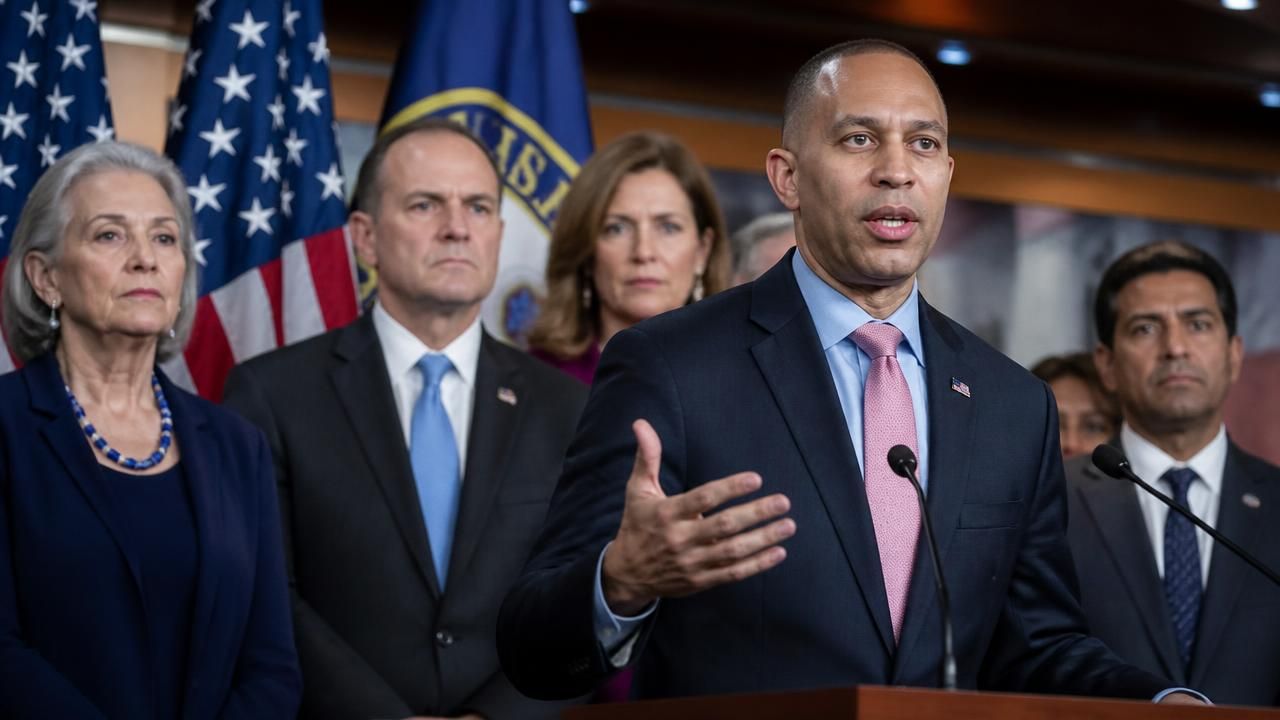
House Democratic Leader Hakeem Jeffries was unequivocal:
“He will not succeed.”Jeffries vowed that Democrats would stop Trump from trying to nationalize the midterms, a sentiment echoed in a meeting of House Democrats focused on combatting potential interference.
States Fortify Election Defenses
Beyond Washington, states are taking matters into their own hands. Stateline reported that states are moving to fortify elections against Trump, with one election official declaring, “No more hypothetical situations.” California Democrats have urged election officials to prepare for the possibility of Trump attempting to seize ballots, according to the San Francisco Chronicle. CNN detailed how Democratic-led states are scrambling to prevent potential Trump administration interference, including drafting legal briefs and contingency plans.
A key flashpoint is the presence of federal law enforcement at polling sites. Multiple blue states are pushing to ban ICE agents from polling places, a move framed as a direct response to fears of voter intimidation. As Politico reported, Democrats see the potential deployment of immigration enforcement as “a pretext to rig the election.” The National Immigration Law Center and other groups have warned that any ICE presence near polls could suppress turnout in immigrant communities.
The Federal Threat: Troops, ICE, and the DOJ
Perhaps the most alarming scenario involves the U.S. military. Notus reported that Democrats are mobilizing over fears Trump will deploy troops to the polls, a move that would echo authoritarian regimes and violate longstanding norms against military involvement in civilian elections. Democratic attorneys general are plotting to thwart such interference through litigation, according to Politico. They are preparing emergency legal actions against the administration, arguing that any attempt to use federal power to influence election outcomes violates the Constitution and federal law.
Robert Reich, in his Substack newsletter, identified what he sees as Trump’s most likely threat to the midterms: not outright voter suppression, but the weaponization of the Justice Department and federal agencies to create chaos and cast doubt on the legitimacy of results. The Democracy Project has warned of a coming confrontation between Trump and the courts, as the administration seeks to expand executive power over elections.
A Pattern of Rhetoric and Action
Critics point to Trump’s recent speeches as laying the groundwork for tampering with results. The Guardian noted that his rhetoric has escalated, with baseless claims about widespread fraud and a system that is “rigged.” The Economist raised the question directly: “Might Donald Trump try to rig the midterms?” Even conservative commentators are acknowledging the possibility of a “doomsday scenario” in which Trump and Republicans could steal power even if they lose, as Zeteo detailed.
The Center for American Progress goes further, arguing that the Trump administration is actively interfering in the midterms to entrench what it calls the imperial presidency. Its report outlines a strategy of using federal power to intimidate voters, purge voter rolls, and challenge ballots in key states.
The White House Fires Back
Administration officials dismiss these concerns as partisan fearmongering. A White House spokesperson told PBS that the accusations are baseless and designed to undermine public confidence in the electoral system. “The president believes in free and fair elections,” the spokesperson said. “These claims are simply fearmongering.”
But election officials on the ground are sounding the alarm. PBS News also reported that election officials from both parties are worried about political interference, even as they try to maintain neutrality. The National Association of Secretaries of State, which includes Republican and Democratic officeholders, has issued statements affirming that elections are administered at the local level and that federal intrusion would be met with resistance.
What Comes Next
The coming months will test the resilience of America’s electoral system. Democrats are preparing for possible election clashes with the federal government, as The New York Times reported. The Washington Spectator has called for emergency planning, arguing that the country can still act to protect the midterms. That plan includes public education campaigns, legal defense funds, and bipartisan coalitions to certify results.
Jeffries and other leaders have stressed that Democrats will not back down. “We will ensure that the American people, not any one individual, decide the outcome of this election,” he said in a recent address. With the stakes this high, the preparation is not theoretical—it is a matter of preserving democratic governance itself.
As Election Day approaches, the question is whether these safeguards will be enough. The lessons of January 6 loom large, and Democrats are determined not to be caught off guard again. The midterms, it seems, will be as much a test of institutional resilience as of voter preference.