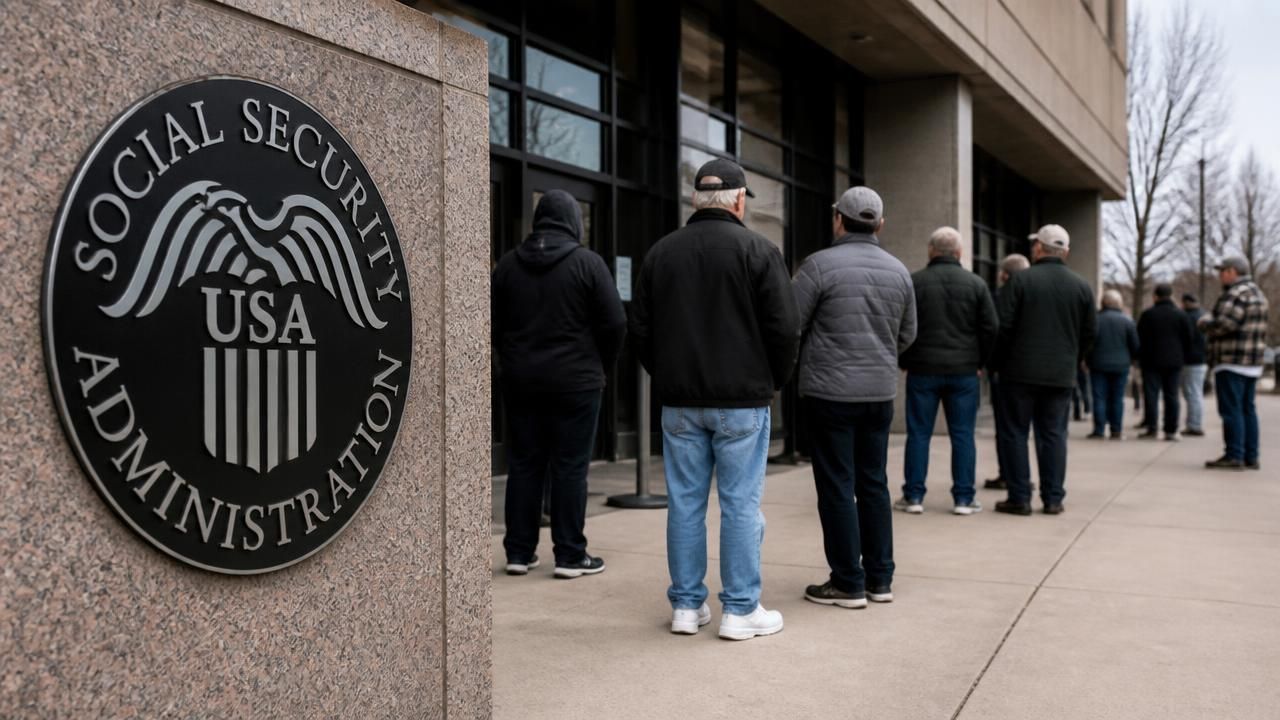
The Social Security trust fund is on pace to run dry within the next decade, a confluence of demographic shifts and financial pressures that threatens to cut benefits for millions of retirees. Yet despite the stakes, the issue has barely registered as a top-tier campaign topic in the 2024 election cycle. Experts worry that the lack of public discussion leaves most Americans unprepared for the trade-offs ahead.
The Looming Depletion: A Shifting Timeline
Official projections from the Social Security Board of Trustees have long warned that the combined trust fund reserves will be exhausted by the mid-2030s. Forbes reports the fund could be depleted by 2032—even earlier than some estimates—while Marketplace pegs the date at 2035 unless lawmakers act. MSN similarly highlights 2032 as a critical threshold, urging Americans to rethink retirement strategies.
However, a new Wharton School analysis, covered by CNBC, suggests the depletion date may arrive later than official projections, offering a slightly more optimistic—but still urgent—timeline. The discrepancy hinges on assumptions about economic growth, immigration, and wage trends.
A Political Blind Spot
Despite these numbers, NPR notes that Social Security is conspicuously absent from campaign debates.
“Limited public discussion of the trust fund's shortfall has experts worried that most Americans don't fully understand the problems Social Security faces — let alone be able to weigh in on solutions,”NPR reported. That silence is especially striking in swing states like Michigan, where Detroit News columnist Nolan Finley argues the issue should be front and center in the Senate race. “Counting on Social Security? Don’t,” he warns.
Some state-level politicians have engaged, including Indiana State Senator Mike Delph, who discussed Social Security in an interview with Wikinews—an indication that the concern is percolating even if presidential candidates are avoiding it.
The Candidates’ Divergent Visions
The contrast between the leading presidential contenders is stark. Former President Donald Trump has promised tax-free Social Security, a crowd-pleasing idea that critics say would actually accelerate trust fund depletion. The Tax Policy Center characterizes Trump as a “disrupter” who is taking dead aim at the program’s finances. WBUR’s On Point explores whether the pledge is too good to be true, noting that eliminating income taxes on benefits would remove a key revenue stream.
Vice President Kamala Harris, meanwhile, has proposed expanding benefits and raising taxes on high earners to shore up the system, according to USA Today. Her approach reflects a Democratic emphasis on protecting and enhancing the program, while Trump’s tax-cut plan is framed as reducing the financial burden on seniors—at the cost of accelerating insolvency.
What Americans Actually Agree On
Investopedia reports that there are surprising areas of bipartisan consensus among the public. Polling shows strong support for:
- Raising the payroll tax cap on high-income earners
- Implementing means-testing for wealthy retirees
- Increasing the retirement age gradually
These ideas, however, remain politically radioactive in Washington, where any change to Social Security is met with fierce opposition.
Advocates Fight to Protect Benefits
AARP has been at the forefront of defending Social Security. Nancy LeaMond, AARP’s executive vice president, testified before the Senate, urging lawmakers to reject benefit cuts and instead focus on making the wealthy pay their fair share. AARP argues that any solution must preserve the program for the millions of Americans who rely on it as their primary retirement income.
The Economic Fallout of Inaction
Delaying reform doesn’t just endanger retirees—it risks broader financial instability. CNBC reports that research shows procrastination raises risks for bond markets and the economy. Investors could demand higher yields on U.S. debt if they fear fiscal instability, creating a feedback loop that exacerbates the problem.
MarketWatch adds a psychological dimension: a looming 20% benefit cut could trigger panic among near-retirees, prompting them to alter spending and savings in ways that could worsen the economic impact. “Warning Americans could make it even worse,” the outlet cautions.
The Real Fix?
Robert Reich, the former U.S. Secretary of Labor, offers a direct prescription: scrap the payroll tax cap and tax investment income. In his Substack, Reich argues that the program’s funding gap is largely a product of income inequality, not demographic destiny. “The real fix for Social Security,” he writes, “is to make the wealthy contribute their fair share.”
That sentiment echoes AARP’s testimony and the public opinion data from Investopedia. The path forward, advocates argue, is not about cutting benefits but about increasing revenue at the top.
A Call to Action
With the trust fund depletion date now within sight, the cost of inaction grows higher every year. The Wharton forecast offers a little breathing room, but the political system has yet to engage in a meaningful way. As the 2024 campaign enters its final stretch, voters deserve answers on how the next president will handle a program that tens of millions depend on.
Social Security may not be the loudest issue on the trail, but its future will shape the retirement security of a generation. The question is whether politicians will start talking about it before the money runs out.