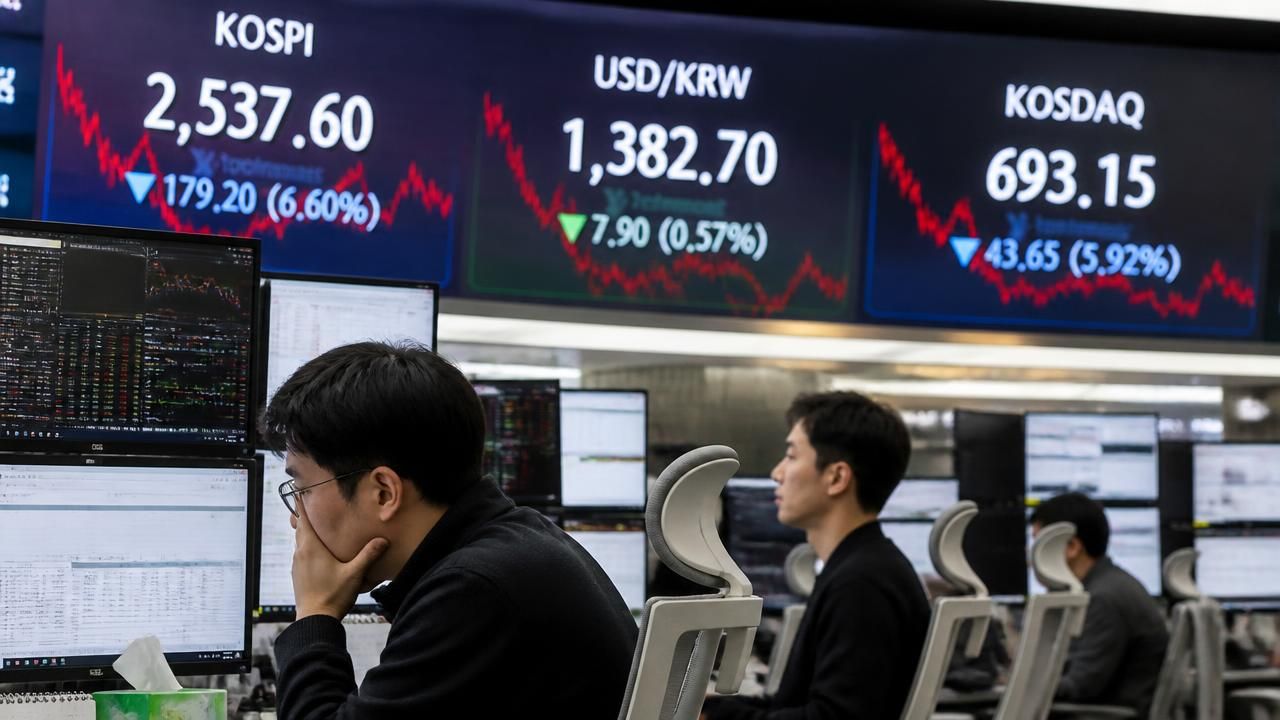
Asian markets closed sharply lower on Monday, extending a global selloff in technology and artificial intelligence-related stocks. South Korea's Kospi led the decline, plunging 6.6% as heavyweight chipmakers and tech giants like Samsung Electronics and SK Hynix came under heavy selling pressure. The region-wide downturn also dragged down Chinese tech names, including Alibaba, and set a cautious tone for the week ahead, with investors bracing for Nvidia's quarterly earnings and the U.S. Federal Reserve's annual symposium at Jackson Hole.
The simultaneous drop in AI-linked equities and retreat in oil prices underscored a broader risk-off mood across global markets. According to Bloomberg Markets, the decline in Asian stocks put the artificial intelligence trade in early focus during a week dominated by two pivotal events: chip bellwether Nvidia Corp.'s earnings report and the Fed's gathering of central bankers. Oil also fell, adding to the sense of uncertainty.
Kospi's 6.6% Plunge Shakes Regional Sentiment
South Korea's benchmark Kospi index suffered its steepest single-day fall in recent memory, closing down 6.6%. The drop was fueled by a combination of profit-taking in tech stocks and concerns over valuations in the AI sector. Samsung Electronics, the country's largest company by market capitalization, was among the biggest drags, along with chipmaker SK Hynix, which has been a major beneficiary of the AI memory-chip boom.
The scale of the Kospi's decline reverberated across other Asian markets. Japan's Nikkei and China's Shanghai Composite both closed lower, though by smaller margins. Hong Kong's Hang Seng Index also fell, with Alibaba and other tech platforms leading the retreat. The synchronized downturn suggests that investors are reassessing the durability of the AI rally that has powered global equities for much of 2024.
Mixed Signals on Oil Prices
While most sources confirmed that oil prices slipped alongside equities, one headline from NY1 noted a contradictory script: it initially said oil prices were “still climbing” but then reported that oil prices slipped in the same article. This discrepancy highlights the volatility in energy markets, which remain sensitive to geopolitical tensions and demand forecasts.
Brent crude and West Texas Intermediate both edged lower during Asian trading hours, partly on expectations of weaker demand from a slowing global economy. However, any sustained decline in oil prices could provide some relief to central banks wrestling with inflation, including the Fed, which is expected to signal its next policy moves at Jackson Hole later this week.
Nvidia Earnings and Jackson Hole: The Week's Dual Catalysts
Investors are now turning their attention to two key events that could determine the direction of global markets in the coming weeks. First, Nvidia, the world's most valuable chipmaker and a bellwether for the AI trade, is set to report quarterly earnings on Wednesday. The results will be scrutinized for signs of whether the explosive growth in AI infrastructure spending is sustainable. Expectations are sky-high: any slight miss in guidance could trigger a sharp correction in tech stocks worldwide.
Second, the Federal Reserve's Jackson Hole Economic Symposium will take place from Thursday to Saturday, with Fed Chair Jerome Powell scheduled to speak on Friday. Markets will be parsing his remarks for clues on the timing and magnitude of interest-rate cuts. According to Bloomberg, the Fed’s annual gathering is traditionally used to telegraph major policy shifts, and this year’s meeting carries extra weight given the recent cooling in U.S. inflation and a softening labor market.
What Analysts Are Saying
“The simultaneous slump in AI stocks and oil prices suggests that investors are de-risking ahead of a pivotal week,” said one market strategist in Hong Kong. “The Kospi's 6.6% drop is a stark reminder that valuations in the tech sector have run ahead of fundamentals.”
Other analysts caution against reading too much into a single day's move. “Corrections are healthy after such a strong rally,” said a portfolio manager in Singapore. “The underlying demand for AI chips remains robust, and Nvidia's numbers could easily reset the narrative.”
Samsung, Alibaba Lead the Decliners
Samsung Electronics has been a particular focus of selling, as investors worry about a potential slowdown in memory-chip prices and the company's exposure to the smartphone market. Meanwhile, Alibaba and other Chinese internet platforms face unique headwinds, including regulatory uncertainty and a fragile domestic recovery. These companies are also part of the broader AI narrative, as they invest heavily in cloud computing and large language models.
In a note to clients, analysts at a major investment bank argued that the AI trade has become overcrowded, with too much capital concentrated in a handful of mega-cap technology names. They recommended that investors diversify into other sectors, such as healthcare and financials, which could benefit from lower interest rates.
A Broader Market Correction?
Monday's decline raises the question of whether this is the beginning of a more prolonged correction or merely a short-term pullback. The Kospi's 6.6% drop is particularly notable because it came without a clear negative catalyst, suggesting that investor psychology is shifting. Some traders pointed to options expiration and month-end rebalancing as technical factors that may have amplified the move.
Yet global markets have shown remarkable resilience over the past year. The MSCI Asia-Pacific Index is still up roughly 8% year-to-date, despite Monday's losses. Much will depend on Nvidia's earnings and Powell's speech. If Nvidia delivers a strong beat and the Fed signals a dovish pivot, the AI trade could resume its upward trajectory. Conversely, any disappointment could trigger further volatility in Asian markets, which are increasingly tied to the fortunes of the global tech cycle.
Conclusion: A Week of Reckoning
As the week unfolds, Asian investors will be watching three key things: Nvidia's earnings, Powell's Jackson Hole address, and whether oil prices continue to slide. The intersection of these forces will likely determine whether the AI-driven bull market has more room to run. For now, the slump in Asian stocks and the retreat in oil prices serve as a stark reminder that markets are vulnerable to sudden shifts in sentiment.
For individual investors, the advice remains the same: diversify, stay disciplined, and avoid chasing momentum. The 6.6% crash in the Kospi may be a warning sign, but it could also be a buying opportunity for those with a longer-term perspective.