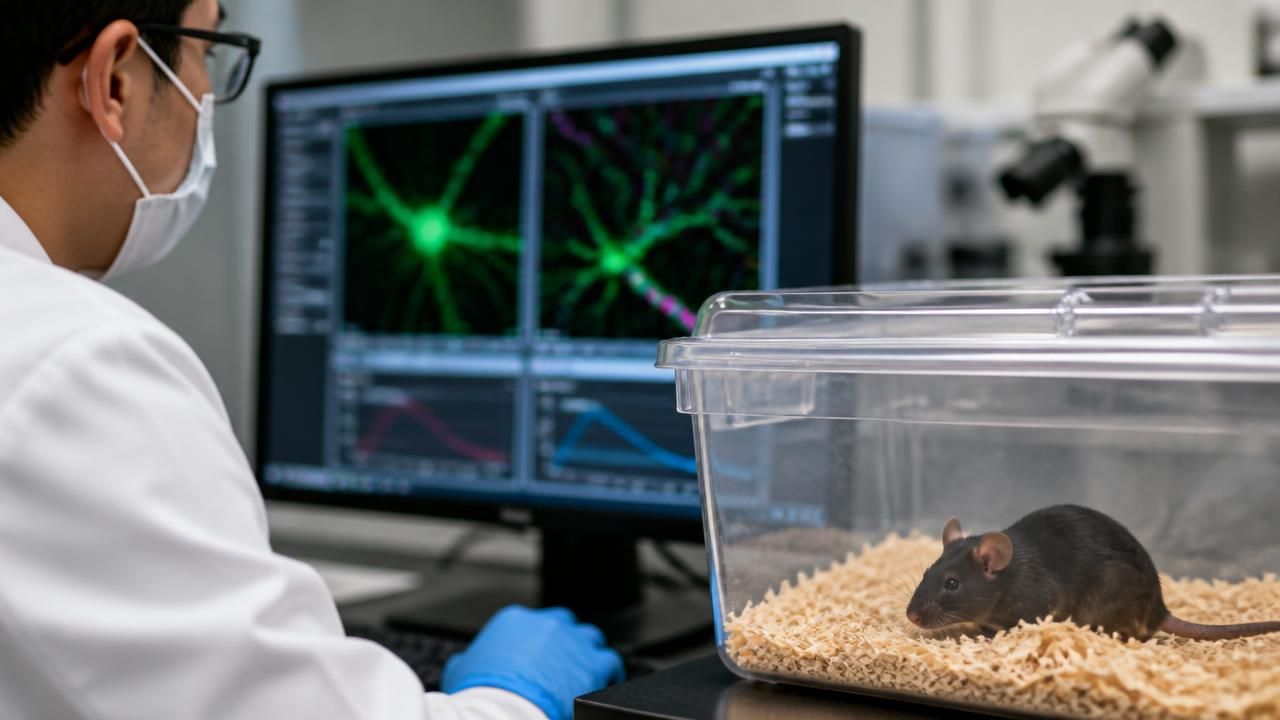
A groundbreaking study has thrown into question one of neuroscience's most fundamental assumptions: that memories are stored in the physical connections between neurons. By putting mice into an artificial hibernation-like state, researchers at the Okinawa Institute of Science and Technology (OIST) and the University of Tsukuba discovered that the animals lost more than half of their synapses—yet their memories remained completely intact. The findings, published in Science, are forcing scientists to reconsider how long-term memories survive the constant remodeling of the brain.
The Memory Paradox
For decades, the leading hypothesis for memory storage has been that learning strengthens and enlarges the connections among neurons—synapses—and that this physical change constitutes the memory. However, synapses are highly plastic, continuously forming and breaking down. Kazumasa Tanaka, a neuroscientist at OIST and lead author of the study, explains the puzzle: "If you compare the arrangement of these connections on day one with the same on day four or five, it's very, very different." So how can a memory last for years if its physical substrate shifts every few days? To tackle this question, Tanaka and his team decided to make the change even more dramatic.
Hibernation on Demand
Hibernation is a natural ability in some mammals like squirrels and bears, but the neural circuit that triggers it exists in all mammals, even those that don't hibernate—including mice. In June 2020, Takeshi Sakurai, a neuroscientist at the University of Tsukuba and co-author of the new study, developed a technique to artificially activate this circuit by stimulating a population of neurons called Q neurons in the hypothalamus. This allowed the team to induce a torpor-like state in mice on demand. During this state, the animals' body temperature drops, metabolism slows, and brain activity changes dramatically.
When Tanaka and colleagues examined the brains of mice after a period of artificial hibernation, they were stunned by what they saw: over half of the synapses had been eliminated. "It's like a reset button for the brain," Tanaka said. Yet when the mice were revived and tested, they still remembered tasks they had learned before the torpor episode. The memories were intact, despite the massive loss of synaptic connections.
What Does This Mean for Memory Storage?
The results challenge the conventional view that memory is stored solely in the pattern of synaptic strengths. If synapses are wiped out but memories persist, there must be either a more resilient molecular mechanism at play or a way for the brain to reconstruct the necessary connections upon revival. Some researchers speculate that memories might be encoded in the pattern of gene expression or in the extracellular matrix, while others suggest that the brain may have a backup system that allows it to rebuild key circuits.
The study also opens the door to a related but distinct line of research. In a separate paper published in Scientific Reports (Nature's open-access journal), the same team demonstrated that torpor enhances synaptic strength and restores memory performance in a mouse model of Alzheimer's disease. This finding suggests that the mechanisms underlying torpor-induced synaptic reset could be harnessed therapeutically. If scientists can understand how memories survive synaptic loss, they might be able to develop interventions that protect or even restore memories in patients with Alzheimer's or other dementias.
Differing Perspectives
Each news outlet covering the story has framed it through a different lens. Ars Technica provides an in-depth scientific analysis, emphasizing the paradox of memory stability in the face of synaptic plasticity. MSN headlines it as "Memory may not work how we thought," reflecting the shock and paradigm-shifting nature of the discovery. Genetic Engineering & Biotechnology News (GenEngNews) focuses on the "secrets" of long-term memory loss revealed by artificial hibernation, hinting at the potential for unlocking new treatments. Nature itself highlights the Alzheimer's disease connection, giving the story a translational and clinical angle.
These varied framings show how a single scientific finding can ripple across multiple domains: fundamental neuroscience, neurodegenerative disease research, and even the ethics of memory manipulation. The possibility that we might be able to safely induce torpor in humans—currently speculative—raises questions about whether such a state could be used to "reset" faulty neural circuits or treat memory disorders.
Implications and Next Steps
The research is still in its early stages, and many questions remain. How exactly do memories persist when synapses are wiped out? What molecular signals enable the brain to rebuild the critical connections? Could the same mechanism be activated pharmacologically without inducing hibernation? These are the questions Tanaka, Sakurai, and their colleagues are now pursuing.
For now, the study serves as a powerful reminder that our understanding of the brain is far from complete. As Tanaka put it, "The brain is more resilient than we thought." By pushing the brain to an extreme state, the researchers have uncovered a hidden layer of memory preservation that could one day lead to breakthroughs in treating Alzheimer's disease and other conditions characterized by memory loss.
The findings also have broader implications for how we think about memory. If memories can survive such drastic changes, perhaps they are not stored in individual synapses but are more like patterns that can be overwritten—or restored—at a system level. Future research will need to map these higher-order mechanisms and determine whether they can be artificially modulated. For now, this study marks a turning point in the field, and it may not be long before our textbooks on memory are rewritten.