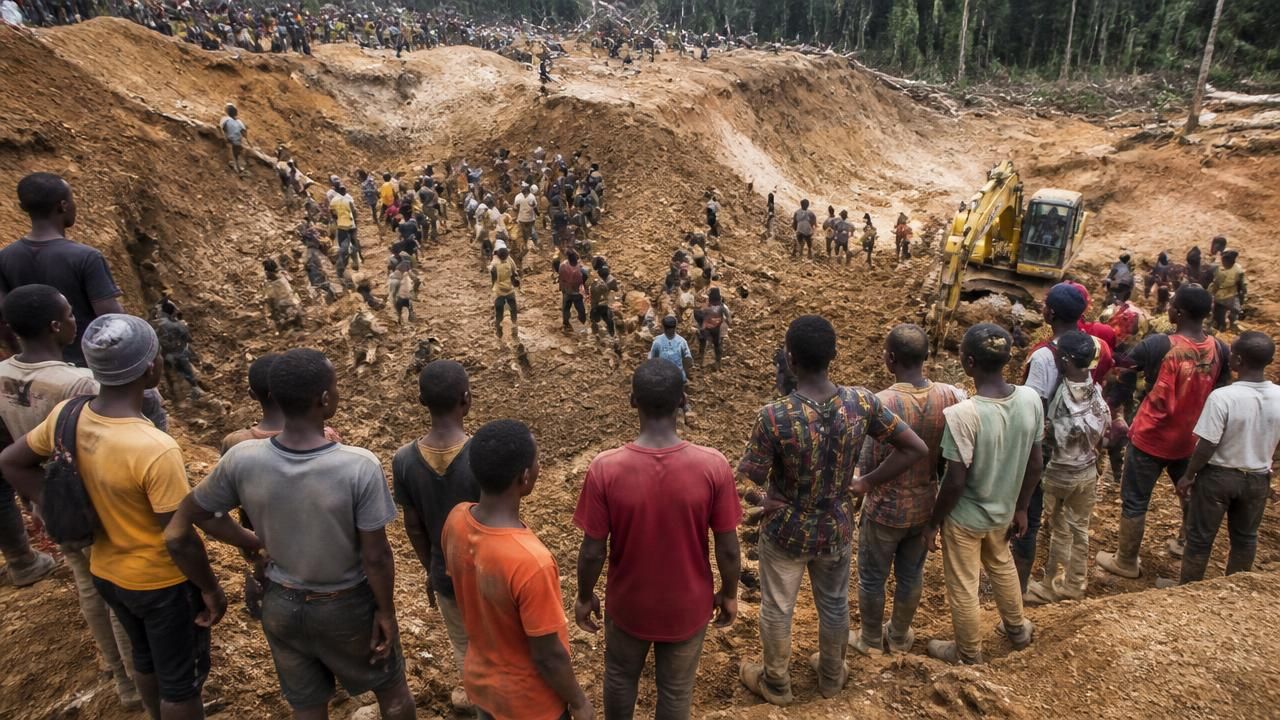
At least 100 people have been killed after an artisanal goldmine collapsed in a remote village in the Central African Republic (CAR), according to local officials and aid workers. The disaster struck on Tuesday afternoon in Zamboye, a small village approximately 50 kilometers (31 miles) from the town of Baboua, near the country's border with Cameroon. The cause: a landslide that engulfed a group of miners, leaving recovery teams struggling to reach the site.
A Catastrophic Landslide
Video footage circulating on social media, which has been verified by news agencies, shows an avalanche of sand and earth hurtling down a slope and burying a group of people who were likely working in the open pit. The scale of the collapse is immense. "We have recovered more than 100 bodies," a local official told The Guardian, speaking on condition of anonymity. "There are still people missing, and we fear the death toll will rise."
Rising Death Toll and Conflicting Reports
Initial news reports varied widely, with some outlets mentioning "dozens" of deaths while others said "at least 100." This discrepancy reflects the chaotic nature of the event and the difficulties of accessing the remote site. As more information emerged, the consensus settled on a toll exceeding 100, with the possibility of further increases as rescuers continue to dig through the debris.
"The situation is dire. We are doing everything we can, but the terrain is difficult and we lack the equipment needed for a large-scale rescue operation,"
said an aid worker from the region, speaking to the BBC.
Artisanal Mining in CAR: A Risky Livelihood
Artisanal gold mining is a common but hazardous occupation in the Central African Republic, one of the world's poorest countries. The country has significant mineral wealth, including gold, diamonds, and uranium, but much of the mining is unregulated and carried out by informal workers using hand tools. These operations often lack basic safety measures, such as pit supports or early warning systems for landslides.
The collapse at Zamboye highlights the chronic dangers faced by these miners. According to the International Labour Organization, artisanal and small-scale mining employs over 40 million people globally, but it is also associated with high rates of fatal accidents. In CAR, the issue is compounded by political instability and weak regulatory oversight, which have allowed illegal mining to flourish in border regions.
Regulatory Gaps and Economic Pressures
The mine at Zamboye was reportedly unlicensed, a common feature of the region's informal mining sector. Miners often work in dangerous conditions because they have few other economic opportunities. Gold prices have risen in recent years, incentivizing more people to take on the risk. However, the payoff is often meager, and the price can be death.
"This tragedy is a stark reminder of the human cost of unchecked resource extraction," said a spokesperson for a human rights organization monitoring the region. "Governments and mining companies must do more to protect these workers, who are essential to the global supply chain but are often forgotten."
Recovery Efforts and International Response
Rescue operations are being hampered by the lack of heavy machinery and the remote location of the mine. Local authorities have appealed for international assistance, but with the nearest major town 50 kilometers away over poor roads, help is slow to arrive. Teams are using shovels and bare hands to search for survivors, but officials say the chances of finding anyone alive are "getting slimmer" by the hour.
The CAR government has expressed its condolences and promised an investigation. However, given the country's history of weak enforcement, it is unclear whether any meaningful safety reforms will follow. The disaster has also raised questions about the role of foreign buyers and corporations that source gold and minerals from the region, often without verifying the conditions under which they are extracted.
How Different Outlets Framed the Story
The news coverage of the collapse varied in emphasis. The Guardian and the New York Times initially focused on the rising death toll and the likelihood of more casualties. ABC News and BBC News highlighted the proximity to the Cameroon border and the remote nature of the site. The New Indian Express was explicit in describing the mine as "illegal," while other outlets referred to it as "artisanal."
Several sources, including MSN and Yahoo, shared amateur video footage of the landslide, which provided a visceral sense of the disaster. The video, which has been widely circulated, shows the moment the ground gave way, underscoring the speed and violence of the event.
Context: Deadly Mining Accidents in Africa
This is not an isolated incident. Similar tragedies have occurred across Africa, where mining accidents are common. In 2019, more than 40 people were killed in a gold mine collapse in the Democratic Republic of Congo. In 2020, a landslide at an artisanal mine in Tanzania killed dozens. The African Union has repeatedly called for stronger safety regulations, but enforcement remains weak.
The economic implications of the disaster extend beyond the immediate loss of life. Gold mining is a vital source of revenue for many local communities in CAR, and the loss of an entire work crew will have a devastating impact on the village of Zamboye and its surroundings.
Looking Ahead
As the recovery effort continues, the global attention on this tragedy may spur renewed calls for action. But without sustained pressure on governments and companies to formalize the artisanal mining sector, similar disasters are likely to recur. For now, the immediate priority is to recover the bodies and support the families of the victims, who are left to grieve in one of the most neglected corners of the world.
This article is based on reporting from The Guardian, BBC News, ABC News, The New York Times, and other sources. Additional context was drawn from regional monitoring groups and historical data on mining accidents.