In a striking departure from decades of American diplomatic tradition, President Donald Trump has consistently shown hostility toward traditional allies while expressing unexpected warmth toward adversaries. The recent friction with Oman, Canada, and South Korea—coupled with the president's overtures to North Korea—has left many observers baffled. Yet, analysts argue, this 'upside-down world' is not a sudden aberration but the culmination of a decade of global upheaval and a deliberate reordering of U.S. foreign policy priorities.
A Pattern of Diplomatic Disruption
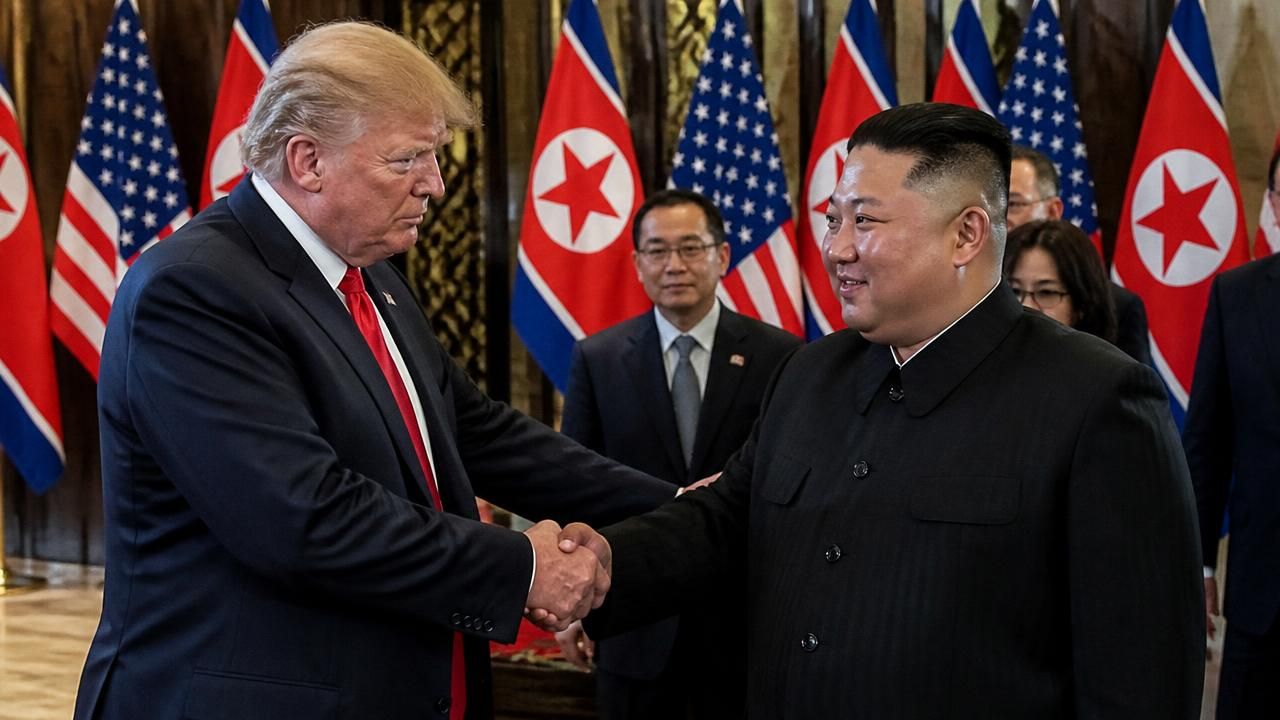
From the outset of his presidency, Trump has challenged the bedrock assumptions of the post-World War II alliance system. His transactional view of international relations treats friendship as negotiable and enmity as an opportunity for engagement. This was vividly illustrated in recent weeks when the president reportedly pressured Oman, a key Gulf mediator, to normalize ties with Israel, while simultaneously criticizing Canada and South Korea over trade and defense spending. Meanwhile, his summitry with North Korean leader Kim Jong-un—a man he once called 'Little Rocket Man'—has produced historic meetings but few concrete results.
The pattern is unmistakable: allies are squeezed, adversaries are courted. According to Dr. Elena Rodriguez, a professor of international relations at Georgetown University, 'Trump is signaling that the old rules no longer apply. He believes that alliances are burdens, not assets, and that engagement with enemies can yield breakthroughs that traditional diplomacy cannot.'
The Decade of Upheaval
To understand this dramatic reversal, one must look back at the last ten years. The 2008 financial crisis eroded faith in Western institutions, the rise of populism in Europe and the United States challenged elite consensus, and China's rapid ascent shifted the global balance of power. The Arab Spring, the Syrian civil war, and the refugee crisis fractured the Middle East. These events, argues historian James Whitfield, 'created a vacuum of predictability. Trump has simply filled that vacuum with his own instincts, which are fundamentally transactional.'
The president's 'America First' doctrine is not merely isolationist; it is actively revisionist. It seeks to dismantle multilateral frameworks like the Paris Agreement, the Trans-Pacific Partnership, and the Iran nuclear deal, while simultaneously pursuing direct, bilateral deals with rivals. This approach has been on full display in his interactions with Oman, Canada, and South Korea—each a strategic partner that has borne the brunt of his demands.
Oman: A Quiet Ally Pressured
Oman has long served as a discreet intermediary in the Middle East, maintaining channels with both Iran and the Gulf states. The United States has historically valued this role. Yet, according to leaked diplomatic cables, the Trump administration has threatened to restrict aid unless Oman accelerates normalization with Israel. 'This is a coercive tactic that undermines Omani sovereignty,' said retired ambassador Sarah Chen. 'It treats a trusted friend as a pawn in a broader geopolitical game.'
Canada: From Ally to Adversary?
Even Canada, the United States' closest neighbor and largest trading partner, has not been spared. Trump has repeatedly attacked Canadian dairy tariffs and threatened to terminate NAFTA altogether. The renegotiated USMCA (United States-Mexico-Canada Agreement) was hailed by the administration as a victory, but the rhetoric has left a sour taste. 'Canada is used to being the reliable sidekick,' said trade expert Michael O'Leary. 'To be branded a national security threat under Section 232 was a shock.' The aluminum tariffs imposed in 2020 were seen as a direct affront to a historically seamless economic relationship.
South Korea: The Price of Protection
South Korea, a linchpin of U.S. security in East Asia, faces escalating demands to increase its contribution to the cost of American troop presence. Trump has called Seoul a 'rich nation' that should pay more, and negotiations have repeatedly stalled. This recalcitrance has emboldened Pyongyang, which sees a rift between its two main adversaries. 'The alliance is still strong operationally, but the trust is eroding,' noted Korean security analyst Park Ji-min. 'Trump's personal diplomacy with Kim has undercut the traditional U.S. position that the South Korean alliance is the cornerstone of stability.'
The North Korea Gambit
The most visible symbol of Trump's inverted approach is his relationship with North Korea. After trading insults and nuclear threats, Trump became the first sitting U.S. president to step onto North Korean soil, and he has repeatedly expressed admiration for Kim. This courtship has drawn sharp criticism from American allies and human rights groups, but the president frames it as a necessary opening. 'There is no point in having the same failed policy for 30 years,' he said at a rally in 2019. 'I like Kim Jong-un. He likes me. That is how deals get done.'
However, experts caution that personal affinity has not translated into denuclearization. North Korea has continued to develop its missile capabilities, and negotiations have stalled. 'This is a dangerous illusion,' warns former State Department official Laura Harmon. 'By embracing a dictator, Trump legitimizes his regime while asking little in return. It undermines the very leverage the U.S. holds with its allies.'
Why This Approach?
Why would a U.S. president alienate friends and cosy up to enemies? Some analysts point to Trump's business background, where negotiating leverage comes from unpredictability and the willingness to walk away. Others see a deeper ideological conviction that the United States has been 'ripped off' for decades, and that only by creating a climate of uncertainty can new, better deals be forged.
'Trump is upending the chessboard to see how the pieces fall. For him, chaos is a strategy.' — Dr. Elena Rodriguez, Georgetown University.
Critics argue that this approach is deeply flawed. Alliances are built on trust, not coercion. The very foundations of the international order—from the United Nations to NATO—depend on predictable, rule-based behavior. By eroding these norms, the president risks isolating the United States at a time when global challenges like climate change, pandemics, and great-power competition require robust cooperation.
Implications for the Global Order
The long-term consequences are profound. Trust is a fickle currency in international affairs. Once squandered, it is difficult to reclaim. Allies are already diversifying their partnerships, hedging against an unpredictable Washington. The European Union has accelerated its strategic autonomy efforts, and Asian nations are deepening ties with China. Meanwhile, adversaries have gained a propaganda victory, pointing to the United States' unreliability as evidence that the liberal world order is crumbling.
The president's defenders counter that his approach is restoring respect for American strength. They point to increased defense contributions from NATO members, a more balanced trade portfolio, and the diplomatic opening with North Korea as tangible wins. Yet, the list of broken agreements and wounded allies is long.
What Comes Next?
As the election approaches, Trump's foreign policy remains a central issue. Whether he wins a second term or hands off to a new administration, the repercussions of his 'upside-down world' will endure. The next president will inherit a diplomatic landscape transformed, for better or worse, by four years of transactional chaos.
The global community watches with a mix of alarm and fascination. Will the United States return to its traditional role as a steady, reliable partner? Or has the decade of upheaval permanently reset the terms of engagement? The answer may determine the shape of the 21st century.
For now, the president remains unrepentant. At a recent press conference, he declared: 'Every country has to look out for itself. That is not selfish. That is smart.' Whether that worldview ultimately protects American interests or isolates it in a hostile world is the defining question of our time.