Across Washington, a single phrase is echoing through strategy sessions, congressional hearings, and op-ed pages: "wake-up call." From the Pentagon to Silicon Valley, policymakers and experts are warning that the United States is sleepwalking into a new era of competition with China — one that could see Beijing beat America back to the Moon, dominate critical technologies, and even challenge the foundations of the post-war order. The message is stark: the United States must open its eyes, or risk waking up in a world where it no longer leads.
The New Space Race: China's Lunar Ambitions
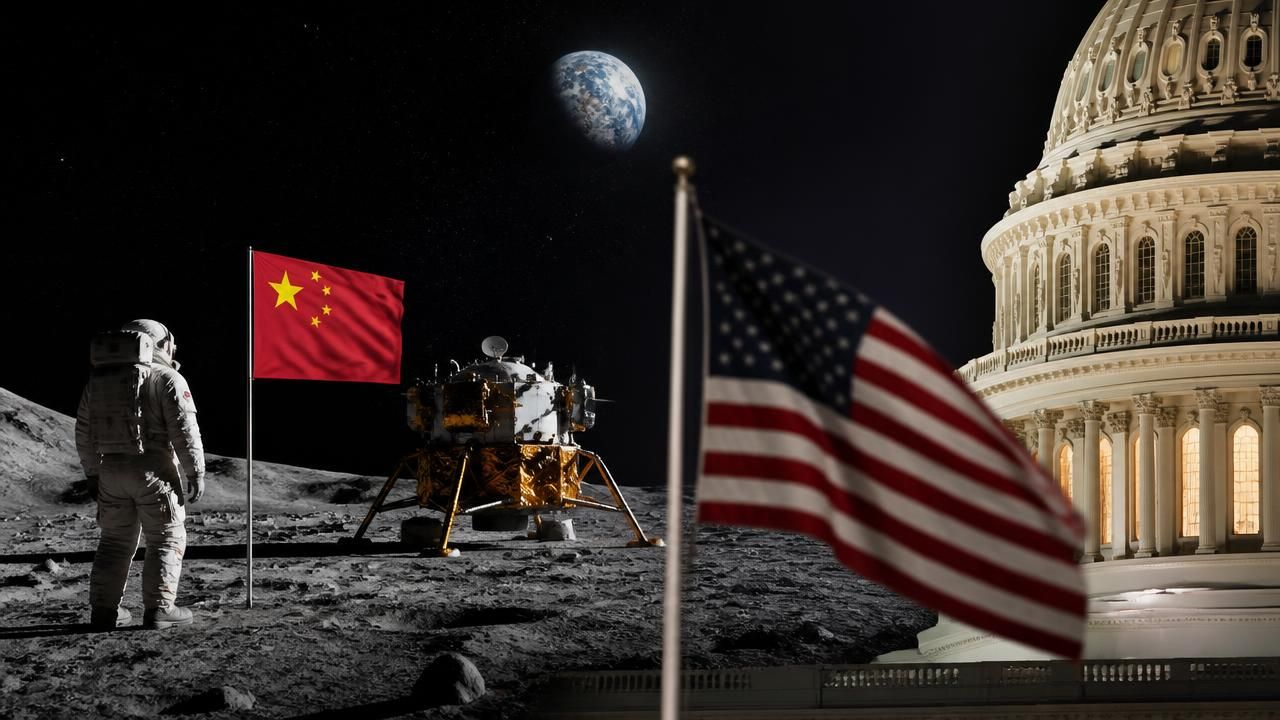
At the heart of this anxiety is space. As Ars Technica reports, there are "two schools of thought" about China's plans to land astronauts on the Moon. Some dismiss the prospect, noting that NASA won the space race decades ago. But others see a "huge geopolitical win" for Beijing if it reaches the lunar surface before the United States returns. "If China can land humans on the Moon before the United States returns, it will represent a huge geopolitical win," the report argues. "From a propaganda standpoint, it will allow China to declare that it has not just caught up to the United States but surpassed it as this century's superpower."
That sentiment is echoing in political circles. Senator Ted Cruz has pledged to protect NASA funding amid proposed budget cuts, warning, "I don't want to wake up one day and look up at the moon and realize the Chinese have beat us there." His comments reflect a growing bipartisan anxiety that space dominance is not just a matter of scientific prestige, but of national power.
A 'Sputnik Moment' for the Military
Military leaders are using even stronger language. The Air Force Secretary recently warned of a "Sputnik moment" as the United States faces China's rapid military advances. The reference to the 1957 Soviet satellite launch, which shocked the West into action, is intentional: many believe China's progress in hypersonics, AI, and space warfare represents a comparable existential challenge.
Republican Senator Katie Britt has pushed for increased Space Force readiness legislation, stressing the urgency of the moment. The Heritage Foundation, meanwhile, warns that "China's new weapon just upped the global threat level." The Space Review has published a multi-part series titled "Red Heaven: China sets its sights on the stars," detailing the breadth of Beijing's space ambitions, from lunar bases to orbital weapons.
The warnings are not limited to hardware. China's growing space domain awareness capabilities — the ability to track and potentially neutralize adversary satellites — are described as a "secret weapon against shadowy threats in orbit" by SpaceNews. Near-collisions, like the one involving a Starlink satellite and China's space station, underscore the risks of an increasingly crowded and contested orbital environment.
Taiwan: The Flashpoint That Keeps Strategists Awake
Nowhere is the "wake-up call" more urgent than Taiwan. A new Taiwanese TV show imagining a Chinese invasion has given viewers a wake-up call, while a U.S. military paper has sparked outrage by suggesting Taiwan should adopt a "broken nest" policy and destroy its crown jewel, chipmaker TSMC, in the event of a Chinese invasion. Taiwan's navy, meanwhile, is caught between two strategies to counter the Chinese threat, as reported by USNI News.
National Interest warns of "misled confidence" in both Taiwan and America, arguing that the island's defenses may be inadequate. Brookings, in its analysis of China's "grand strategy," notes that Beijing is playing a long game to displace the American order — not through direct confrontation, but through economic and technological leverage. The fate of Taiwan, and of TSMC, is central to that strategy, as semiconductors are the lifeblood of modern warfare and commerce.
Beyond Space: AI and Cyber as Wake-Up Calls
China's technological rise extends far beyond space. President Trump recently called China's DeepSeek AI "a wake-up call for American tech companies," acknowledging that Beijing has closed the gap in artificial intelligence. The remark highlights a broader anxiety: the United States is no longer the undisputed leader in every cutting-edge technology.
The wake-up call metaphor has also been applied to cybersecurity. After the Colonial Pipeline ransomware attack, experts described it as a "wake-up call about the threat of ransomware." The incident revealed how vulnerable critical infrastructure is to digital attacks, many of which trace back to state-sponsored actors. China's alleged role in telecommunications vulnerabilities, as explored by the National Defense University, adds another layer of concern.
Global Repercussions: Allies and Rivals Respond
The ripples are being felt far beyond Washington. Calcalistech reports that the U.S. and China are battling for space supremacy while India and Japan eye bigger roles. Europe, too, is waking up. The FT reports that Europe's space ambitions are at risk over dependence on NASA, while a stunned Europe gathers to respond after Trump increased pressure over Greenland — a sign that the competition for strategic territory is heating up. Meanwhile, the UK and Germany have accused Russia of threatening their satellites, adding a second adversarial power to the mix.
India's anti-satellite (ASAT) test, as SpaceNews notes, was itself a wake-up call for norms of behavior in space, demonstrating that the dangers of space debris are no longer theoretical. Russia's intelligence activities, as detailed by Russia Matters, are causing "greater concern over escalation" even as U.S. attention is focused on China.
The Long Game: What the Future Holds
The common thread across all these stories is a recognition that the United States is in a marathon, not a sprint. China's "brute force economics" and long-term strategy, as analyzed by the Texas National Security Review, are designed to outlast American dominance.
The "wake-up call" framing is itself a call to action. As China Daily notes, the phrase is also used in China — but there, it is a wake-up call to the Chinese people about the need to strengthen their country against Western containment. Both sides see the other as a threat, and both are mobilizing.
"I don't want to wake up one day and look up at the moon and realize the Chinese have beat us there." — Senator Ted Cruz
The practical implications are enormous. For the United States, it means sustained investment in NASA, Space Force, AI research, and cybersecurity. It means difficult conversations about Taiwan, about supply chains, and about alliances. The question is whether the wake-up call will be heeded in time — or whether the United States will, as the warnings suggest, wake up to a new reality it no longer controls.
As the Air Force Secretary's Sputnik analogy suggests, moments of national reckoning can produce transformational responses. The Sputnik launch led to NASA, the Apollo program, and a generation of scientific achievement. Whether China's rise triggers a comparable response — or whether it cements a new multipolar order — is the defining question of this decade.
One thing is certain: the United States is no longer alone at the top, and the dreams of a unipolar moment have faded. The wake-up call has sounded. Now comes the hard part: answering it.