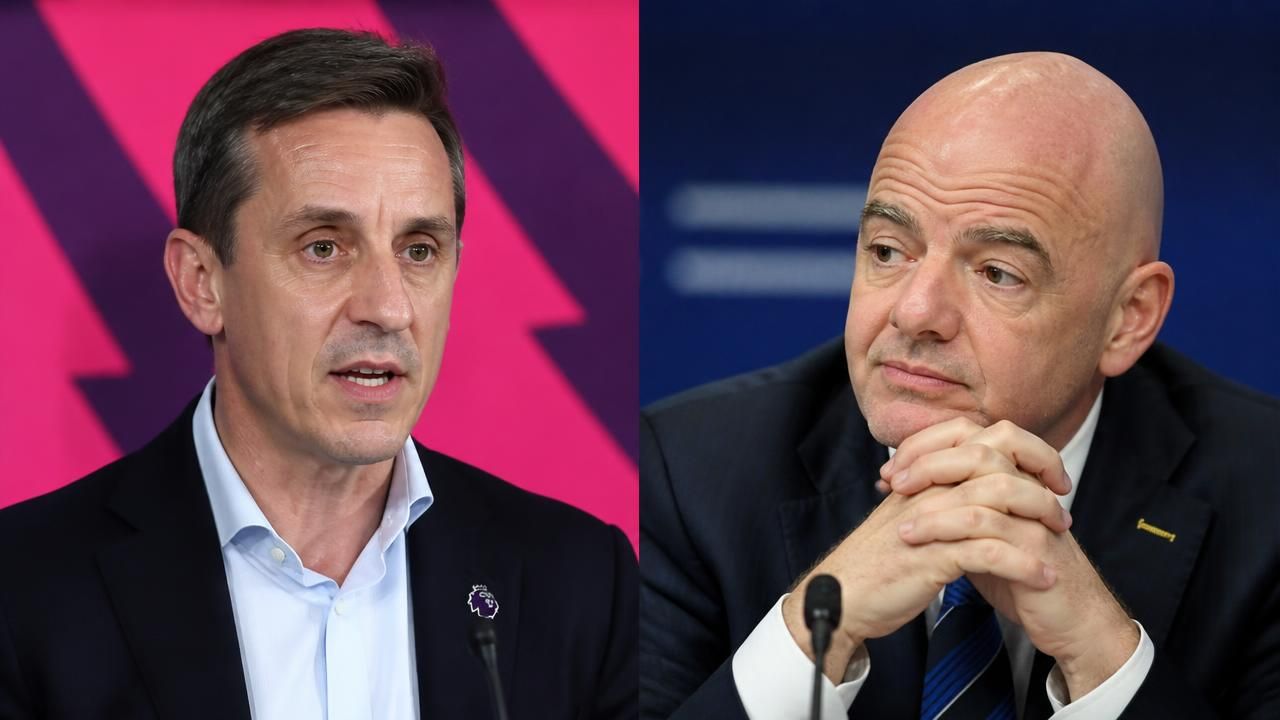
The Premier League's chief executive, Richard Masters, has delivered a stinging rebuke to FIFA president Gianni Infantino, accusing world football's governing body of pressing the "self-destruct button" over its controversial World Cup plans. Speaking to the BBC, Masters described the initiative as "a self-inflicted wound," the strongest criticism yet from a leading figure in European football.
Masters' comments come at a turbulent time for FIFA, which faces mounting scrutiny over its governance, leadership, and handling of major tournament proposals. The specific plan in question relates to FIFA's push to restructure the international match calendar, including proposals for a biennial World Cup and expanded club competitions—moves that have drawn widespread opposition from domestic leagues, national associations, and player unions.
Richard Masters: 'The organisation has pressing issues'
In an interview with BBC Sport, Masters pulled no punches. "FIFA has pressed the self-destruct button," he said. "There is a real sense that the organisation is delivering a self-inflicted wound. The plans for the World Cup have been rushed and lack consultation with those who actually make the game work."
The Premier League chief's remarks reflect a broader frustration among Europe's top domestic leagues, who fear that FIFA's ambitions would disrupt domestic calendars, increase player workload, and dilute the commercial value of international football. Masters, who also oversees the English game's commercial interests, stressed that the Premier League is not alone in its opposition. "The European Leagues and the European Club Association are aligned on this. We believe in a balanced international calendar that respects domestic competitions."
"FIFA has pressed the self-destruct button. There is a real sense that the organisation is delivering a self-inflicted wound." — Richard Masters
Kevin Lamour sacking: 'Deeply troubling' says UEFA executive
Masters' criticism lands amid another storm surrounding FIFA's leadership. UEFA executive Laura McAllister has described FIFA's decision to sack Kevin Lamour, a prominent official in the organisation's governance department, as "deeply troubling." Lamour, who had been involved in integrity and compliance work, was dismissed under circumstances that critics say raise questions about political interference.
"This sends a deeply troubling message about FIFA's commitment to good governance," McAllister told the BBC. "When officials who uphold standards are removed, it undermines trust across the entire football ecosystem." The sacking is widely seen as part of a broader pattern of FIFA tightening control over its internal structures, particularly in the run-up to the 2026 World Cup, which will be hosted by the United States, Canada, and Mexico.
FA's planned backing of Infantino before Trump scandal
Adding to the turmoil, The Telegraph reported that the Football Association (FA) had planned to back Gianni Infantino's re-election as FIFA president—until a scandal involving former U.S. President Donald Trump intervened. The details remain under wraps, but the report suggests that the FA's support was conditional and that the scandal forced a recalibration of its position.
This revelation is particularly damaging for Infantino, who has sought to project an image of neutrality and reform. The FA, as one of football's most influential associations, is now seen as wavering in its support, a signal of how fragile Infantino's grip on power has become. The Premier League's Masters has not directly addressed the FA's stance, but his public rebuke of FIFA aligns with the growing unease among English football's leadership.
Domestic matters: Chelsea and the Premier League
Masters has also been busy closer to home. In a separate development, he addressed why Chelsea, the London club, avoided a points deduction for alleged financial breaches. According to Masters, the club's cooperation with the Premier League's investigation and the nature of the violations did not warrant a sporting sanction. "We take financial rules seriously, but the outcome must be proportionate," he explained. The case has sparked debate about the effectiveness of the Premier League's financial fair play regime.
Looking ahead to 2026: England, Scotland, and the Saka question
With the 2026 World Cup on the horizon, attention is already shifting to the tournament's host cities. England manager Thomas Tuchel has confirmed that Bukayo Saka's fitness is being "carefully managed" ahead of the competition. Tuchel, who took over from Gareth Southgate, stressed that the Arsenal winger's health is paramount. "We have a plan for Bukayo, and we will not take risks," he said.
Meanwhile, a BBC feature titled "One Night in Miami: The Scotsmen of the Apocalypse" explores the fervent support of Scotland fans as they prepare for their first World Cup appearance in a generation. The piece captures the blend of hope and fatalism that defines Scottish football culture, even as the team faces a daunting group stage.
Beyond football: Hockey legacy and more
The broader sports world continues to reflect on its own milestones. This month marks the tenth anniversary of Team GB's hockey gold at the 2016 Rio Olympics. As The BBC reports, the legacy of that triumph is being evaluated—from grassroots participation to the professionalisation of the sport. The win inspired a generation, though challenges remain in sustaining that momentum.
In rugby league, Bradford Bulls head coach Kurt Haggerty has said his team is driven by a desire not to finish bottom of the table. Haggerty's candid admission highlights the competitive pressures of the Championship, where pride and survival are at stake.
What lies ahead?
Richard Masters' explosive comments are unlikely to be the last word in the simmering dispute between FIFA and Europe's top leagues. With the 2026 World Cup fast approaching, the pressure on Infantino is mounting from multiple fronts. Whether FIFA can navigate these crises without further damage remains to be seen. But as Masters' pointed critique makes clear, the patience of football's most powerful figures is wearing thin.
The coming months will be crucial. Will FIFA heed the warnings, or will it continue to press ahead with plans that alienate its key stakeholders? For Masters, the message is unambiguous: FIFA must change course, or risk irrelevance. "World football needs leadership that talks to everyone, not dictates to everyone," he concluded.