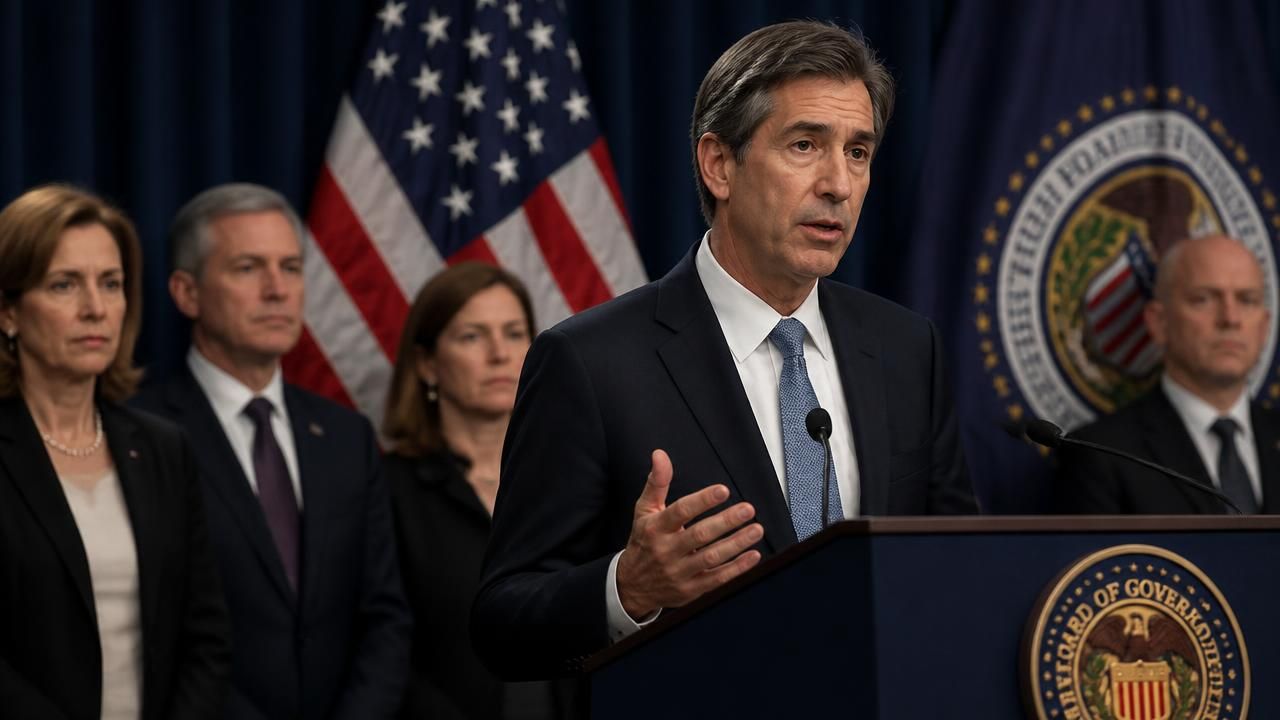
The Federal Reserve concluded its latest policy meeting on Wednesday with a decision that surprised few but satisfied none: interest rates would remain unchanged for the fifth consecutive time. The vote, however, revealed a deeply divided central bank, with three of twelve officials dissenting in favor of an immediate rate hike. The move, widely described as a "hawkish pause," underscores the Fed's delicate balancing act as it wrestles with stubbornly high inflation, a potential oil shock, and growing skepticism from bond markets.
A Split Decision Rooted in Inflation Concerns
The Federal Open Market Committee (FOMC) voted 9-3 to hold the federal funds rate at its current target range, a level that remains restrictive by historical standards. According to MSN, the split reflects "lingering inflation" that continues to run above the Fed's 2% target. Seeking Alpha noted that this is the fifth straight meeting without a change, but the three dissents—all favoring a hike—signal that internal pressure for tighter policy is building.
Fed Chair Kevin Warsh, who has led the central bank through a turbulent period, struck a resolute tone in post-meeting remarks. "The Fed won't hesitate to stop inflation," Warsh said, according to CNBC. Yet the bond market appears unconvinced, with yields reflecting doubts about the Fed's resolve. Bloomberg's coverage framed the decision as a genuine cliffhanger: "Hike or Hold? Fed's Warsh Has Markets Unsure."
The Case for Patience
Proponents of holding rates argue that the full effects of previous tightening are still working through the economy. BNY Investments' Ella Gude, Head of Fixed Income and Co-Head of Real Return, told Bloomberg that her firm expects the Fed to keep rates unchanged in the near term. "The data has been mixed," Gude explained. "They have the luxury of waiting to see how the lag effects play out."
Bloomberg's decision-day guide highlighted that officials were expected to hold rates "with broad support" while weighing the impact of an oil shock, which could complicate the inflation outlook. The Fed's own communications emphasized that the policy rate is well-positioned to respond to evolving risks, a stance that Investopedia notes is central to the federal funds rate's role as a tool for managing economic activity.
What the Hold Means for Consumers
For everyday Americans, the Fed's decision translates directly into borrowing costs. Mortgage rates, which have been hovering near a one-year high, are unlikely to drop meaningfully in the near term. NerdWallet's analysis explains that while the Fed doesn't set mortgage rates directly, its policy influences the broader interest rate environment. A hold means continued pressure on homebuyers, who are already facing affordability challenges.
Yahoo Finance explored what the decision means for bills, noting that credit card rates, auto loans, and other variable-rate debt will remain elevated. For savers, the news is more positive: high-yield savings accounts and certificates of deposit are likely to keep paying attractive returns. The Federal Reserve's own consumer guides on mortgage refinancing and lock-ins provide practical advice for those navigating these conditions.
Annuity markets are also sensitive to Fed policy. As Annuity.org notes, rate cuts—when they eventually come—could reduce the income that new annuity contracts can lock in. For now, the hold offers a window of opportunity for retirees to secure favorable rates, but the window may close once the Fed pivots.
Global Ripple Effects
The Fed's influence extends far beyond U.S. borders. Israel's central bank, for instance, faced a "last minute" decision on whether to follow the Fed's lead, according to Bloomberg. Meanwhile, Sweden's Riksbank signaled it would defy the Fed's approach, maintaining a "gradual" path to normalization. These divergences underscore the Fed's role as the world's most powerful monetary authority, even as other central banks assert their independence.
Emerging markets, in particular, watch the Fed's every move. A sustained hold could relieve pressure on their currencies, but the threat of future hikes keeps risk sentiment fragile. The Dallas Fed's research on balance sheet reduction adds another layer: the Fed must decide how quickly to shrink its holdings, a process that could tighten financial conditions even without a rate change.
The Road Ahead: Patience or Action?
The Fed's updated "dot plot"—the quarterly summary of officials' rate projections—is expected to back up Warsh's patience. Bloomberg reported that the dots may show a median path that implies no cuts this year, with another hike possible if inflation proves sticky. However, the three dissents could signal that the hawkish wing is growing, and a future increase is far from off the table.
"This is a hawkish pause," one strategist told Bloomberg, "designed to keep the option to hike while avoiding a commitment that could roil markets."
Adding to the complexity, new research from Reuters suggests that the Fed could benefit from blending private-sector and official data to guide policy. This reflects a broader debate about the reliability of economic statistics in a post-pandemic world where traditional models have often missed the mark.
Implications Across Asset Classes
The hold has immediate implications for investors. Gold, which shares an inverse relationship with interest rates, could see support if rates stay flat. Discovery Alert's analysis highlights that persistent high rates are a headwind for bullion, but any hint of future cuts would reverse that dynamic. Equities, meanwhile, are left to digest the reality of “higher for longer” rates, with sectors like technology and housing particularly sensitive.
For fixed-income investors, the yield curve remains a key indicator. The bond market's doubts about the Fed's credibility were evident in real yields, which continued to hover near elevated levels even after the announcement. As CNBC reported, "the bond market has doubts" about whether the Fed can sustain its restrictive stance without tipping the economy into recession.
A Central Bank in Transition
Wednesday's decision is more than a technical hold; it is a statement about the Fed's evolving strategy under Warsh. The institution has shifted from the ultra-loose policies of the pandemic era to a more conventional, data-dependent framework. Yet the 9-3 vote reveals a committee that is anything but unified. As The New York Times put it, the Fed "leans toward fighting inflation with future increases," even as it stays put today.
In the coming months, the Fed will need to reconcile its patience with the persistence of inflation. If price pressures reaccelerate, the dissents could become the majority. If the economy cools, the next move might be a cut. Either way, markets will be watching every data point, every speech, and every dot on the chart.
For now, the message from Washington is clear: the Fed is in no hurry to move, but it has not taken its finger off the trigger.