HONOLULU — Hurricane Lala weakened to a tropical storm on Sunday after skirting Hawaii's Big Island without making a direct landfall, yet the sprawling system continued to punish the archipelago with drenching rain, hurricane-force wind gusts, and the threat of flash flooding. The storm, which at its peak raised fears of a rare hurricane landfall in Hawaii, instead sideswiped the island chain, leaving communities bracing for a prolonged bout of severe weather.
A Storm in Flux: From Hurricane to Tropical Storm
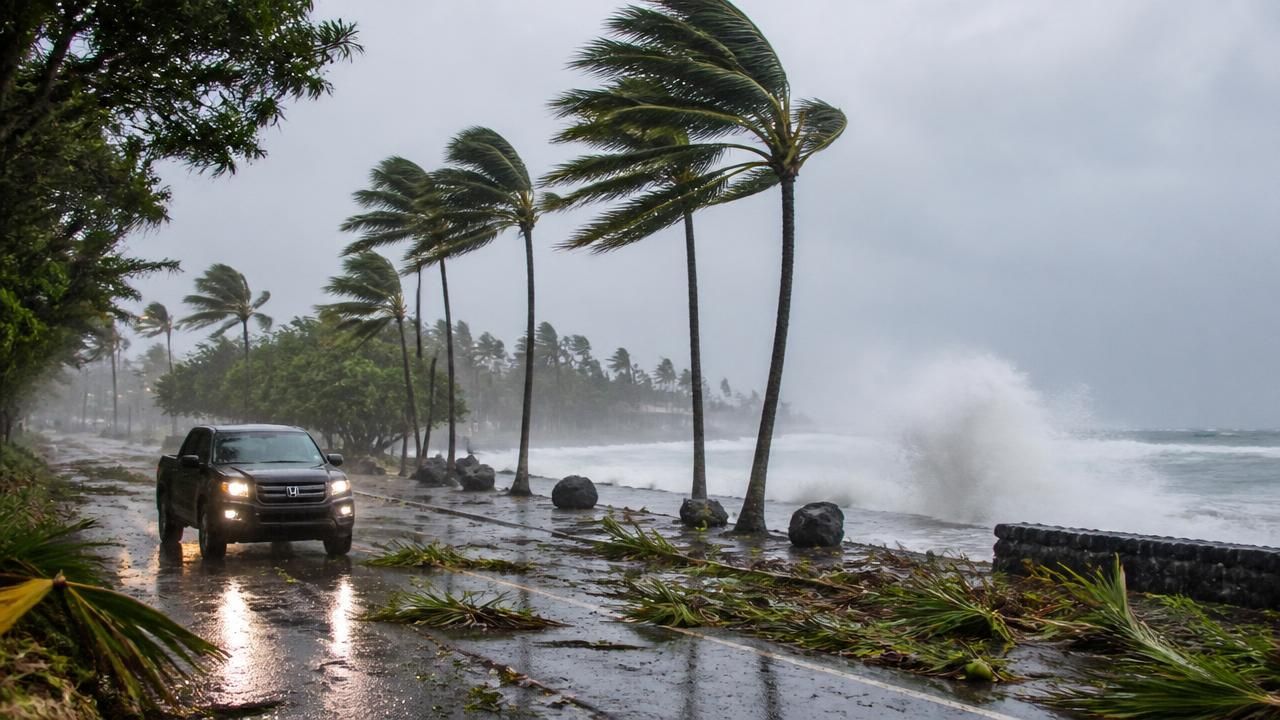
The National Weather Service confirmed that Lala, which had intensified into a hurricane earlier in its trek across the Pacific, had weakened to a tropical storm by Sunday. But the downgrade brought little relief. Forecasters warned that the storm's expansive field of moisture and strong winds—some areas clocking hurricane-force gusts—would continue to lash the islands for an extended period. The storm's center passed just offshore, sparing the state a catastrophic direct hit, but its outer bands acted like a firehose aimed at the volcanic slopes of the Big Island.
"This is a powerful, moisture-laden system that is going to take its time moving through," said a meteorologist with the Central Pacific Hurricane Center in a briefing. "Even though it's no longer a hurricane, the impacts are still significant, especially for wind and rainfall."
Rain and Wind: The Immediate Impact
As Lala churned northwestward, it unleashed torrential rain across the Hawaiian islands, with the Big Island bearing the brunt. Rainfall totals in some windward areas topped 15 inches, leading to flash flood watches and warnings across the state. Roads were closed in low-lying areas, and emergency management officials urged residents to stay off the roads unless absolutely necessary.
Wind gusts were equally fierce. On the Big Island, gusts reached tropical-storm strength in many communities, and higher elevations reported hurricane-force gusts. The winds downed trees and power lines, leaving thousands of residents without electricity. Hawaii Electric Light Company reported that crews were assessing damage and beginning restoration efforts as conditions permitted.
"We are grateful that the storm didn't make a direct landfall, but we are not out of the woods yet," said Nakoa Johnson, a county civil defense spokesperson on the Big Island. "The ground is saturated, and high winds can topple trees already weakened by heavy rain."
Landfall Threat: A Rare Event
Days before Lala's arrival, forecasters had flagged the possibility of a rare hurricane landfall on the Big Island. Hawaii has been struck by only a handful of hurricanes in recorded history—most notably Hurricane Iniki in 1992, which devastated Kauai, and Hurricane Dot in 1959. The last direct landfall of a hurricane on the Big Island was in 2014 with Hurricane Iselle, which made landfall as a tropical storm after weakening.
The prospect of a landfalling hurricane had prompted state and county officials to open shelters, issue evacuation notices for coastal and flood-prone areas, and urge residents to stockpile supplies. Though Lala ultimately spared the islands a direct hit, the preparations were widely credited with minimizing the risk to life and property.
Differing Perspectives: How the Media Framed the Story
The storm's fluctuating intensity and track led to a wide range of headlines across news outlets. Some, like NPR and PBS, emphasized that Lala had "again" become a tropical storm, reflecting its earlier weakening and re-strengthening cycle. Others, such as MSN, highlighted the "rare hurricane landfall threat" that had existed days earlier, when Lala was still a hurricane. The New York Times focused on the storm "lashing" the Big Island, capturing the visceral experience of wind and rain.
This variance in framing underscores the challenge of communicating rapidly evolving weather events. Early forecasts suggested a stronger storm and a potential landfall; by Sunday, the system had degraded and shifted course. Media outlets responded by recalibrating their messages—some focusing on the diminution of the threat, others on the still-dangerous conditions.
Historical Context: Hurricanes and Hawaii
Hawaii's location in the central Pacific makes it less prone to hurricanes than the Caribbean or the U.S. Gulf Coast. The islands are typically protected by cooler waters and strong vertical wind shear that disrupt tropical cyclones. However, during strong El Niño years, warmer ocean temperatures can extend farther north, increasing the odds of hurricanes approaching the islands. Climate scientists note that a warming planet may alter these patterns, potentially making storms like Lala more frequent or more intense.
Dr. Elena Reyes, a climatologist at the University of Hawaii, said, "The fact that we saw a hurricane-strength system this close to the islands is a reminder that Hawaii is not immune to these events. While Lala weakened before landfall, the narrow escape should not lead to complacency."
What's Next for Lala and Hawaii
As Lala continues its westward path over open ocean, forecasters expect it to weaken further into a remnant low-pressure system. But the storm's trailing moisture will continue to produce significant rainfall and possible thunderstorms across the island chain through the coming days. The National Weather Service has advised residents to monitor local alerts and heed warnings from civil defense authorities.
In the meantime, cleanup efforts are underway. Utility crews are working to restore power, and public works departments are clearing blocked roads. The Federal Emergency Management Agency (FEMA) is in contact with state officials, ready to provide assistance if needed.
- Key numbers: Hurricane-force gusts recorded; rainfall up to 15 inches in some areas; thousands of power outages; shelters opened across the state.
- Safety advisory: Residents told to stay indoors, avoid floodwaters, and follow emergency instructions.
- Emergency contacts: Hawaii Emergency Management Agency, National Weather Service, and county civil defense agencies.
Broader Implications
The storm serves as yet another reminder of the increasing volatility of weather patterns. While Lala did not make landfall, its presence so close to Hawaii—and the fact that it briefly reached hurricane strength—raises questions about the future. Emergency management officials say they will review their response and look for lessons to apply to the next storm.
For residents, the experience was a mix of relief and anxiety. "We got lucky this time," said Big Island resident Leilani Kimura. "But the wind and rain were frightening. It's a good wake-up call to be prepared."
As the storm recedes into the Pacific, Hawaii will begin the long process of drying out and repairing. But the memory of Lala—the storm that brushed the islands without delivering a knockout punch—will linger, a potent reminder of nature's power.