In an age of information saturation, the headline remains the first—and often the last—point of contact between reader and news. This week, a cross-section of outlets from Bloomberg to PBS to local sports desks deployed headlines to distill a turbulent world: geopolitical brinksmanship, shifting energy markets, and the quiet economic signals of daily life.
Greenland, Tariffs, and the Geopolitical Chessboard
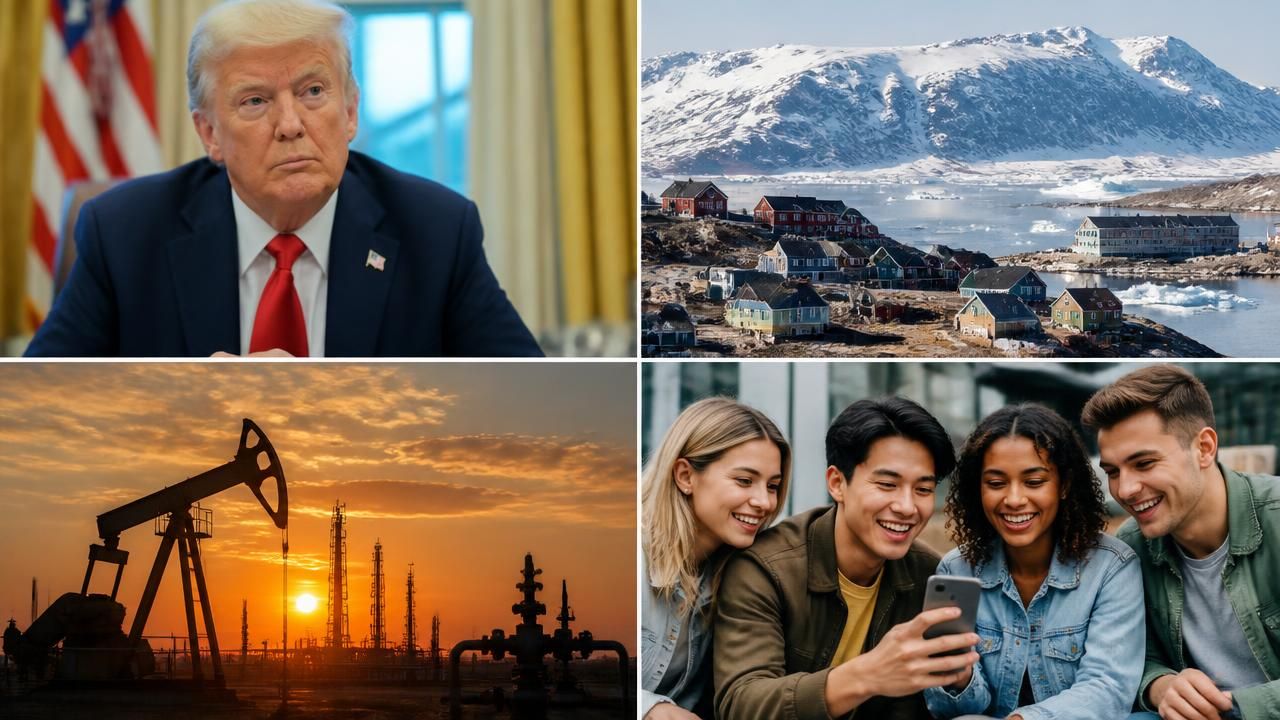
One of the most consequential headlines came from PBS, which reported that President Trump is threatening tariffs against countries that do not support his administration's ambitions for Greenland. The story, framed as a 'News Wrap' segment, underscored how foreign policy is increasingly intertwined with trade leverage. The Trump administration has long viewed Greenland as strategically vital, and the tariff threat signals a willingness to use economic coercion to advance territorial interests.
Meanwhile, energy markets are grappling with their own tensions. The International Energy Agency (IEA), as highlighted by Futunn's Dow Jones energy headlines, stated that oil demand recovery is underway, but U.S.-Iran escalation clouds the outlook. This juxtaposition—of recovery and risk—has become a defining narrative for commodity traders, who must weigh bullish consumption data against the specter of supply disruptions in the Strait of Hormuz.
The Tehran Bureau, via PBS FRONTLINE, reminded us of the long shadow of history: former Iranian President Mahmoud Ahmadinejad's 2008 claim that the 'U.S. government orchestrated 9/11' resurfaced in selected headlines. While hardly new, such revisionist narratives continue to inflame tensions in an already volatile region.
Oil demand recovery is underway, but U.S.-Iran escalation clouds the outlook.
The Business of Everyday Life
On the business beat, Bloomberg's Lisa Mateo delivered a headline roundup that found economic meaning in the mundane. 'Marathon wine, wedding party size, suit sales rise and Gen Z's different wealth plan,' she quipped. These are not just lifestyle stories; they are leading indicators. Increasing suit sales often correlate with a return-to-office push. Wedding party size reflects social confidence and discretionary spending. Marathon wine—a term that might refer to long-distance wine events or a metaphor for endurance—taps into experiential spending trends. And Gen Z's wealth plan, which often diverges from traditional investing, signals a generational shift in financial priorities.
Such headlines are a reminder that economics is not just about central banks and GDP—it's about how people choose to live. As Gen Z eschews conventional ownership in favor of experiences and digital assets, the implications for markets are profound.
Sports, Community, and the Local Beat
While national and global stories dominate the front pages, local newsrooms continue to churn out essential community coverage. From Monticello's 2026 football roster to the Muskegon-area conference champions, high school sports are the lifeblood of many readers. In Minnesota, KMS flexed its muscle on the wrestling mat and stole bases on the diamond, as the West Central Tribune's roundups showed. These stories may not move markets, but they build civic bonds.
The ubiquity of sports headlines was echoed by outlets such as mlive.com and d1baseball.com, where 'conference champions' and 'dominant pitching' took center stage. Even The Guardian, typically focused on politics and culture, devoted headlines to concussion concerns as the NRL and AFL seasons kicked off, highlighting the growing intersection of sports and health.
Culture and the Headline Ecosystem
Beyond hard news, the entertainment world made its presence felt. Lil Wayne and Tyler Childers topped July concert lists in Des Moines, while Y&T and Adam Hunter headline Northern California casino events. These stories are carefully promoted by venues and publicists, yet they are often the most-read items on local sites. Meanwhile, tech and media commentators weighed in on the art of the headline itself: Search Engine Journal featured '14 Surprising Examples of Clickbait Headlines That Work,' a nod to the persuasive craft behind modern journalism. GQ and PodcastReview.org ranked the best daily news podcasts, acknowledging that audio has become a headline medium of its own.
Even hardware enthusiasts got in on the act: Hackaday showcased a dot-matrix printer that delivers physical headlines to your door, a retro-indie take on news consumption. It's a small reminder that the medium is as much the message as the words themselves.
What We Missed
Ironically, a significant portion of the news ecosystem is now behind bot checks, paywalls, and 'edge' errors. Several outlets—from aol.com to the Des Moines Register—returned errors or required 'JavaScript and cookies,' a sign of the ongoing battle between publishers and scrapers. In synthesizing these sources, we encountered the very friction that shapes modern journalism.
Key Takeaways from the Week's Headlines
- Trump's tariff threat links foreign policy to trade policy.
- IEA sees oil demand recovering, but U.S.-Iran tensions loom.
- Consumer behaviors like suit sales and wedding sizes serve as economic barometers.
- Local sports roundups remain a staple of community journalism.
- News podcasts and clickbait analysis show the evolving media landscape.
Conclusion
The headlines of this week tell a story of interconnection. A threat to impose tariffs on Greenland allies moves oil prices; a shift in suit sales reflects workforce dynamics; a high school wrestling match unites a town. In the words of the IEA, 'recovery is underway,' but the path is clouded by risk. That duality is the essence of news: finding clarity amidst turbulence.