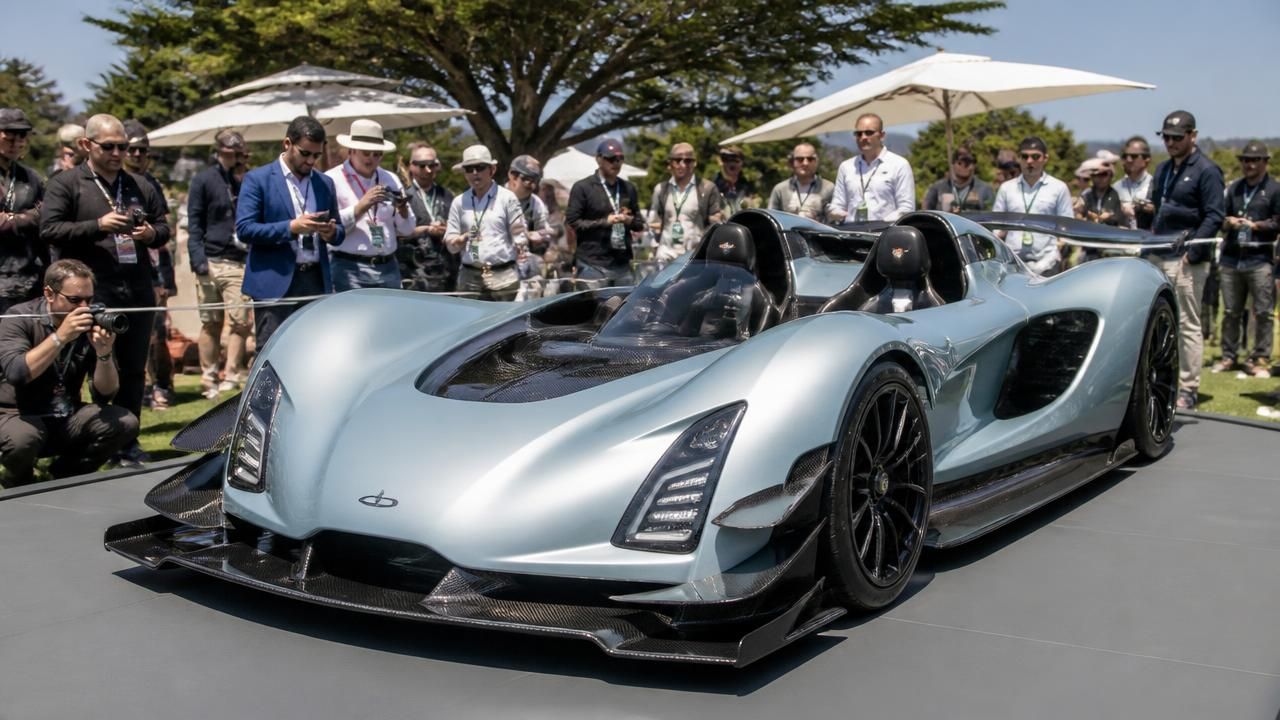
Monterey Car Week has long been a carnival of excess, where the world's most exotic machines vie for attention against a backdrop of traffic jams and influencer photo ops. But amid the usual parade of multi-million-dollar baubles, one car has emerged as a genuine engineering marvel: the Czinger 21C Spyder. This roofless hybrid hypercar, unveiled during the California automotive extravaganza, is turning heads not just for its otherworldly speed, but for the revolutionary way it's built.
From Parts Supplier to Record-Breaking Hypercar
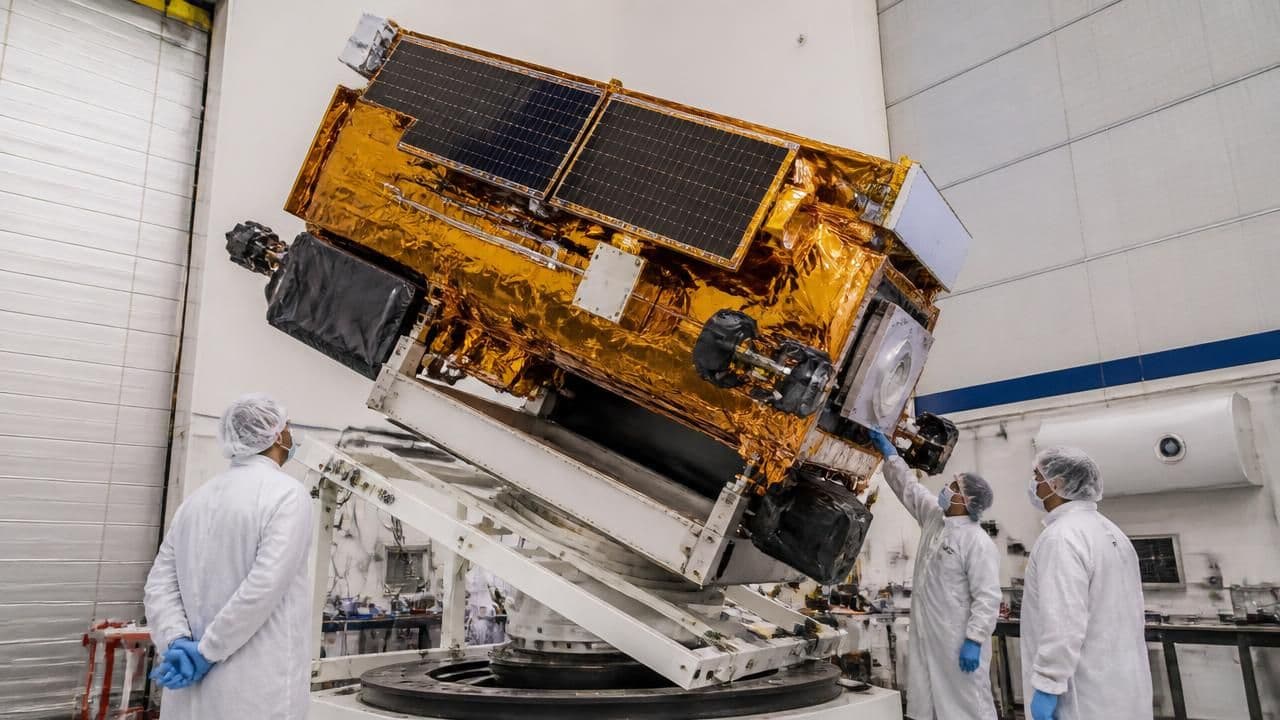
Czinger Vehicles, founded by Kevin Czinger, began life as Divergent 3D, a company pioneering direct-metal laser sintering (DMLS) technology. The idea was simple: build a state-of-the-art car to prove to the automotive and aerospace industries that they should contract with Divergent for additive-manufactured parts. That strategy has paid off. Today, Czinger counts major automakers and aerospace firms as clients, while simultaneously producing one of the most audacious production cars ever conceived.
The 21C Spyder, a roofless variant of the already extreme 21C, is the latest proof of concept. It retains the controversial tandem-seating layout—reminiscent of a fighter jet—and adds an open-top experience that amplifies the sensory overload. According to MSN's coverage, it's an "open-top road-legal fighter jet," and the comparison isn't hyperbole. With a hybrid powertrain that combines a high-revving V8 with electric motors, the 21C Spyder is capable of lap times that would embarrass purpose-built race cars—all while wearing a license plate.
Organic Aesthetics, Aerospace Engineering
Visually, the 21C Spyder is unlike anything else on the road. The body panels, or rather the lack thereof, reveal a structure that appears more organic than mechanical. Topology-optimized shapes, generated by algorithms that mimic natural bone growth, create a latticework of strength and lightness. Ars Technica noted the "organic-looking brake assemblies" debuting on this model—a perfect example of form following function in the age of additive manufacturing.
"The structure looks more organic than mechanical, with topology-optimized shapes that are lighter but no less performance-oriented." This is a key differentiator. Traditional manufacturing methods impose constraints; 3D-printing eliminates them. Components can be grown layer by layer, using only the material needed to withstand the loads placed upon them. The result is a car that is incredibly stiff yet featherweight.
"The performance is less interesting than the engineering," Ars Technica's review noted, a sentiment that underscores the car's technical significance.
Record-Breaking Pace, Roofless Thrills
Of course, the engineering wouldn't matter if the car couldn't deliver on its promise. The 21C Spyder does not disappoint. MSN's headline boasted of "record-breaking pace roofless," and the numbers back it up. The hybrid system produces upwards of 1,250 horsepower, channeled through a seven-speed automated manual transmission and all-wheel drive. With active aerodynamics and a carbon fiber monocoque, the Spyder is aerodynamically efficient enough to generate immense downforce—essential for a car with no roof to shield the driver from the slipstream.
The open-top experience transforms the cabin into a sensory assault. Wind blast, engine scream, and the smell of burning rubber—this is as close to piloting a fighter jet as a civilian can legally get. For those brave enough, the 21C Spyder offers a visceral connection to speed that even the fastest closed-cockpit hypercars can't match.
A Polarizing Star in a Sea of Excess
Not everyone at Monterey was impressed by the spectacle. Ars Technica described the event as "an accumulation of rich people and influencers all crammed into the now-traffic-snarled peninsula," and singled out a "hideous collaboration between Singer and Louis Vuitton" as a low point. The 21C, however, seems to have escaped that criticism. Perhaps because it represents more substance than style. Or perhaps because its style is derived from function, not fashion.
"The Czinger 21C might be the wildest car we drive all year," Ars Technica predicted, and after this debut, it's hard to argue. The Spyder isn't just a flamboyant collector's piece; it's a rolling laboratory for the future of manufacturing.
Implications for the Industry
Czinger's strategy of building a halo car to market its manufacturing technology is paying dividends. The company's DMLS approach is already being adopted for aerospace components, where weight reduction is critical, and automotive companies are beginning to experiment with topology-optimized parts for everything from suspension components to engine mounts. The 21C Spyder serves as a spectacular proof of concept, demonstrating that additive manufacturing can produce parts that are not only lighter but also more durable than their conventionally machined counterparts.
As the automotive industry shifts toward electrification and lightweighting, the kind of generative design seen on the 21C Spyder could become mainstream. Czinger is positioning itself at the forefront of that shift, and Monterey Car Week was its stage.
What to Expect Next
Czinger has not announced pricing for the Spyder, but given the limited production run and the research-heavy development, it will likely be in the millions. Buyers should be prepared for an experience unlike any other—and for the inevitable comparison to a jet fighter with a license plate.
For the rest of us, the 21C Spyder is a glimpse into the future of speed and engineering. And for now, it owns Monterey.