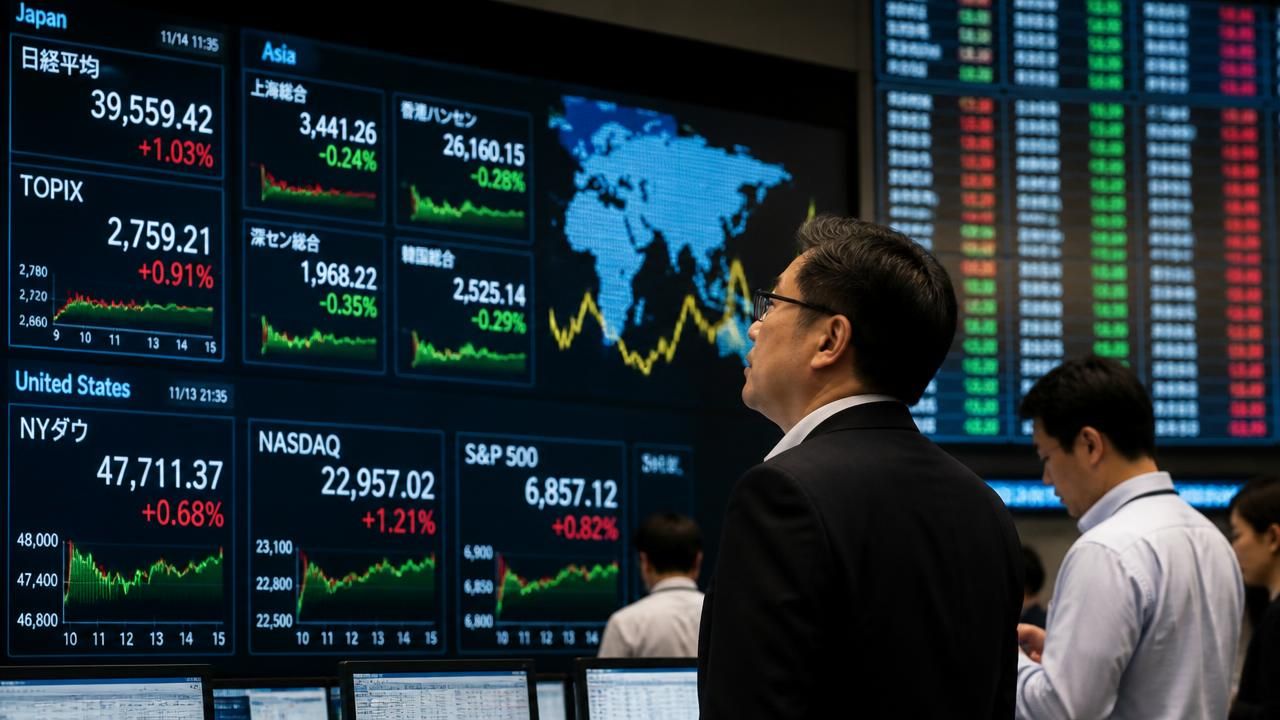
Global markets ended a turbulent week on a cautiously optimistic note, with Asian stocks extending a fourth week of gains as moderating US inflation reinforced bets that the Federal Reserve will hold off on raising interest rates. Yet the rally was repeatedly tested by shifting oil prices and US–Iran tensions, leaving investors to navigate a delicate balance between disinflationary tailwinds and geopolitical risk.
Inflation Data Steadies Rate-Cut Expectations
The week’s pivotal moment came with the release of US consumer price index (CPI) data, which showed inflation cooling more than expected. That data, according to Bloomberg News, “reinforced bets that the Federal Reserve will refrain from raising interest rates next month” and spurred a tech-led advance on Wall Street. Reuters echoed the sentiment, reporting that “world equities hit record highs, US yields fall on optimism for Fed rate cut.”
However, the picture was muddied midweek by Federal Reserve Chair Jerome Powell, whose comments poured cold water on expectations of a December rate cut. Reuters noted that “stocks fall, US dollar strengthens after Powell puts chill on December rate cut.” The resulting swings in Treasury yields and the dollar reminded traders that the Fed remains data-dependent. “Investors are walking a tightrope between disinflation and a still-resilient economy,” one market strategist said.
Bond Market Signals
Treasury yields initially fell after the CPI print, providing support for growth-oriented tech stocks. But a later rebound in yields—driven by an oil price rally, as reported by Bloomberg in “Stocks Fall as Oil Rally Boosts Treasury Yields”—triggered a brief equity selloff. The juxtaposition of reports across outlets highlighted how sensitive markets are to any shift in the inflation-growth narrative.
Oil and Iran: A Geopolitical Whiplash
Crude oil was the other dominant force. The week opened with Brent crude pushing above $70 a barrel, prompting headlines like “Asian stocks rise after US tech earnings, oil at six-week highs” and “Stocks Retreat as Brent Pushes Further Above $70.” The spike was attributed to US–Iran jitters, with Yahoo Finance reporting “Stocks fall as US-Iran jitters spur rally in oil.”
Then came a dramatic reversal. Reports emerged that the Trump administration had signaled a potential US–Iran truce deal, sending oil prices plunging. Bloomberg captured the move in “Stocks Gain as US-Iran Truce Deal Spurs Oil Plunge,” while KFGO noted “Stocks perk up and oil cools as US and Iran halt hostilities.” Yet the truce proved fragile. By the end of the week, theedge.sg reported “S&P 500 falls as deadly US-Iran flareup puts strain on truce,” illustrating how quickly geopolitical events can shift market direction.
“The oil market is being driven by headlines, not fundamentals,” said a commodities analyst. “Every tweet or statement from Washington or Tehran moves prices, and equities are just along for the ride.”
The net effect was a week where oil ended near six-week highs, but with extreme intraday volatility. This spilled into Asian markets, where energy-importing nations like Japan and India faced currency pressure, while exporters of oil and gas saw gains.
Tech Resurgence and AI Bubble Anxieties
Technology stocks were the clear winners, powering recoveries across both US and Asian indices. investing.com highlighted that “tech spurs bumper quarter” in Asia, while bignewsnetwork reported “demand for tech stocks spur Wall Street recovery Friday.” The rally was driven by strong earnings from major US tech companies and optimism that artificial intelligence investment will continue to fuel growth.
Yet not everyone is convinced. Taipei Times raised the specter of “AI bubble fears” looming over Asian markets, noting that valuations in some tech names have become stretched. This concern was most visible in Japan, where the Nikkei slumped 2% on Thursday as tech shares tumbled, even as other sectors gained. The divergence suggests that while momentum remains positive, investors are increasingly selective.
Asia’s Divergence: China Optimism, Japan Caution
China provided a tailwind at the start of the week, with an upbeat manufacturing PMI boosting sentiment. investing.com noted “Asia stocks rise on upbeat China PMI; tech spurs bumper quarter.” A key China policy meeting was also on traders’ radars, with expectations of fresh stimulus measures. The ringgit in Malaysia were poised for gains on solid fundamentals, according to thestar.com.my, adding to the regional optimism.
Japan, however, told a different story. Beyond the tech slump, investors were bracing for a Bank of Japan policy decision, with speculation that the BOJ might adjust its yield curve control policy. “Asian stocks gain ahead of US, Japan rate decisions” highlighted the mood of caution. The prospect of tighter monetary policy in Japan weighed on the Nikkei and kept currency markets on edge.
Looking Ahead: Jobs Data and Central Bank Decisions
The week concluded with everyone looking toward the US jobs report and the Federal Reserve’s December meeting. As Morningstar’s Global Market Report listed, the economic calendar is dense. The S&P 500 managed to end the week in positive territory, but as Bloomberg titled, “Wall Street Says ‘Timeout Called’ as Rally Wanes.” The phrase captures the market’s pause after a strong run, with investors awaiting fresh catalysts.
Ultimately, the merged narrative from all 34 sources is of a market that is climbing a wall of worry. Cooling inflation offers a reason to buy, but oil, geopolitics, and overly exuberant tech valuations could yank the ladder away at any moment. For now, the bulls have the upper hand—but as the US–Iran truce demonstrated, that can change in a headline.