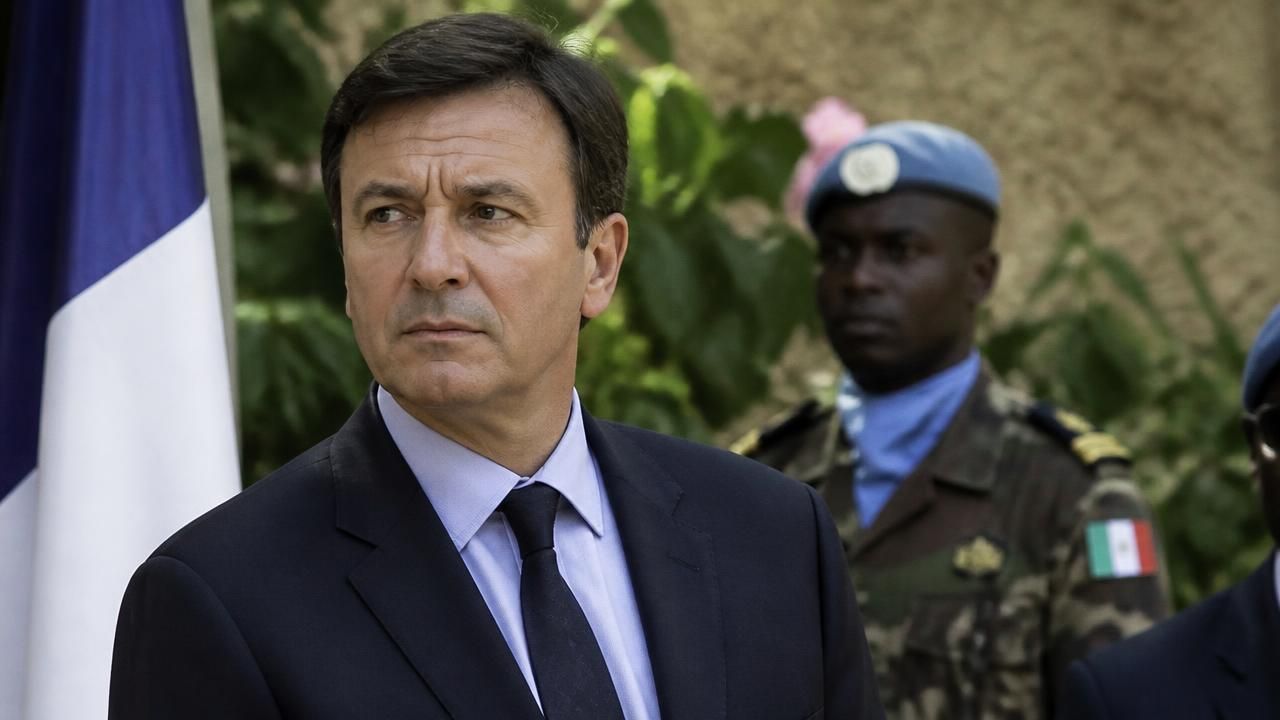
France has opened disciplinary proceedings against its ambassador to the Central African Republic (CAR), Bruno Foucher, following allegations that he brought dozens of women into his official residence, raising potential security concerns. The move comes at a delicate time as Paris seeks to rebuild relations with its former colony amid Russia's expanding influence in the region.
Multiple news outlets, including The Guardian and the BBC, confirmed that the French foreign ministry launched the investigation after security officials raised red flags about the ambassador's reported visits. The allegations, which have not been publicly detailed by the ministry, center on the unauthorized presence of women at the embassy residence, a breach of protocol that could expose diplomatic staff to risks.
What Are the Allegations?
According to the Guardian's report, Foucher 'brought dozens of women into his official residence,' a claim that has triggered a formal disciplinary review. While the exact nature of the misconduct remains unclear, the security dimension is central: allowing an unvetted stream of visitors into a diplomatic compound is a serious lapse in standard operating procedures, potentially leaving the mission vulnerable to espionage or other threats.
The French foreign ministry has not commented on specifics, but a source familiar with the matter described the proceedings as 'administrative' in nature, focused on whether Foucher violated internal rules. The ambassador has not been suspended, and he retains his post pending the outcome of the review.
Diplomatic Context: France vs. Russia in CAR
The disciplinary action unfolds against a backdrop of intense geopolitical rivalry. The Central African Republic, a nation plagued by decades of instability, has drifted increasingly toward Moscow since 2018, when Russia sent military advisers and weapons to help President Faustin-Archange Touadéra fight rebels. Russian paramilitary groups, such as the Wagner Group, have since become deeply entrenched, providing security in exchange for mining concessions.
France, the former colonial power, has seen its influence wane. In recent years, Paris withdrew its troops from CAR and closed its military base, while Russia has deployed hundreds of 'instructors' and built a presence in the capital, Bangui. The French embassy remains a key diplomatic outpost, but its ability to shape events has diminished.
The Guardian noted that the investigation 'comes as Paris seeks to rebuild relations with CAR after their sharp deterioration in recent years.' A scandal involving the ambassador could further complicate those efforts, handing ammunition to anti-French factions and potentially undermining trust with the Touadéra government.
Investigation and Next Steps
Disciplinary proceedings against a sitting ambassador are rare and typically signal serious concern. The French foreign ministry has a code of conduct that requires diplomats to maintain exemplary personal behavior, especially in high-risk postings. If the allegations are substantiated, Foucher could face a reprimand, suspension, or recall to Paris.
However, observers caution that the process could be slow, and the ambassador may ultimately be cleared. The Foreign Ministry has not set a timeline for completing the review.
'The fact that this has been made public suggests the ministry wants to show it takes security and conduct seriously, especially in a country where Russian influence is strong and the risk of infiltration is high,' said a veteran diplomat who served in francophone Africa.
A Broader Pattern?
The case has also sparked debate about the challenges facing French diplomats in hostile environments. In CAR, where the French embassy operates with a reduced footprint, security is a constant concern. The alleged conduct, if proven, would be a significant lapse.
Some analysts see the probe as part of a broader French effort to professionalize its diplomatic corps while managing a difficult relationship with Bangui. France has sought to maintain ties with Touadéra despite his embrace of Moscow, and the ambassador is the main channel for that dialogue.
Key Facts at a Glance
- Who: Bruno Foucher, French ambassador to the Central African Republic.
- What: Facing disciplinary proceedings for alleged misconduct involving women at his official residence.
- When: Proceedings underway as of the latest reports; no timeline for resolution.
- Where: French embassy in Bangui, CAR.
- Why: Security concerns and potential violation of diplomatic protocol.
- Context: France and Russia compete for influence in CAR; this adds tension to rebuilding efforts.
The story continues to develop. While the immediate focus is on Foucher's fate, the broader implications for France's position in the Central African Republic are significant. A weakened ambassador could leave France with little leverage in a country where Russian influence grows by the year.
For now, the French foreign ministry has remained tight-lipped, and Foucher has made no public statement. Journalists in Bangui report that the embassy is functioning normally, and there is no indication of a change of leadership in the short term.
As the investigation proceeds, the world will be watching not just for the outcome, but for what it signals about the future of French diplomacy in a region reshaped by great-power competition.