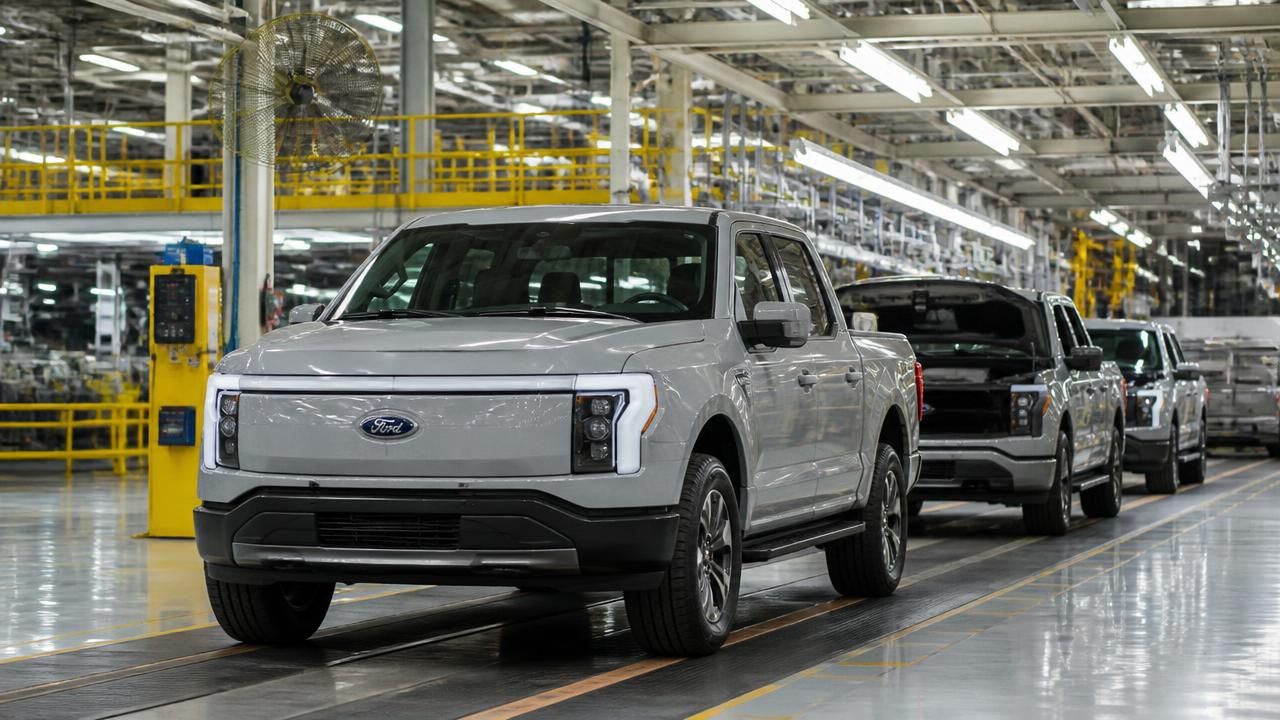
Ford has officially named its next-generation electric pickup the “Fathom” and confirmed that production will begin at the company’s extensively overhauled Louisville Assembly Plant in the first quarter of 2027. The announcement, which surfaced across multiple outlets today, positions the Fathom as one of the most anticipated and affordable electric trucks on the market, with a starting price near $28,000. The news comes after a $2 billion transformation of the 70-year-old, 3-million-square-foot facility—a retooling that took less than a year and signals Ford’s aggressive push to capture mainstream EV buyers.
A Game-Changing Price Point
The Fathom’s sub-$30,000 starting price is the headline-grabbing figure. Sources vary slightly on the exact number: The Verge cites $28,000, MSN reports $28,350, and The Next Web rounds it to $30,000. Forbes and InsideEVs both emphasize the “sub-$30,000” positioning, which would make the Fathom one of the most affordable electric pickups in the U.S. market—undercutting the Tesla Cybertruck, Rivian R1T, and even Ford’s own F-150 Lightning. According to The Next Web, the base model will include features like Ford’s BlueCruise hands-free highway driving system, bidirectional charging capability, and a front trunk (frunk) as standard equipment—a value proposition rarely seen at this price point.
The $2 Billion Louisville Transformation
At the heart of this story is the extraordinary factory overhaul. Fox Business offered an inside look at the 3-million-square-foot Louisville plant, which has been in operation for over seven decades. Ford invested $2 billion to convert the facility for EV production, a process that InsideEVs reports was completed in under a year. The Verge notes that the plant is already in the “production-level pre-tooling phase,” with Ford’s team in Louisville working alongside engineers from the New Model Product Development Center in Dearborn, Michigan. The same operators who helped design the high-stakes EV will also be involved in its assembly, ensuring a seamless transition from prototype to mass production.
“Ford’s next-generation electric vehicle – recently dubbed Fathom – will go into production at the automaker’s recently overhauled Louisville Assembly Plant in the first quarter of 2027.” – The Verge
The first Fathoms rolling off the line will be prototypes, hand-built by the workers who will eventually assemble the production versions. This collaborative approach between design and manufacturing teams is unusual in the auto industry and reflects Ford’s commitment to quality as it enters this new segment.
Why This Matters for Ford and the EV Market
The Fathom is more than just another electric truck; it’s a strategic gambit to democratize EV ownership. With the average new EV still selling for over $55,000 in the U.S., a $28,000 pickup could be a watershed moment. Forbes frames the name announcement as a signal of Ford’s intent to lead in the affordable EV space, while Seeking Alpha suggests that the Fathom’s success will likely influence the direction of Ford’s stock price. “The battery electric pickup is a pivotal product for Ford’s future,” the analysis notes, as investors look for growth beyond the traditional F-150 franchise.
The timing also aligns with broader market trends. Governments are tightening emissions regulations, and consumer demand for affordable, practical EVs is surging. The Fathom’s combination of utility, advanced tech, and low price could disrupt the dominance of internal combustion trucks in the lucrative midsize and compact segments. However, Ford faces stiff competition from upcoming rivals like Tesla’s promised $25,000 model and Chevrolet’s equally affordable electric trucks.
Perspectives Across Outlets
Different sources have emphasized different aspects of the announcement:
- The Verge focused on the production timeline and the hands-on involvement of factory workers.
- Fox Business provided a visual tour of the massive Louisville plant and its $2 billion transformation.
- The Next Web highlighted the feature set, calling BlueCruise, bidirectional charging, and the frunk “standard.”
- Forbes covered the naming decision and its implications for Ford’s brand identity.
- Seeking Alpha analyzed the stock market impact, noting that the Fathom could be a key driver of Ford’s valuation.
- InsideEVs underscored the speed of the factory retooling—less than a year—as a testament to Ford’s execution capabilities.
While the core facts are consistent, the framing varies. Enthusiast outlets like InsideEVs and The Next Web celebrate the affordability and features, while financial publications like Seeking Alpha approach it with cautious optimism, noting that Ford must prove it can hit these price points profitably.
Historical Context and What It Means
The Louisville Assembly Plant has a long history, having produced some of Ford’s most iconic vehicles over the past seven decades. Converting such an aging facility into a cutting-edge EV plant is no small feat. Ford’s ability to do so in under a year reflects a broader industry trend of retrofitting existing factories to accelerate the EV transition, avoiding the massive costs and delays of building new plants from scratch. This approach not only saves capital but also preserves jobs in traditional manufacturing communities—a key political consideration as the automotive industry shifts toward electrification.
Looking ahead, the Fathom’s launch in early 2027 will be a litmus test for Ford’s overall EV strategy. If the truck ships on schedule and with the promised price and features, it could cement Ford’s position as the leader in affordable electric vehicles. If not, it may give competitors an opening to capture the same audience. As The Verge points out, the first prototypes are already being assembled, which suggests Ford is on track. But the real proof will come when the first customers get behind the wheel.
Conclusion
Ford’s Fathom is more than just a new model—it’s a bet that the future of electric vehicles lies in mass adoption, not luxury niches. With a $28,000 price tag, a fully retooled factory, and a feat-rich standard package, the Fathom has the potential to reshape the pickup market. The next two years will be critical, but Ford appears to be charging ahead with a clear vision. For now, the industry and investors will be watching closely as Louisville’s assembly lines begin to hum with the promise of America’s affordable electric workhorse.