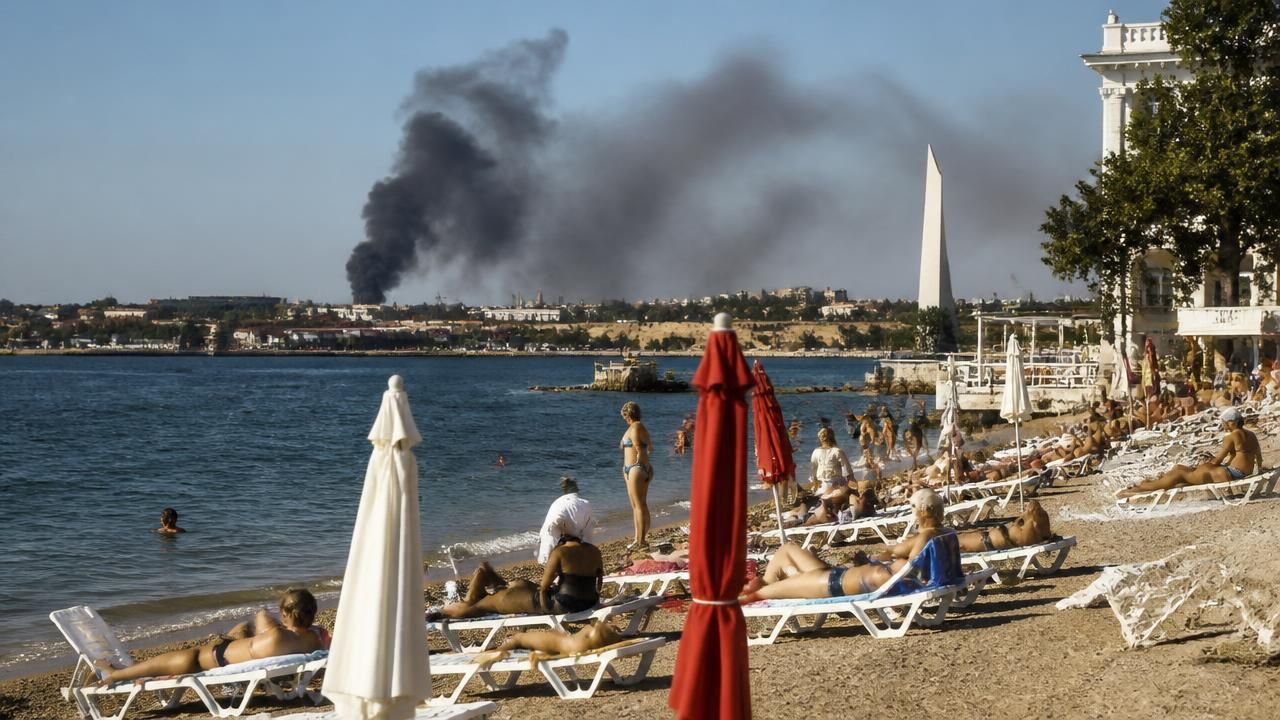
Russia has maintained an iron grip on Crimea since seizing it from Ukraine in 2014, with many Russian civilians flocking to its beaches each summer. But that grip is now being tested like never before. Ukrainian drone strikes—both in the air and at sea—are hitting the peninsula hard, upending daily life and challenging Moscow's military dominance in the Black Sea region.
Recent reporting from NPR, Yahoo News, The New York Times, and The Wall Street Journal reveals a conflict increasingly defined by unmanned systems. From a Ukrainian drone unit hunting Russian ships "from steppe to sea" to a secretive team dedicated to knocking Russian drones out of the sky, the battle for Crimea has become a high-tech proving ground.
The Changing Battlefield Over Crimea
NPR's coverage underscores how the war has come home to Russian civilians on vacation. "Russia maintained an iron grip on Crimea since seizing it from Ukraine in 2014," the report notes. "But now Ukraine is hitting Crimea hard, upending daily life." The strikes have made once-safe resort areas feel like the front lines, disrupting tourism and planting fear among those who believed the peninsula was a secure backyard.
Military analysts say the intensified drone campaign serves multiple purposes: degrading Russian air defenses, destroying logistics hubs, and—importantly—sending a message that Crimea is not permanently lost to Ukraine.
From Steppe to Sea: Hunting Russian Ships
A report from Yahoo News profiles a Ukrainian drone unit that has taken the fight to the Black Sea. The headline "From steppe to sea" reflects the unit's journey from land-based operations to naval strikes. These drone operators use uncrewed surface vessels (USVs) packed with explosives to target Russian warships, including landing ships and patrol boats.
Ukraine's naval drone force has already sunk or severely damaged several Russian vessels, forcing the Black Sea Fleet to relocate some assets farther east. The strategy is to break the sea blockade and open grain export routes, but it also chips away at Russia's ability to project power from Crimea.
The Secretive Air War Above
The Wall Street Journal offers an inside look at a different kind of unit: one that shoots down Russian drones. This secretive unit operates in the shadows, tasked with protecting Ukrainian cities and troops from Russian reconnaissance and strike UAVs. The report details the cat-and-mouse game between Russian operators and Ukrainian counter-drone specialists.
This defense is critical, as Russian drones like the Shahed-136 have terrorized urban areas. Ukraine has responded with everything from electronic jamming to interceptor drones and modified anti-aircraft weapons. The WSJ piece highlights how these teams often learn on the fly, adapting consumer technology for military use.
A Proving Ground for Drone Warfare
The New York Times describes the broader "war happening above Russia and Ukraine," noting that both sides are constantly innovating. The skies have become an experimental laboratory for unmanned combat, with drones used for reconnaissance, artillery spotting, precision strikes, and even aerial dogfights.
Ukraine has proved particularly adept at leveraging commercial drones, 3D-printed components, and open-source software to counter Russia's numerical advantage. Meanwhile, Russia has deployed Iranian-designed loitering munitions and long-range strike drones, showcasing an increasingly globalized drone supply chain.
Civilian Life in Crimea Under Pressure
The humanitarian impact is growing. While Ukrainian forces avoid targeting civilian infrastructure, the psychological effect of nightly drone alerts and explosions is profound. Vacationers now face beach closures and air raid sirens. Local residents, many of whom welcomed Russian annexation in 2014, are beginning to question the stability that Moscow promised.
Ukrainian officials argue that strikes on military targets are legitimate and that Russia is using civilians as shields by placing military assets near populated areas. International law experts note that such claims must be weighed against the principle of proportionality.
The Strategic Stakes
The drone war over and around Crimea is not occurring in a vacuum. It is part of Ukraine's broader counteroffensive strategy to sever Russian supply lines and make Crimea indefensible. If Ukraine can systematically degrade Russian air defenses and naval power, it could pave the way for a future ground operation—or at the very least, force Moscow to negotiate from a weaker position.
For Russia, losing Crimea would be a catastrophic political and military blow. The Kremlin has invested heavily in the peninsula's defense, but drone technology is leveling the playing field. According to defense experts, the conflict is demonstrating that cheap unmanned systems can challenge even the most sophisticated conventional forces.
Key Takeaways from the Reports
- Ukraine has intensified drone strikes on Crimea, hitting military targets and disrupting civilian life.
- Naval drone units are hunting Russian ships in the Black Sea, forcing the Russian fleet to pull back.
- Secretive Ukrainian counter-drone units are intercepting Russian UAVs to protect cities and frontline troops.
- Both sides are using the conflict to rapidly develop and deploy new drone technologies.
What Comes Next
As summer approaches, the pressure on Crimea is likely to increase. Ukraine is expected to receive more long-range drones and advanced systems from Western allies. Russia, meanwhile, is fortifying its air defenses and developing counter-drone tactics. The outcome of this unmanned war could determine the future of Crimea—and the shape of 21st-century conflict.
The reports from NPR, Yahoo, NYT, and WSJ all converge on the same conclusion: the era of drone warfare has arrived, and Ukraine is leveraging it to challenge a far larger adversary. Whether that will be enough to reclaim Crimea remains an open question, but the iron grip is no longer absolute.