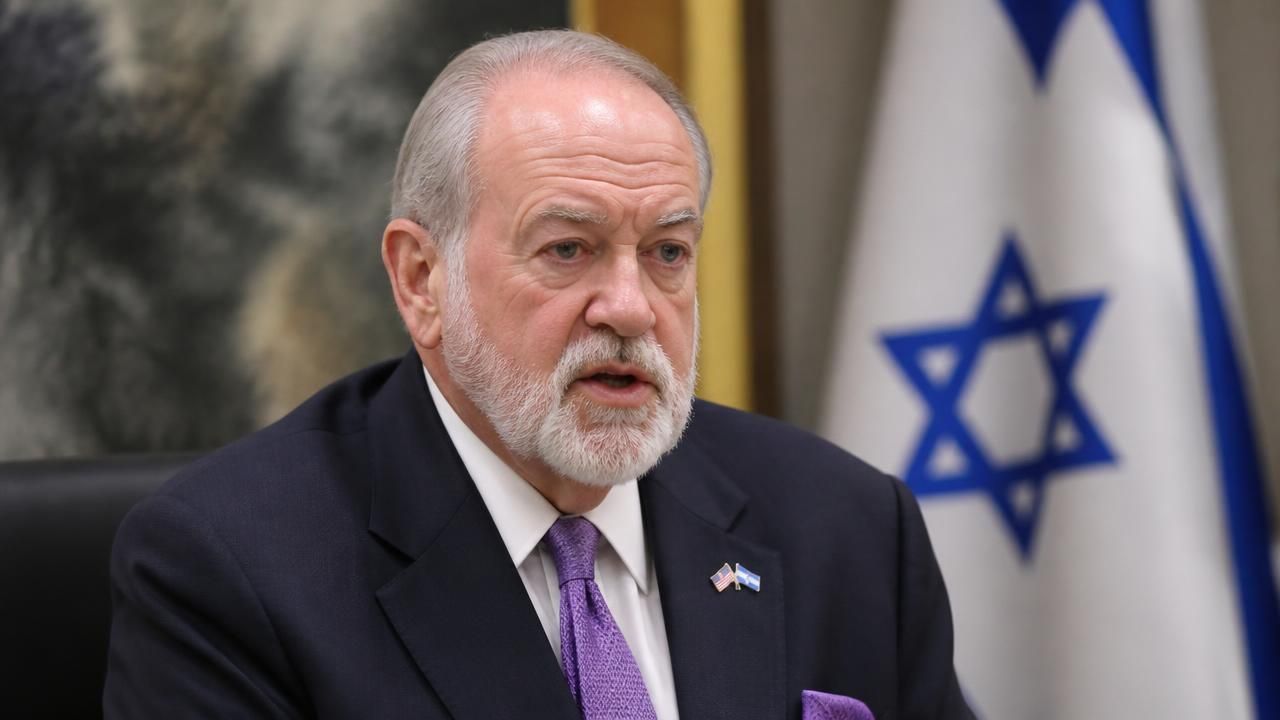
The United States Ambassador to Israel, Mike Huckabee, has condemned the actions of Jewish settlers who have laid siege to the home of an American Palestinian family in the occupied West Bank, calling it a "horrific act of terror." The remarks, reported by multiple outlets including NPR and Saudi Gazette, mark one of the most explicit U.S. diplomatic rebukes of settler violence in recent years.
What Happened
According to reports, a group of Israeli settlers surrounded and besieged the home of a Palestinian-American family in the West Bank. The family, who hold American citizenship, found themselves trapped as settlers blocked access to the property. The incident is part of a broader pattern of settler violence that has escalated in the region, often with impunity. The U.S. ambassador's strong language raises the stakes for Israeli authorities, who have frequently been accused of failing to hold settlers accountable.
Huckabee's Statement
In his public remarks, Huckabee did not mince words. "This is a horrific act of terror," he said, according to the multiple sources. The statement is particularly striking given Huckabee's long history as a staunch supporter of Israeli settlements. As a former governor of Arkansas and a prominent evangelical Christian, Huckabee has previously advocated for Israeli sovereignty over the West Bank and has been a vocal opponent of Palestinian statehood. His decision to use the term "terror" in connection with settler violence therefore carries significant weight.
"This is a horrific act of terror," — Mike Huckabee, U.S. Ambassador to Israel
Context of Settler Violence
The siege is not an isolated event. According to the United Nations, settler violence against Palestinians has reached record levels in recent years, with hundreds of attacks reported annually. These incidents often involve home invasions, property destruction, and physical assaults, frequently carried out under the protection of Israeli military forces. Human rights organizations, including Amnesty International and B'Tselem, have repeatedly called for international intervention to protect Palestinian communities.
The family affected in this case is American, which adds a diplomatic dimension. The United States has a responsibility to protect its citizens abroad, and the Biden administration (and now the Trump administration under which Huckabee serves) has often urged Israel to restrain settlers. However, previous administrations have stopped short of using the term "terror" to describe settler actions.
Reactions and Framing
The story was covered prominently across the globe. NPR and Boise State Public Radio led with Huckabee's "horrific act of terror" quote, while international outlets like Saudi Gazette emphasized the "act of terror" framing. U.S. regional papers, such as the San Antonio Express-News and Caledonian Record, ran similar headlines, indicating the story's broad appeal. MSN also carried the report, ensuring widespread reach.
The unanimity of the headline language suggests that Huckabee's rebuke broke with typical diplomatic decorum. Some analysts see this as an attempt by the Trump administration to distance itself from far-right settler elements, even as it maintains close ties with Israel. Others view it as a personal statement from Huckabee, who may be seeking to moderate his image in his new diplomatic role.
Why It Matters
The incident underscores the fragile security situation in the West Bank, where Israeli settlers and Palestinian residents live in close proximity under a complex legal and military framework. The United States has long called for a two-state solution, but continued settlement expansion and violence threaten that vision. Huckabee's language, while powerful, remains a statement rather than policy. The question is whether it will translate into concrete action, such as sanctions on settlers or increased diplomatic pressure on Israel.
For the Palestinian-American family, the siege is a daily reality of fear and intimidation. Their plight highlights the intersection of U.S. citizenship and the occupation. As American citizens, they have a claim on Washington's protection, yet they remain subject to the hazards of the West Bank. Their case may prompt further scrutiny of how the U.S. handles incidents involving its citizens in the occupied territories.
Looking Ahead
Huckabee's comments come at a time of heightened tensions. The Israeli government, led by a coalition that includes far-right parties, has embraced settlement expansion. Meanwhile, Palestinian leaders are calling for international protection. The U.S. ambassador's "terror" label could embolden those seeking tougher measures against settler extremism, but it could also inflame political reactions within Israel, where settlers are considered a legitimate part of the electorate.
For now, the family remains under siege, and the world watches to see whether words will be followed by deeds. The international community, including the United Nations, has repeatedly condemned settler violence, but without enforceable mechanisms, the situation on the ground is unlikely to change soon. Huckabee's sharp rebuke may be a step toward a more candid U.S. stance, but it is only one step in a long and unresolved conflict.